

Modular belting comes up often in conveyor specification work, yet the term gets used loosely. Engineers sometimes mean one thing; suppliers mean another. If you are evaluating a replacement belt or planning a new conveyor line, a clear, grounded understanding of what modular belting actually is — structurally and operationally — saves time and prevents mismatches.
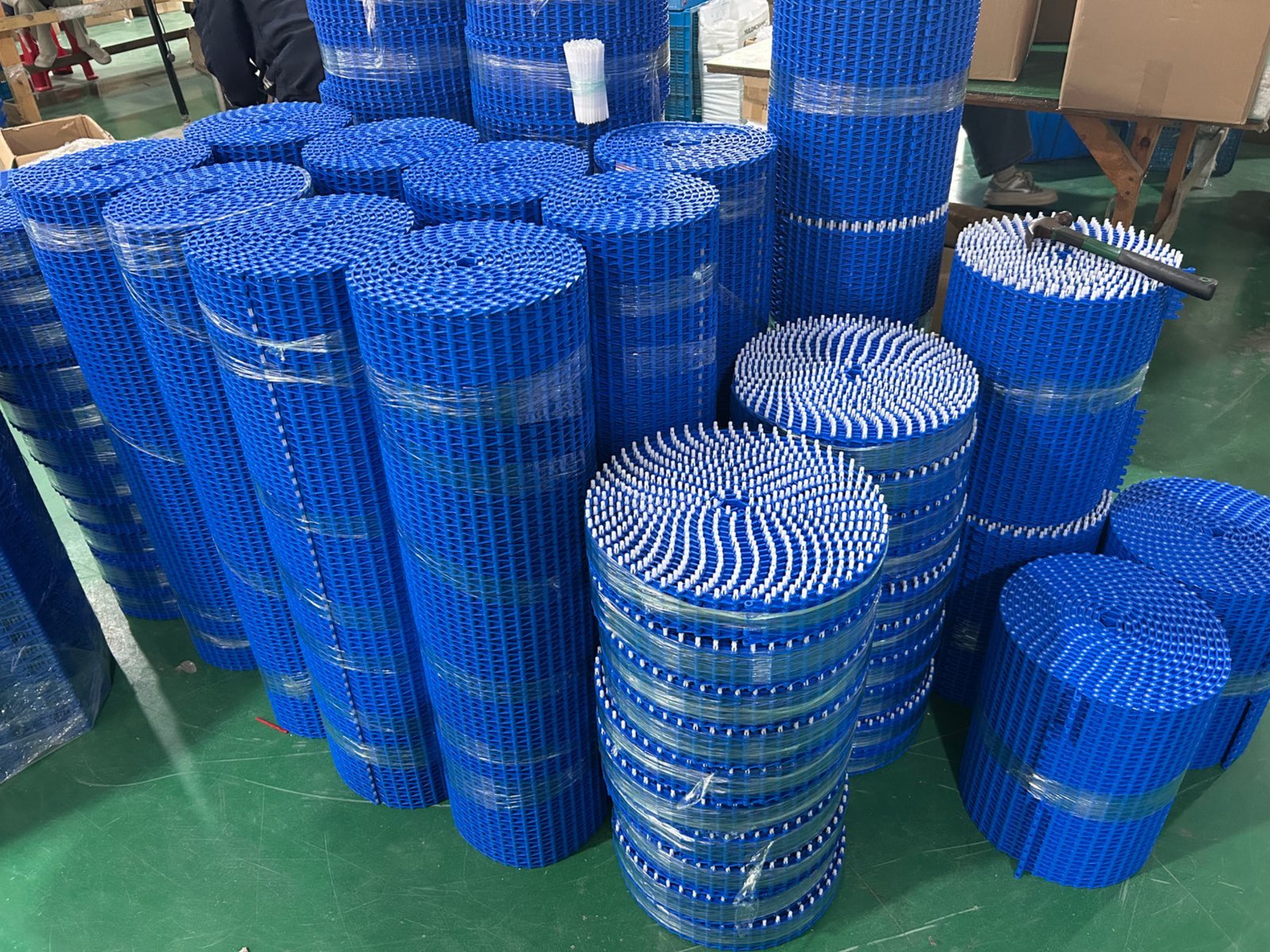
Modular belting is a type of conveyor belt built from individual interlocking plastic modules connected by hinge rods, driven by sprockets rather than friction1. Each module is a discrete, replaceable unit. Belt width is configured by adding modules side by side; belt length is built by linking rows end to end. This structure makes modular belting cleanable, reconfigurable, and locally repairable in ways that solid belts are not.
That definition is the foundation. But understanding whether modular belting fits your application requires going deeper — into materials, pitch dimensions, surface patterns, and the real-world conditions where this belt type performs well or poorly.
How Is a Modular Belt Actually Built?
If you have never handled a modular belt, the generic description — "interlocking plastic modules" — can feel abstract. The physical reality is specific, and those specifics matter for selection.
A modular belt is an assembly of three main elements: the plastic modules themselves, the hinge rods that connect them, and the sprockets that drive the belt. Each element affects how the belt behaves in operation, and each element can be specified differently depending on the application.
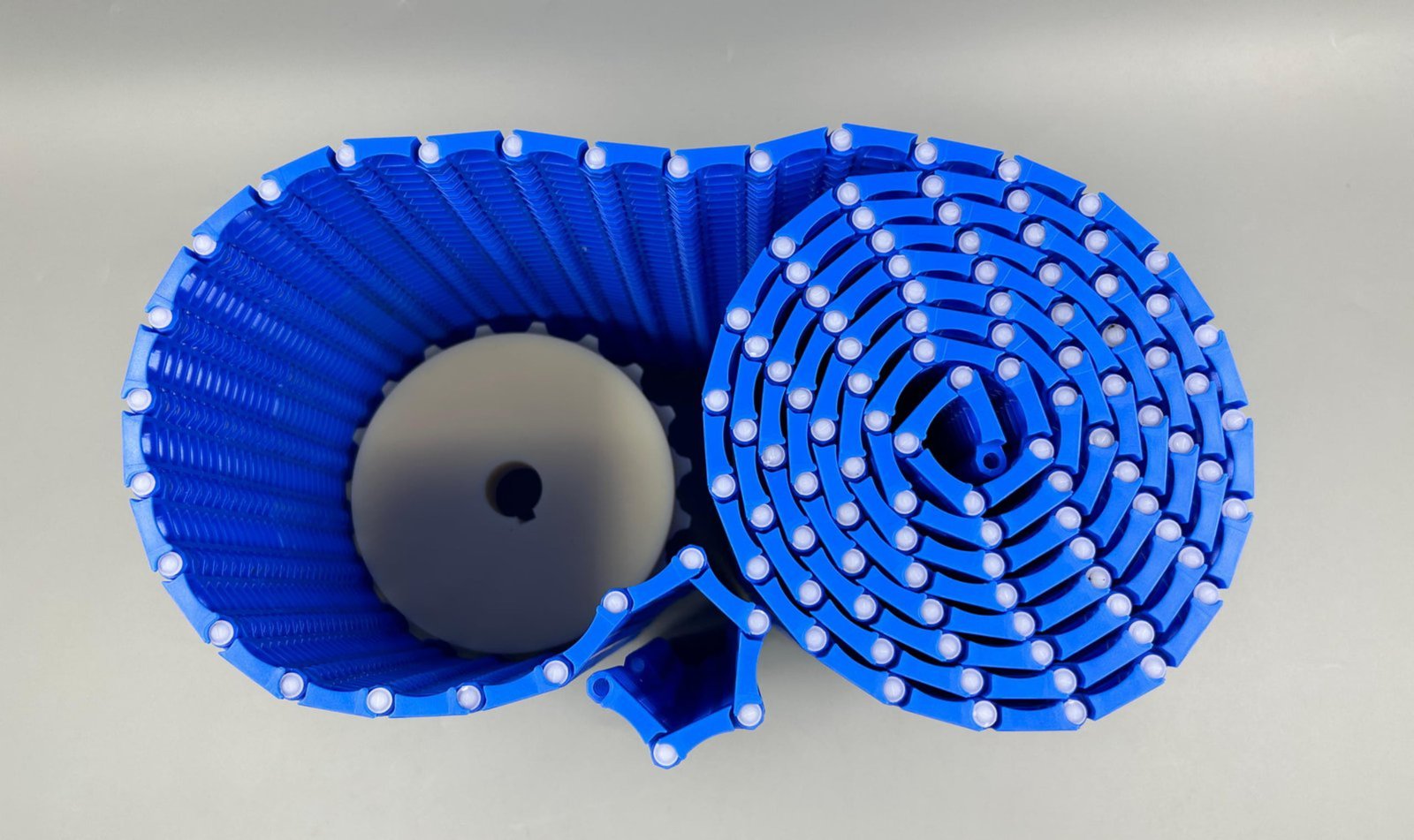
The modular structure means the belt has no single continuous body. It is built piece by piece, which is where its practical advantages — and its limitations — originate.
The Modules
Each plastic module is a small, rigid unit, typically rectangular, with a series of link ends or hinge tabs on both the leading and trailing edges. These tabs interlock with the tabs of adjacent rows, and a rod passes through the aligned holes to hold the rows together.
Modules are produced in different widths and lengths. When you lay them side by side across the belt width, the joints between modules in each row are offset from the joints in the next row — a bricklay pattern. This offset distributes load and adds structural integrity.2
Material selection is one of the most consequential variables in modular belt specification:
- Polypropylene (PP): Common, cost-effective, good chemical resistance. Widely used in food processing and general light-to-medium load applications.
- Polyethylene (PE): Softer, better suited to delicate product handling where surface contact matters.3
- Acetal (POM): Harder, dimensionally stable, handles higher loads and temperatures better than PP. Often chosen for applications with heavier products or more demanding operating conditions.
- Nylon (PA): High mechanical strength, suitable where abrasion resistance is a priority.
- Specialty materials: Some applications require materials with anti-static properties, low friction surfaces, or FDA-compliance for direct food contact4. These are specified based on operating environment, not just product type.
Material choice determines how the belt responds to temperature, cleaning chemicals, load, and contact with the product being conveyed. No material is universally correct. The operating environment drives the selection.
Hinge Rods and Pins
The hinge rods connect module rows and allow the belt to flex over sprockets and return rollers. Rod material matters: stainless steel is standard in food and beverage applications for hygiene and corrosion resistance5, while other materials are used in dry or lower-risk environments.
Rod retention is a structural detail worth noting. Some systems use push-in plastic clips to retain the rods at each end; others use the belt edge itself to contain the rods. In replacement and repair work, rod retention design determines how easily a single row or section of belt can be removed and reinstalled without tools or downtime.
Sprocket Drive
Unlike flat belts that rely on friction between the belt and a drive drum, modular belts are positively driven by sprockets. Sprocket teeth engage directly with drive recesses or pockets molded into the underside of the modules.
This engagement method has practical consequences:
- Slip is eliminated.6 The belt moves in precise relation to sprocket rotation, which matters for timing-sensitive applications.
- Sprocket compatibility must be confirmed. Belt pitch — the distance from one hinge point to the next — must match the sprocket pitch. Mixing incompatible belts and sprockets causes rapid wear or drive failure.
- Sprocket wear affects belt performance. In replacement scenarios, worn sprockets should be inspected and replaced alongside the belt when needed.
Belt Pitch
Pitch is the center-to-center distance between hinge rod holes along the belt's running direction. Common pitches in industrial conveyor work include 12.7 mm, 25.4 mm, 38.1 mm, and 50.8 mm, though non-standard pitches exist for specific belt families.
Pitch affects:
| Pitch | General Characteristic | Typical Use |
|---|---|---|
| Small (e.g., 12.7 mm) | Finer surface, more contact points, smaller bend radius | Light products, tight transfers, inclines |
| Medium (e.g., 25.4–38.1 mm) | Balanced load distribution, common in food processing | General food handling, packaging lines |
| Large (e.g., 50.8 mm) | Higher open area, heavier structure | Washing zones, heavy product, drainage required |
Selecting pitch without considering the minimum bend radius of the belt — and the corresponding sprocket size — is a common specification error.
What Surface Patterns Are Available, and Why Does It Matter?
Surface pattern is not cosmetic. It is a functional design variable that directly affects product handling, drainage, grip, and cleaning access.
Flat-top modules provide a continuous, smooth surface. This supports stable transport of packaged goods, small parts, or any product where surface contact consistency matters. Flat surfaces also clean relatively easily, though water pooling can be an issue depending on drainage design.
Open-grid or open-hinge designs allow liquids, crumbs, and debris to fall through the belt during transport. In washing and blanching applications, or in lines where wet product is conveyed, this open area is not a feature — it is a functional requirement.
Friction-top surfaces — modules with rubberized or textured upper faces — help hold products on inclines or during acceleration and deceleration. This is typically achieved through friction-top inserts overmolded onto the standard module body.
Other surface variations include:
- Raised rib or chevron patterns for incline handling without friction inserts
- Flush-grid designs that balance open area and surface support
- Side-flexing modules configured for curved conveyors, where the belt must navigate horizontal turns
The surface pattern interacts with the product being conveyed, the line speed, the incline angle, and the cleaning method. Choosing a surface style based only on one of these variables without considering the others leads to performance problems that are difficult to correct after installation.
Where Does Modular Belting Fit — and Where Does It Not?
Modular belting is well-suited to specific operating conditions. It is not a default answer for every conveyor application.
The structural characteristics that make modular belting useful — rigid modules, positive drive, open hinge construction, local replaceability — translate into genuine operational advantages in the right context. In the wrong context, those same characteristics create problems.
Where Modular Belting Tends to Work Well
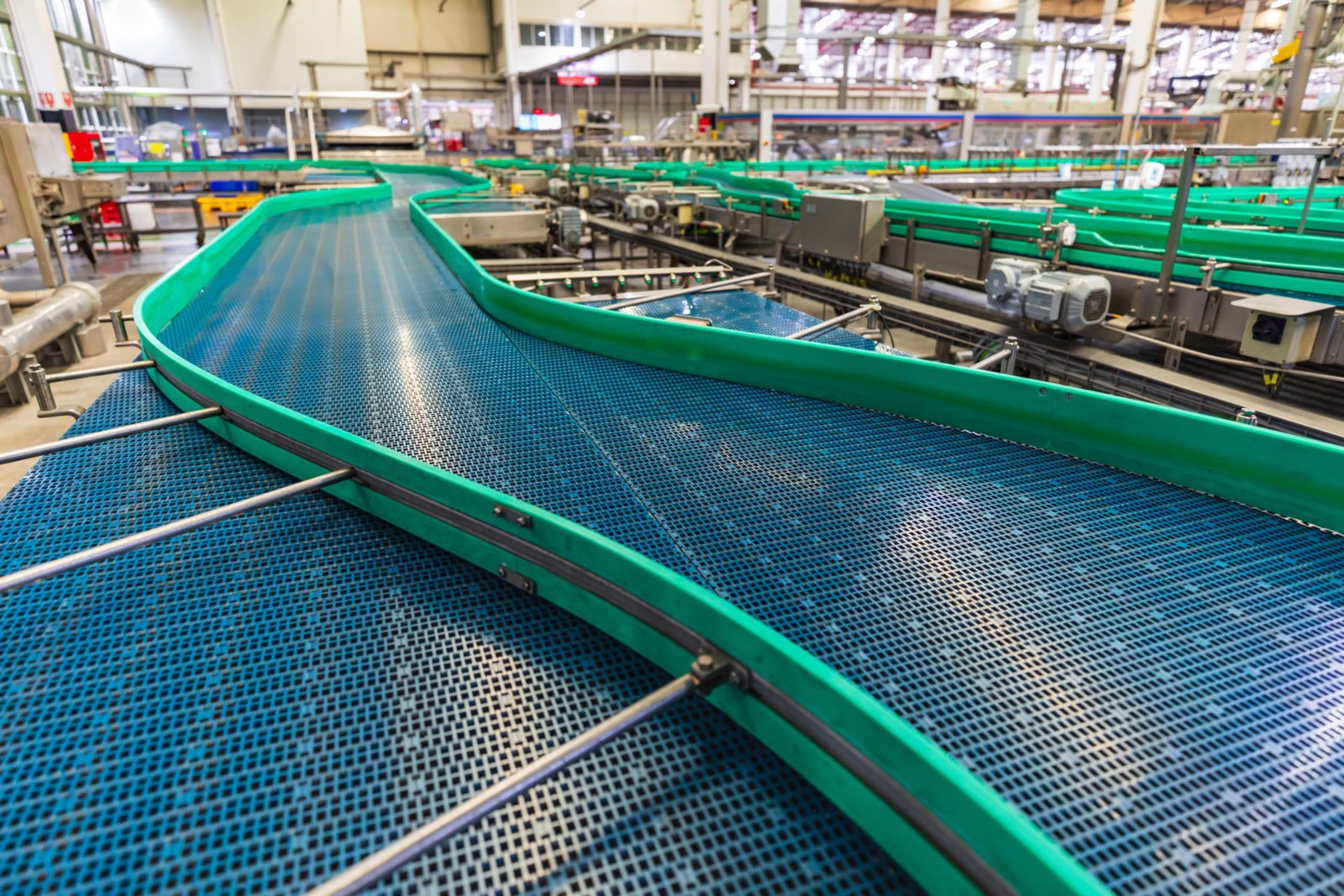
Food processing and beverage lines are among the most common applications. The combination of plastic materials with food-grade compliance, open structure for cleandown, and local replaceability for maintenance windows makes modular belting a practical fit in these environments. The belt can be pressure-washed, inspected module by module, and partially replaced without pulling the entire belt.
Lines with variable width requirements benefit from modular construction. Because width is built by adding or removing module columns and adjusting the hinge rods accordingly, the same belt family can be configured to different widths without custom tooling.
Conveyors with inclines, curves, or transfers can be addressed with specific modular belt families — side-flexing belts for curves, friction-top or high-friction surfaces for inclines, and small-pitch belts for tight transfers.
Applications where maintenance access is limited benefit from module-level replaceability. A single damaged row or section can be replaced in the field without specialized equipment.
Where Modular Belting Has Limitations
- High-speed light-product lines may experience vibration or product instability from the jointed surface — flat continuous belts often perform better here.
- Very delicate products can be marked or affected by module joint lines, particularly at lower pitches.
- Applications requiring a truly flat, smooth running surface — such as certain packaging lines — may not tolerate the slight surface discontinuity at module joints.
- Low-tension return paths with long unsupported spans may sag if the belt is heavy relative to the support structure.
- Cost sensitivity is relevant: modular belting typically costs more per linear meter than standard flat belts. In applications where the structural advantages are not needed, that cost difference is difficult to justify.
Suitability is always application-specific. Load, speed, product type, temperature range, cleaning method, and conveyor geometry all feed into the decision. An experienced supplier or engineering team should review these variables before specification is finalized.
Frequently Asked Questions
Can modular belting be repaired without replacing the entire belt?
Yes — this is one of the structural advantages of modular construction. Individual rows or sections can be removed and replaced by withdrawing the hinge rod, swapping the damaged modules, and reinserting the rod. This repair is typically done in the field, without specialized tools, during a standard maintenance window.
Are all modular belts compatible with each other across brands?
Not reliably. While some belt families share common pitches and may appear interchangeable, module geometry, hinge design, and drive pocket dimensions vary between manufacturers. Before substituting one brand's belt for another, confirm pitch, rod diameter, drive pocket spacing, and module height with your supplier or conveyor OEM.
What is the difference between modular belting and flat plastic chain?
Flat plastic chain — sometimes called slat chain or table-top chain — is also built from individual plastic links, but the chain structure, pin configuration, and drive method differ from modular belt construction. Modular belts are typically wider, driven by sprocket engagement across the full belt width, and available in a broader range of surface patterns and pitches. Both are used in food and beverage processing, but they suit different conveyor layouts and load conditions.
How do I know which plastic material is correct for my application?
The key variables are operating temperature, cleaning chemistry, product contact requirements, load, and any regulatory requirements for food contact or hygiene. PP is the starting point for many food applications; POM is more appropriate for higher loads or temperatures; specialty materials are selected for specific regulatory or performance needs. Confirm material suitability with your supplier based on your actual operating conditions.
How often should modular belts be inspected or replaced?
There is no universal interval — it depends on load, speed, cleaning frequency, chemical exposure, and the specific belt and material. Regular visual inspection of module condition, hinge rod wear, and sprocket engagement is more reliable than time-based replacement alone. Worn or cracked modules, elongated hinge holes, and sprocket tooth wear are the primary indicators that replacement is due.
Conclusion
Modular belting is a conveyor belt built from interlocking plastic modules, hinge rods, and sprocket drive — a structure that enables width configuration, local repair, and cleandown access that solid belts cannot match. Those advantages are real, but they depend on correct material selection, pitch matching, surface pattern choice, and compatibility with the conveyor's drive and support system.
At Molytech, we work with modular belting daily — from manufacturing and specification to supply and replacement support. If you are evaluating modular belting for your conveyor line, we are glad to review your application and help confirm whether it is the right fit. Contact our engineering team to get started.
<!--[googlesitekit-end-of-content]-->
"Article is protected by German copyright law Novel calculation ...", https://www.academia.edu/127159709/Article_is_protected_by_German_copyright_law_Novel_calculation_method_for_chain_conveyor_systems. An institutional conveyor-engineering reference defines modular plastic conveyor belts as belts assembled from interlocking plastic modules joined by hinge rods and engaged by sprockets, supporting the structural definition used here. Evidence role: definition; source type: institution. Supports: A neutral conveyor engineering source should define modular plastic conveyor belts as assemblies of plastic modules joined by rods and driven by sprockets.. ↩
"The Impact of the Pre-Tensioning on the Load Distribution ...", https://www.academia.edu/56733296/The_Impact_of_the_Pre_Tensioning_on_the_Load_Distribution_of_Timing_Belt_Drives. A mechanical-design source on staggered modular joints supports that offsetting adjacent joints helps distribute load and avoid a continuous transverse weakness; the evidence is a structural analogy unless the source tests the exact belt family. Evidence role: mechanism; source type: research. Supports: A mechanical or conveyor design source should explain that staggered joints distribute loads and reduce continuous weak lines across modular assemblies.. Scope note: The degree of strength improvement depends on module geometry, rod design, material, and loading direction. ↩
"(PDF) Polypropylene as a Promising Plastic: A Review", https://www.academia.edu/31233255/Polypropylene_as_a_Promising_Plastic_A_Review. Polymer property data identify polyethylene grades as relatively low-hardness, low-modulus plastics compared with stiffer engineering polymers, supporting the rationale for using PE where gentler contact is desired; this is contextual support rather than direct evidence of reduced product damage. Evidence role: general_support; source type: education. Supports: A polymer property source should show polyethylene has comparatively low hardness/modulus, supporting its use where a less rigid contact surface is desired.. Scope note: Product marking also depends on belt texture, load, speed, temperature, and transfer geometry. ↩
"Inventory of Food Contact Substances Listed in 21 CFR", https://www.fda.gov/food/packaging-food-contact-substances-fcs/inventory-food-contact-substances-listed-21-cfr. FDA food-contact regulations establish that materials intended to contact food must be authorized for their intended conditions of use, supporting the need to specify compliant belt materials for direct food contact. Evidence role: definition; source type: government. Supports: An FDA source should explain that polymers and other materials intended for food contact are regulated as food-contact substances or under relevant food additive regulations.. ↩
"Stainless Steel (SS) Safety Profile", https://www.fda.gov/media/165146/download. Sanitary equipment design guidance identifies corrosion-resistant stainless steels as common materials for food-processing environments because they can withstand cleaning and reduce hygienic risks, supporting the use of stainless rods in such settings. Evidence role: expert_consensus; source type: institution. Supports: A sanitary design or food equipment standard should support the use of corrosion-resistant stainless steel in hygienic food and beverage equipment.. Scope note: The exact stainless grade must match the cleaning chemistry, moisture exposure, and corrosion risk. ↩
"(DOC) Belt drive", https://www.academia.edu/32177456/Belt_drive. Mechanical design references describe positive drive systems as transmitting motion through tooth or sprocket engagement rather than friction, supporting the claim that normal drive slip is eliminated when the belt and sprockets are properly matched and engaged. Evidence role: mechanism; source type: education. Supports: A mechanical power transmission or conveyor source should explain that positive drive systems transmit motion through tooth engagement rather than friction, preventing normal frictional slip.. Scope note: Jumping, wear, overload, contamination, or incorrect sprocket engagement can still cause indexing errors or drive failure. ↩