

Selecting the right conveyor sprocket is harder than it looks. Two sprockets can share the same bore size and tooth count yet perform completely differently — or fail to engage at all — because their tooth form, pitch, and engagement style were designed for different conveyor media. The wrong match wastes time and budget.
Conveyor sprockets are broadly categorized by the conveyor medium they are designed to engage: modular belt sprockets, slat top and table top chain sprockets, wire mesh belt sprockets, and roller chain sprockets.1 Within each category, secondary factors — including material, tooth profile, shaft connection, and operating environment — determine which specific sprocket suits a given application.
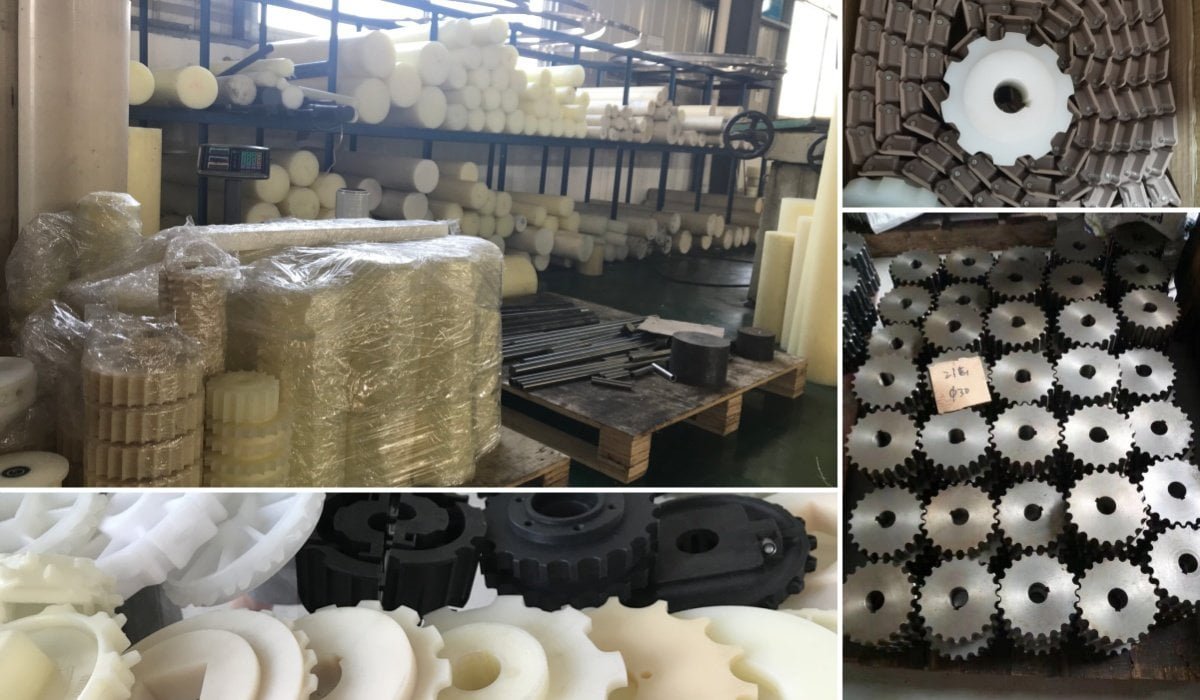
Understanding the category first prevents the most common sourcing error: treating all sprockets as material variations of the same basic part. They are not. Each type is engineered around the geometry and engagement logic of a specific belt or chain family. The sections below walk through each category and the selection factors that matter within it.
Why Does Sprocket Type Start With the Conveyor Medium?
Buyers often ask for a sprocket by tooth count, bore size, and material. Those details matter, but they come second. Before any of those numbers are useful, the sprocket must match the engagement geometry of the belt or chain it is meant to drive.
The conveyor medium — whether a modular plastic belt, a slat top chain, a wire mesh belt, or a roller chain — defines the pitch, tooth form, and contact mechanics that the sprocket must replicate. A sprocket designed for one medium will not reliably drive another, even if the outer dimensions appear similar.
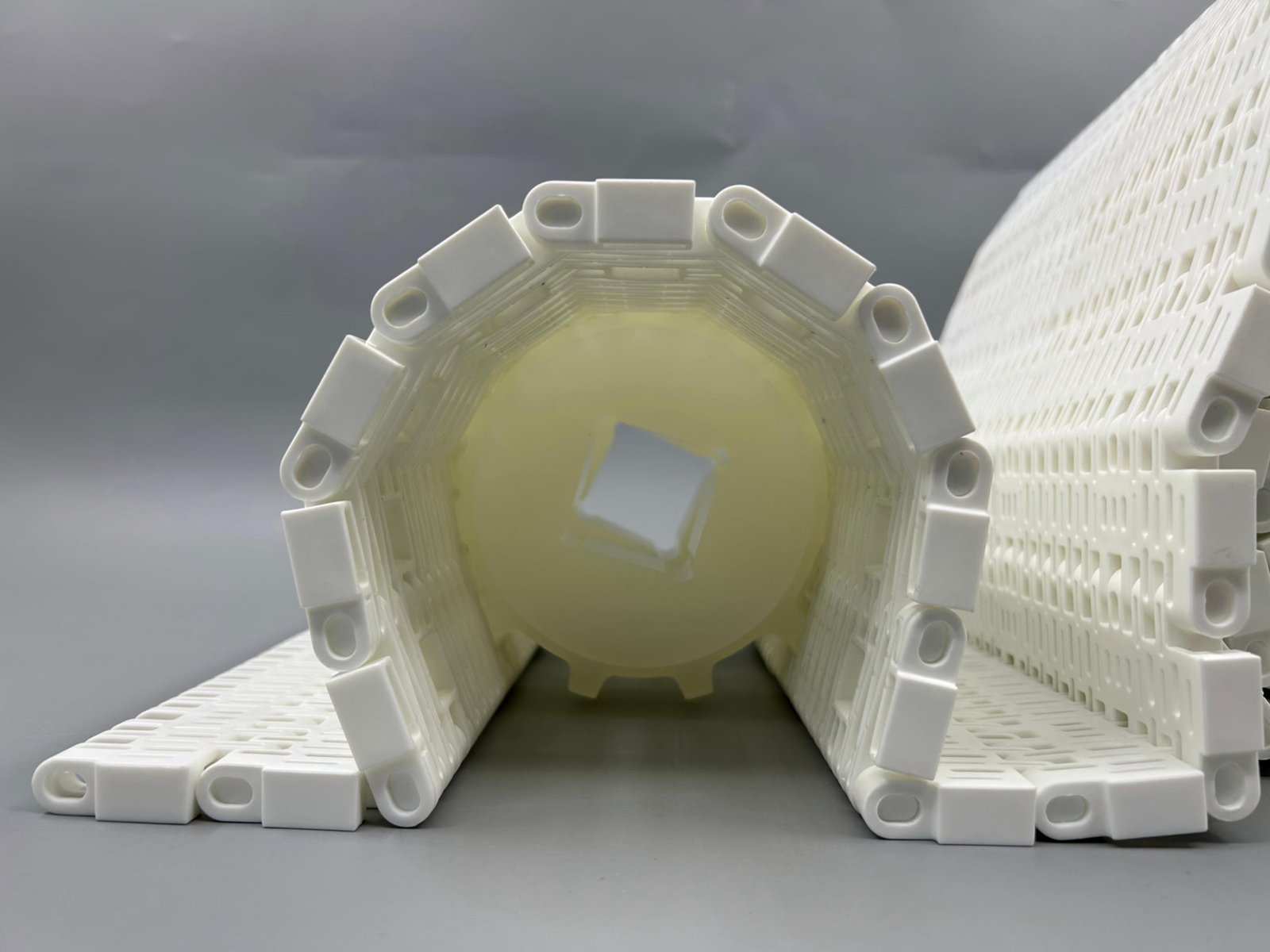
Getting the medium-to-sprocket match right is the foundation. Every other selection decision — material, hardness, shaft connection, and finish — builds on top of it.
What Happens When the Match Is Wrong?
- Uneven wear: Mismatched pitch accelerates tooth and belt wear far beyond normal service life.
- Slipping or jumping: Incorrect tooth form can cause the belt or chain to skip under load.
- Premature belt damage: Wrong engagement geometry can crack or deform modular belt modules at the drive point.
- Noise and vibration: Even partial mismatch produces impact loads that generate noise and stress the conveyor frame.
These are not rare edge cases. In my experience at Molytech, a significant share of replacement inquiries come from customers who sourced a "similar-looking" sprocket and are now troubleshooting engagement problems.
What Are Modular Belt Sprockets?
Modular plastic belt conveyors are common across food processing, beverage, and pharmaceutical lines. They require sprockets that mesh precisely with the hinge rod geometry of each specific belt module — and that geometry varies by manufacturer and belt series.
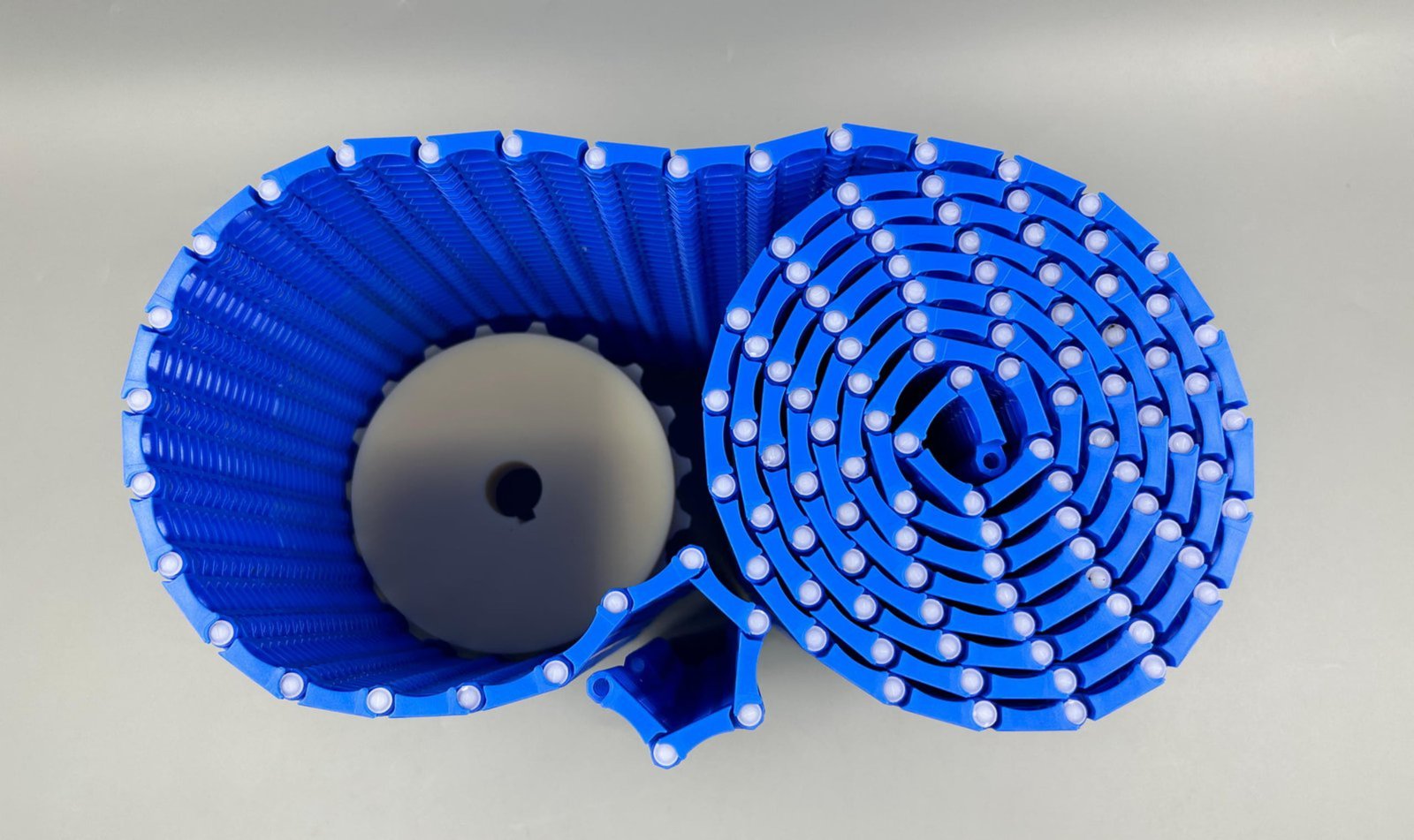
Modular belt sprockets are designed to engage the hinge rods or drive bars of plastic modular belts. Tooth pitch, tooth profile, and sprocket width must match the specific belt series being used. These sprockets are commonly made in plastic or nylon, though material selection depends on the operating environment and belt material rather than a fixed rule.
Key Design Features
Modular belt sprockets typically have:
- Wider, rounded teeth that cradle the hinge rods rather than cutting into them
- Pitch tied to the belt module pitch — commonly 25.4 mm, 38.1 mm, or other belt-specific dimensions
- Segmented or split designs in some cases, which allows installation or replacement without dismantling the shaft
Material Considerations for Modular Belt Sprockets
| Material | Common Use Case | Notes |
|---|---|---|
| Acetal (POM) / Nylon | Standard food and beverage lines | Lightweight, low noise, self-lubricating |
| UHMW-PE | High-wear or abrasive environments | Better impact resistance |
| Stainless steel | High-temperature or CIP washdown zones | Heavier; check belt compatibility |
| Carbon steel | General industrial use outside food | Requires surface treatment |
Plastic sprockets are frequently used with plastic modular belts because both materials share similar hardness levels, which limits wear on the belt hinge rods. However, material selection should account for operating temperature, chemical exposure, cleaning frequency, and load — not belt material alone.
Compatibility Is Belt-Series Specific
This is a point worth emphasizing clearly: modular belt sprockets are not universal. Sprockets are designed for specific belt series from specific manufacturers. A sprocket made for a Habasit M2520 belt will not correctly engage an Intralox Series 900 belt, even if both are 25.4 mm pitch plastic modular belts. Tooth geometry, rod diameter, and module shape differ.
When sourcing replacement modular belt sprockets, buyers should confirm:
- Belt manufacturer and series name
- Belt pitch
- Sprocket bore and keyway dimensions
- Shaft diameter and length between bearing centers
- Number of teeth and resulting conveyor speed
What Are Slat Top and Table Top Chain Sprockets?
Slat top and table top chains are among the most widely used drive media in beverage, canning, and packaging lines. They are roller chains with flat plates — slats or table top units — attached to carry products. The sprockets that drive them must engage the chain rollers or inner links, not the top surface.
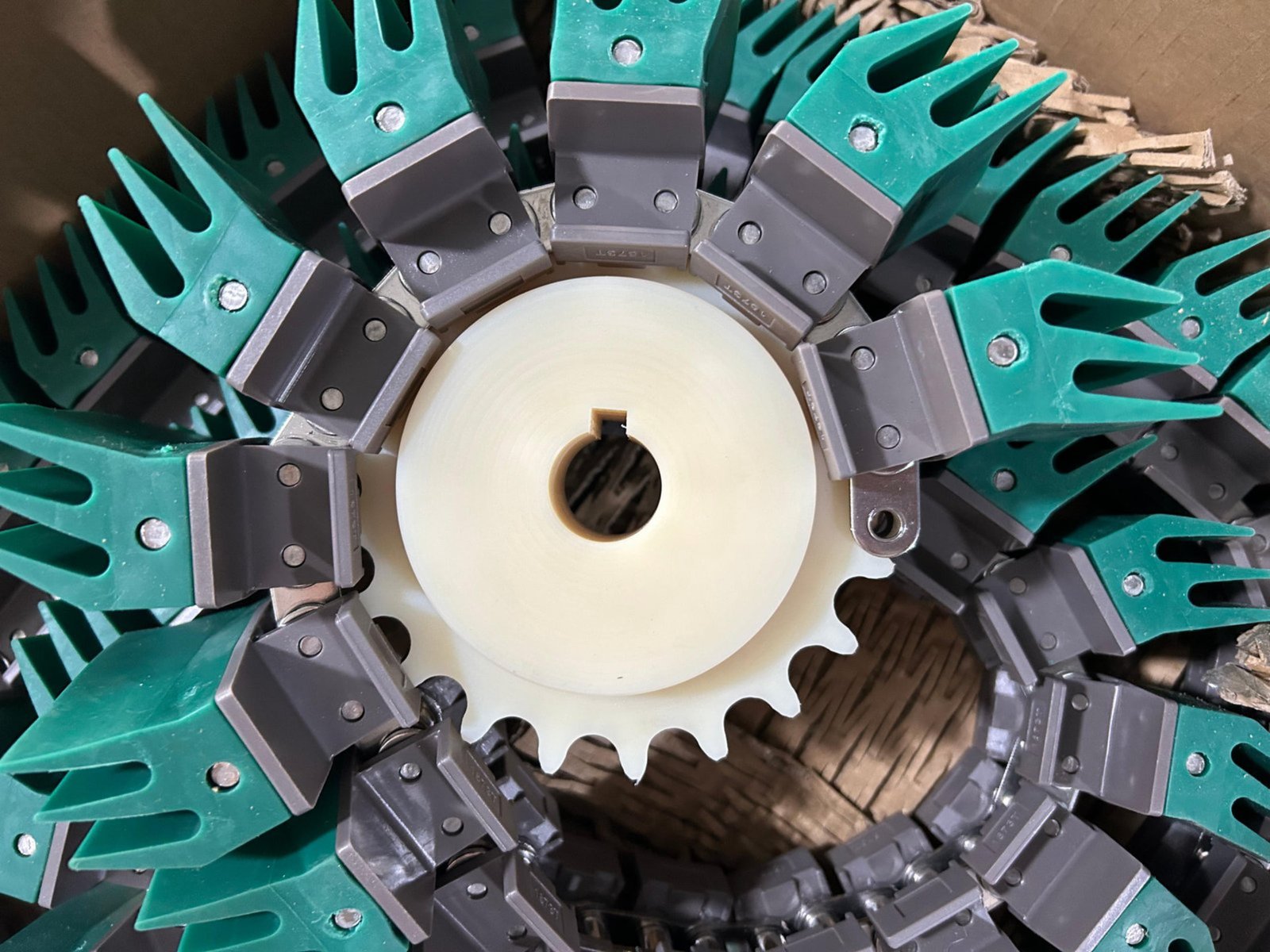
Slat top and table top chain sprockets engage the roller or link geometry of the chain, not the carrying surface. These sprockets share tooth profile logic with standard roller chain sprockets but are often designed to specific chain standards (such as ANSI or DIN), pitch dimensions, and chain series, and must match the chain manufacturer's specifications.
How These Sprockets Differ From Modular Belt Sprockets
- Engagement is through the roller or link, not through hinge rods
- Pitch is defined by the chain standard (e.g., ANSI #50, #60, or manufacturer-specific series)
- Tooth profile follows roller chain geometry with consistent pressure angles
- Load capacity is generally higher than plastic modular belt sprockets of the same pitch
Material and Hardness in This Category
Slat top and table top chain sprockets are commonly produced in:
- Carbon steel with surface hardening — the most common choice for durability under sustained chain tension
- Stainless steel — preferred in wet, washdown, or food-grade environments
- Nylon or engineering plastic — used in lighter-duty applications or where noise reduction is a priority; not always limited to plastic chains
Material hardness relative to the chain matters here. If the sprocket is significantly softer than the chain, the sprocket teeth wear first. If it is significantly harder, the chain rollers wear faster. The right balance depends on the specific chain material, load, and expected service intervals — factors that vary by application.
Confirming Chain-to-Sprocket Compatibility
For slat top and table top chain sprockets, verify:
- Chain series and pitch
- Inner link width or roller diameter
- Number of teeth
- Sprocket bore, keyway, and shaft fit
- Whether the sprocket is for a single-width or multi-strand arrangement
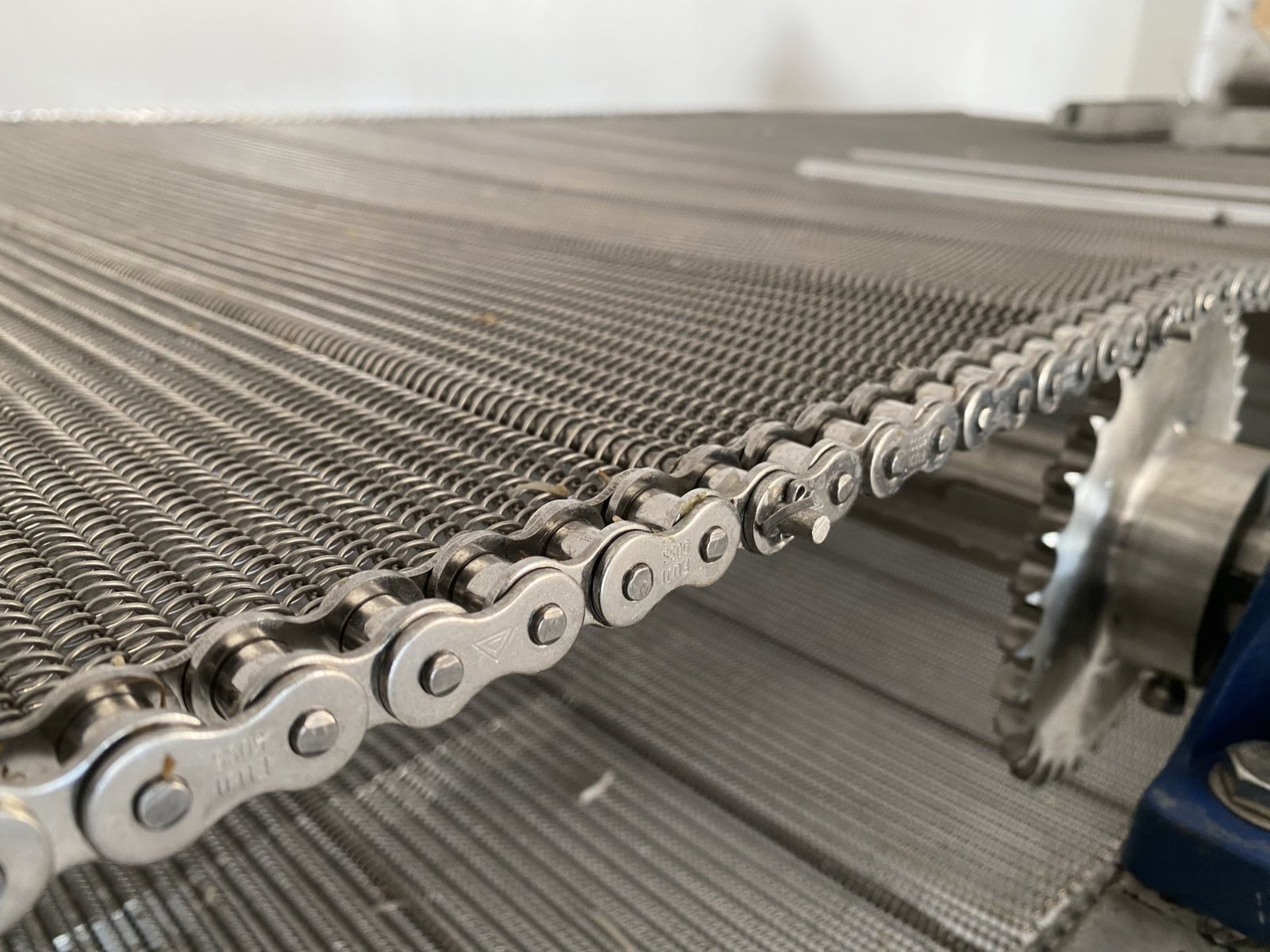
What Are Wire Mesh Belt Sprockets?
Wire mesh belts are used in baking, snack food processing, and heat treatment applications where product needs airflow from below and the belt must withstand elevated temperatures. Their drive geometry is fundamentally different from plastic modular or chain systems.
Wire mesh belt sprockets are designed to engage the transverse rods or wires of a wire mesh belt. Tooth spacing and profile must match the rod pitch of the specific mesh belt, and both the number of active contact points and the tooth-to-rod engagement angle affect how smoothly the belt is driven.
Engagement Logic for Wire Mesh Belts
Wire mesh belts are not rigid in the same way modular belts or chains are. The sprocket teeth must:
- Lift and advance rods rather than push against rigid links
- Distribute load across multiple rods simultaneously to avoid localized stress
- Account for belt elongation — wire mesh belts stretch over time, and sprocket design should accommodate predictable engagement across a range of belt tension states
Material Considerations
Wire mesh belt sprockets are most commonly produced in:
- Carbon steel for general and high-temperature applications
- Stainless steel for food-grade or corrosive environments
- Nylon or engineering plastic in specific lower-temperature applications — this is not a universal recommendation; suitability depends on belt weight, temperature, and speed
High-temperature environments — common in tunnel ovens and continuous baking lines — may require consideration of thermal expansion differences between the sprocket and belt material. This is an application-specific factor that warrants confirmation with an engineer familiar with the equipment.
What Are Roller Chain Sprockets?
Roller chain sprockets are the broadest and most standardized category. They are used in drives and conveyor systems where power transmission is the primary function and where the chain is ANSI or ISO standardized.
Roller chain sprockets are manufactured to ANSI (American National Standards Institute) or ISO standards, with tooth profile, pitch, and roller seating dimensions defined by the chain standard. Common chain sizes include ANSI #35, #40, #50, #60, and #80. Sprockets in this category are the most widely interchangeable — within the same chain standard and pitch.
Categories Within Roller Chain Sprockets
Roller chain sprockets are further divided by how they connect to the shaft and how they are configured:
- Plain bore sprockets — bored to a specific diameter; require keyway and set screw for shaft mounting
- Taper lock sprockets — use a taper bush to secure onto the shaft, allowing easier alignment and removal
- Split sprockets — designed for installation and removal without shaft dismantling
- Double-strand sprockets — engineered for dual-chain drive arrangements
- Idler sprockets — include a bearing bore and are used to guide or tension the chain, not to transmit drive power
Material Options
| Material | Hardness Range | Typical Application |
|---|---|---|
| Carbon steel (C45) | HRC 40–50 (tooth zone) | General industrial drives |
| Alloy steel | HRC 50–58 | Heavy-duty or high-speed drives |
| Stainless steel (304 / 316) | Lower than carbon steel | Food, beverage, washdown environments |
| Nylon / Engineering plastic | Varies | Light-duty, noise-sensitive applications |
Standardization Does Not Equal Universal Interchangeability
Even within standardized roller chain sprockets, buyers should confirm pitch, chain number, tooth count, bore size, keyway dimensions, and hub style before substituting one supplier's sprocket for another. Standard-compliance does not automatically guarantee dimensional alignment across all manufacturers.
Frequently Asked Questions
Can I use the same sprocket for different belt brands if the pitch matches?
Not reliably. Pitch is a necessary condition for compatibility, but tooth profile, rod diameter engagement, and module geometry vary by belt manufacturer and series. Two belts with the same pitch may require different sprocket tooth forms. Confirming sprocket-to-belt compatibility by belt series, not pitch alone, is the safer approach.
Does sprocket material have to match belt or chain material?
No. Sprocket material is selected based on operating environment, load, temperature, hygiene requirements, and wear balance — not solely on belt or chain material. Plastic sprockets are common with plastic modular belts, but they are also used in some chain and wire mesh applications depending on the specific conditions.
What dimensions do I need to provide when ordering a replacement sprocket?
At minimum: conveyor medium type (belt or chain series and manufacturer), pitch, number of teeth, bore diameter, keyway dimensions, and hub configuration. For more complex applications, shaft length between bearings, operating speed, load, and environment may also affect the correct specification.
Are split sprockets always interchangeable with solid sprockets of the same specification?
In most cases, a split sprocket and a solid sprocket of the same tooth count, pitch, and bore can perform the same drive function. However, split designs may have slightly different structural rigidity at high loads or speeds. Confirming suitability for the specific duty cycle is advisable before substituting.
How do I know if my conveyor sprocket needs replacement?
Common indicators include visible tooth wear or rounding, chain or belt skipping under normal load, increasing noise or vibration at the drive point, and accelerated wear appearing on the belt or chain side rather than the sprocket. The exact replacement interval depends on load, speed, material, and maintenance practices — application-specific factors that vary by site.
Conclusion
The different types of conveyor sprockets — modular belt, slat top and table top chain, wire mesh belt, and roller chain — are primarily defined by the conveyor medium they engage, not by material or appearance. Material, hardness, and operating environment are important secondary considerations that should be evaluated once the correct sprocket category and geometry are confirmed. Tooth count and bore size alone are not reliable substitutes for a full compatibility check against the belt series, chain standard, pitch, and shaft specification.
At Molytech, we manufacture conveyor sprockets across these categories with in-house tooling and process controls, supporting replacement orders, OEM builds, and custom specifications. If you are identifying or sourcing a conveyor sprocket and want to confirm the correct type and specification for your system, contact our engineering team with your belt or chain details.
<!--[googlesitekit-end-of-content]-->
"(PDF) Section 4 Conveyor Chain Designer Guide Renold ...", https://www.academia.edu/6696601/Section_4_Conveyor_Chain_Designer_Guide_Renold_Conveyor_Chain_Catalogue_I_69_70_I_Renold_Conveyor_Chain_Catalogue. Engineering references on conveyor drives describe sprockets as components matched to the belt or chain type they engage, supporting the classification of conveyor sprockets by conveyor medium rather than by appearance alone. Evidence role: general_support; source type: education. Supports: A source should support that conveyor drive sprockets are selected according to the belt or chain medium and its engagement geometry.. Scope note: The source may support the classification principle generally rather than list the article's four categories in exactly the same terminology. ↩