

Moving products from one point to another sounds simple. But when a conveyor belt slips, tracks unevenly, or wears out ahead of schedule, the gap between "a loop of material moving" and "a coordinated mechanical system" becomes very clear, very fast. Understanding how conveyor belts work helps you evaluate components better, ask the right questions, and make more reliable decisions.
A conveyor belt works by forming a continuous loop around two or more pulleys or sprockets.1 A drive unit rotates the drive pulley or sprocket, which pulls the belt forward. The belt surface carries materials from the load point to the discharge point. Return rollers, wear strips, guide rails, side guards, and tensioning components all support stable, continuous movement. Together, these parts form a working system — not just a moving strip.
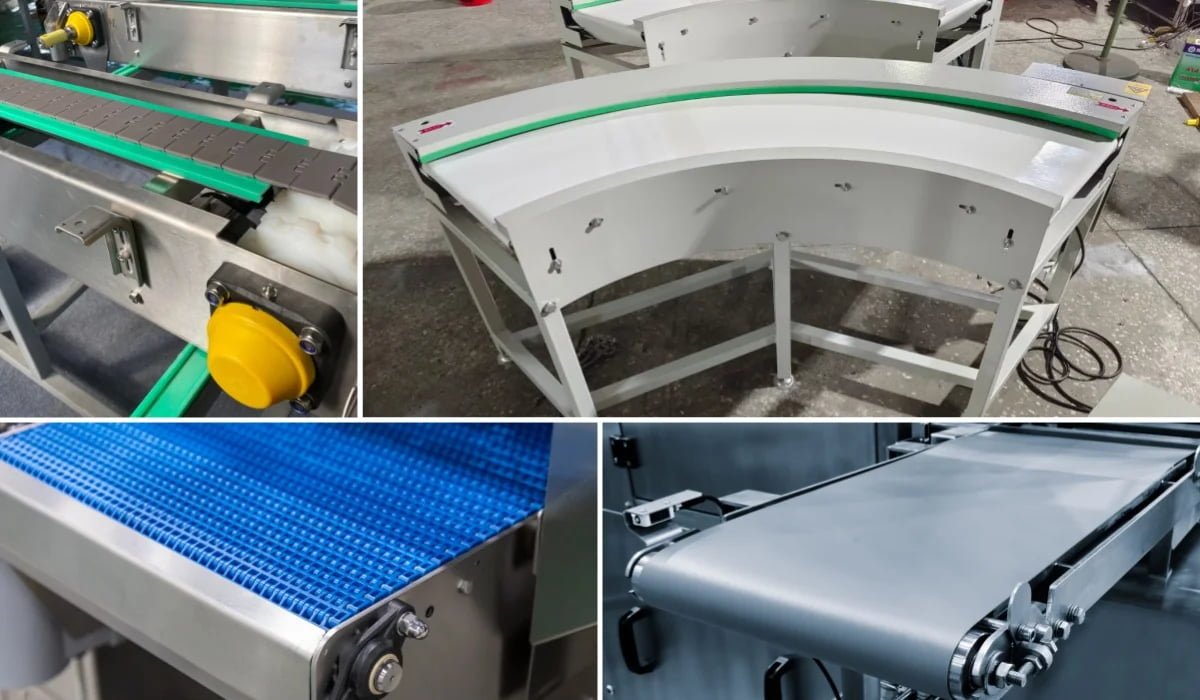
That summary covers the basic logic. But in practice, the details matter far more than the concept. Different belt types transfer motion in different ways. Different industries place different demands on the system. And when something goes wrong, it is rarely just "the belt." What follows is a practical breakdown of how each part of the system contributes — and why they all depend on each other.
What Actually Makes a Conveyor Belt Move?
Most people picture a conveyor belt and think of the flat surface. The drive mechanism is just as important, and it is where the movement actually starts.
The motor transmits torque to the drive pulley or sprocket. Friction between the drive pulley and the belt — or mechanical engagement between sprocket teeth and belt openings — pulls the belt forward. The belt loop then carries whatever is placed on it from the loading end to the discharge end, and the lower return path brings the empty belt back.
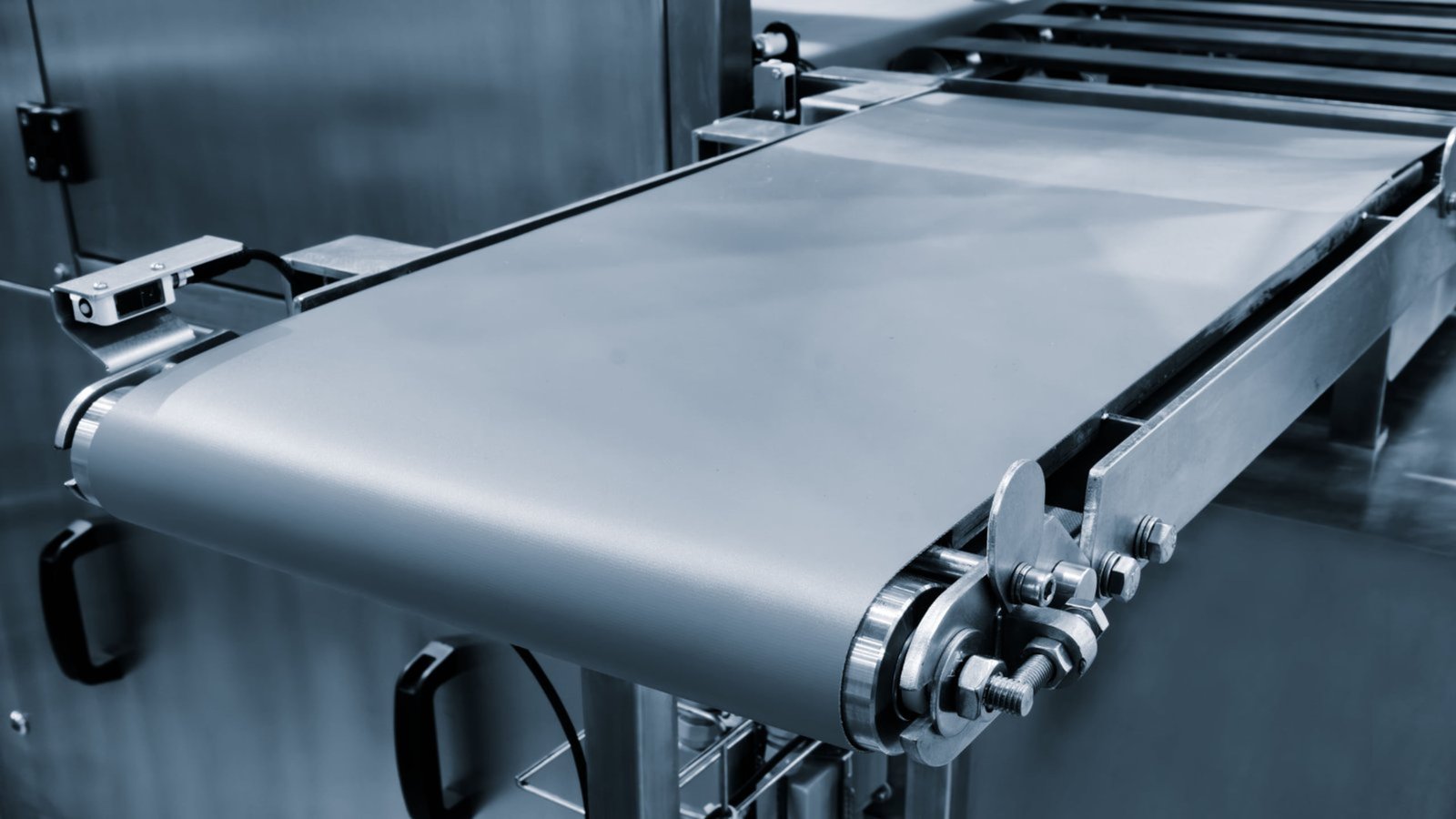
Understanding the drive helps you understand why different belt types work differently — and why changing one component often requires checking others.
Friction Drive vs. Positive Drive
There are two fundamentally different ways a conveyor belt receives power.
Friction drive relies on contact pressure between the belt and the drive pulley. Flat belts and most industrial rubber belts work this way. The tension in the belt determines how well power transfers. Too little tension and the belt slips. Too much and the belt and components wear faster.
Positive drive uses physical engagement. Modular plastic belts connect to sprocket teeth through their hinge rods and open structure. Timing belts engage through molded teeth on the inner surface. This eliminates slippage and makes speed ratios precise — which is why timing belts are common in applications requiring exact synchronization.
| Drive Type | Belt Examples | Relies On | Common Use |
|---|---|---|---|
| Friction drive | Flat belts, PVC belts | Belt tension and surface contact | General conveying, packaging |
| Positive drive | Modular belts, timing belts | Tooth/sprocket engagement | Food processing, precise indexing |
| Chain-link drive | Plastic chain plate belts | Pin-and-hinge sprocket engagement | Heavy loads, wash-down lines |
In component selection discussions, we often need to confirm whether the existing drive uses friction or positive engagement before recommending a replacement belt or sprocket. Mixing incompatible types creates tracking problems immediately.
What Do the Support Components Actually Do?
The belt surface gets all the attention. But in most conveyor problems we hear about — sagging, drifting, unusual wear — the support structure is where the answer lies.
Support components hold the belt flat and stable across its full length. Return rollers support the underside of the belt on long conveyors. Wear strips provide low-friction support along the carrying surface, especially on modular and chain plate belts. Guide rails and side guards keep the belt tracking true and prevent materials from falling off the edges.
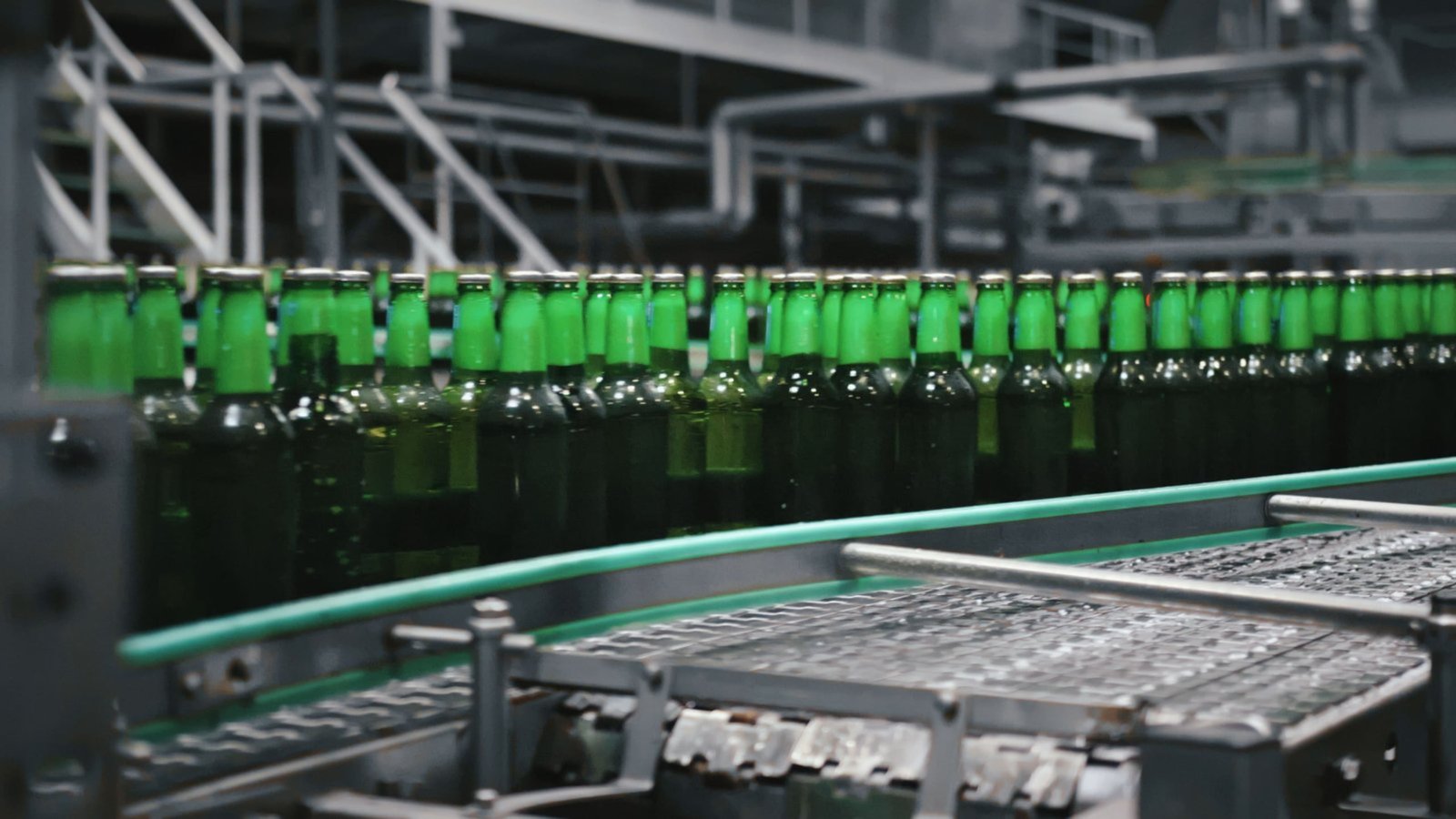
Remove any one of these, and the belt's behavior changes. That is not an abstraction — it shows up in how quickly the belt wears and how consistently it moves product.
Wear Strips
Wear strips sit beneath the belt surface, providing a sliding contact surface as the belt moves forward. They are typically made from low-friction UHMW polyethylene or similar materials in food-grade environments.
Key points buyers should evaluate:
- Material compatibility — Food-contact grades require FDA-compliant or similar certified materials. Confirm documentation before ordering.
- Dimensional fit — Wear strips need to match the frame profile and the belt's running width. Loose or oversized strips create vibration and uneven wear.
- Replacement intervals — Wear strips are consumable components. Planning their replacement as part of routine maintenance reduces unplanned downtime.
Guide Rails and Side Guards
Guide rails keep the belt running in a straight path. Side guards prevent product from spilling off the belt edge, particularly on inclined conveyors or lines handling small, irregular items.
Both components affect not just product containment but belt life. A belt that runs against a rigid guide rail on one side without proper clearance will wear along its edge. In washdown environments, guide rail material and design also affect how well the system drains and cleans.
Rollers and Idlers
On longer conveyors, rollers support the belt between the drive and tail pulley. Idlers prevent the belt from sagging under load, which would cause uneven product movement and increased motor demand. Roller spacing depends on the belt type, load weight, and required support interval — a detail that component suppliers and system designers should specify together.
How Does Tensioning Keep the System Stable?
Tension is one of the least visible aspects of a conveyor system — and one of the most consequential.
Correct belt tension keeps the belt in contact with the drive pulley or sprocket, prevents sagging, and maintains consistent tracking. Too little tension leads to slippage or belt wandering. Too much increases load on the drive, accelerates wear on the belt and bearings, and can cause premature component failure.
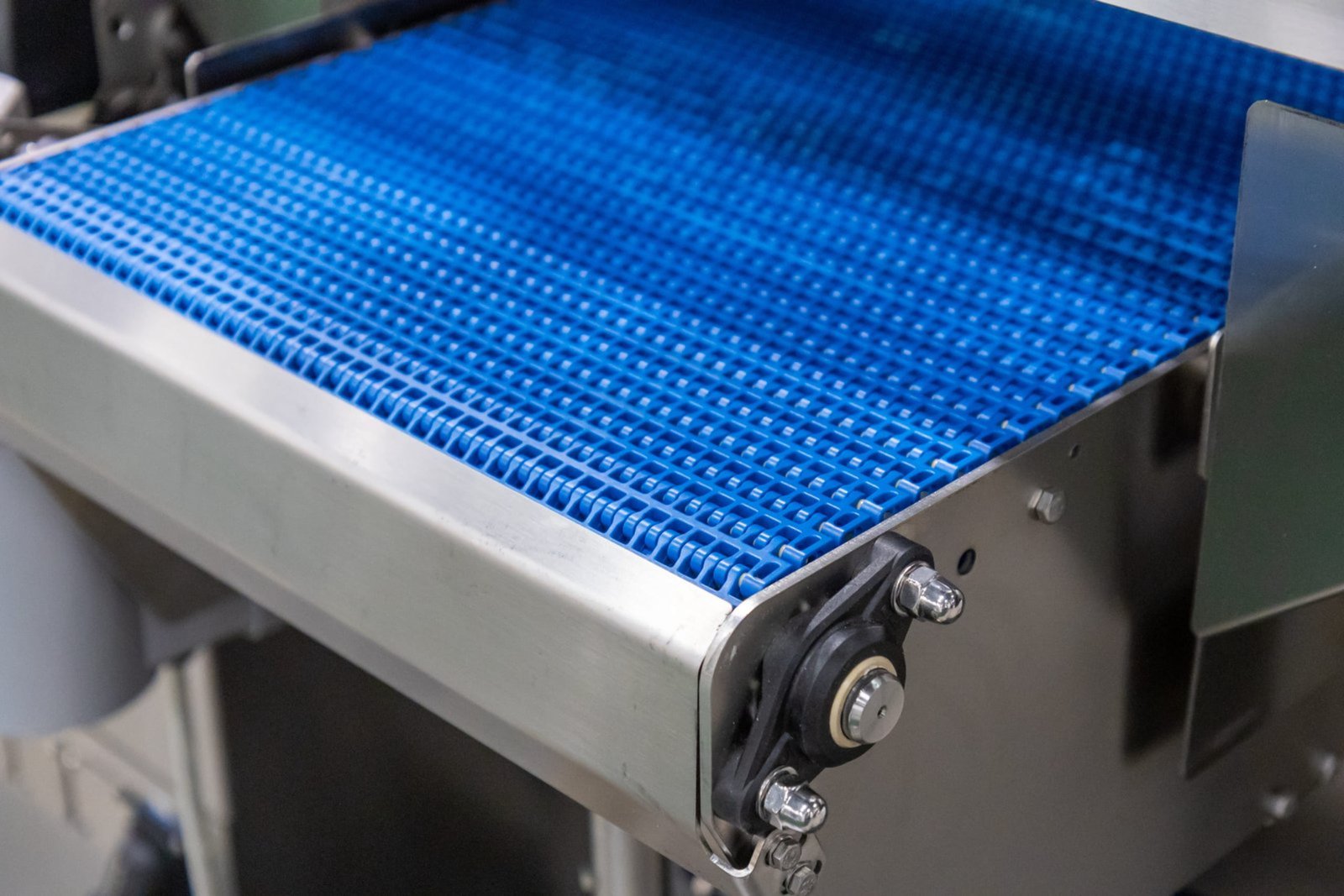
Most conveyor systems manage tension through the tail pulley position. Adjusting the tail pulley forward or backward changes the effective belt path length and sets tension. Some systems use spring-loaded or screw-type take-up units.
Why Tension Changes Over Time
New belts stretch slightly after initial installation — especially synthetic flat belts. Tension needs to be checked and adjusted during the first days of operation. After that, periodic checks should be part of routine maintenance.
Temperature also affects tension. In bakery or cold-storage applications, belts expand and contract with heat cycles. A belt tensioned correctly at room temperature may run slack in a chilled environment or tight in an oven tunnel. Material selection matters here: different belt materials respond differently to temperature change, which is why operating temperature is one of the first things we ask about in selection or replacement discussions.
How Do Different Belt Types Work in Practice?
"Conveyor belt" covers a wide range of structures. Each type transfers load and motion differently. Knowing the differences helps you evaluate which type fits a given application — or recognize why a substitute may not perform the same way.
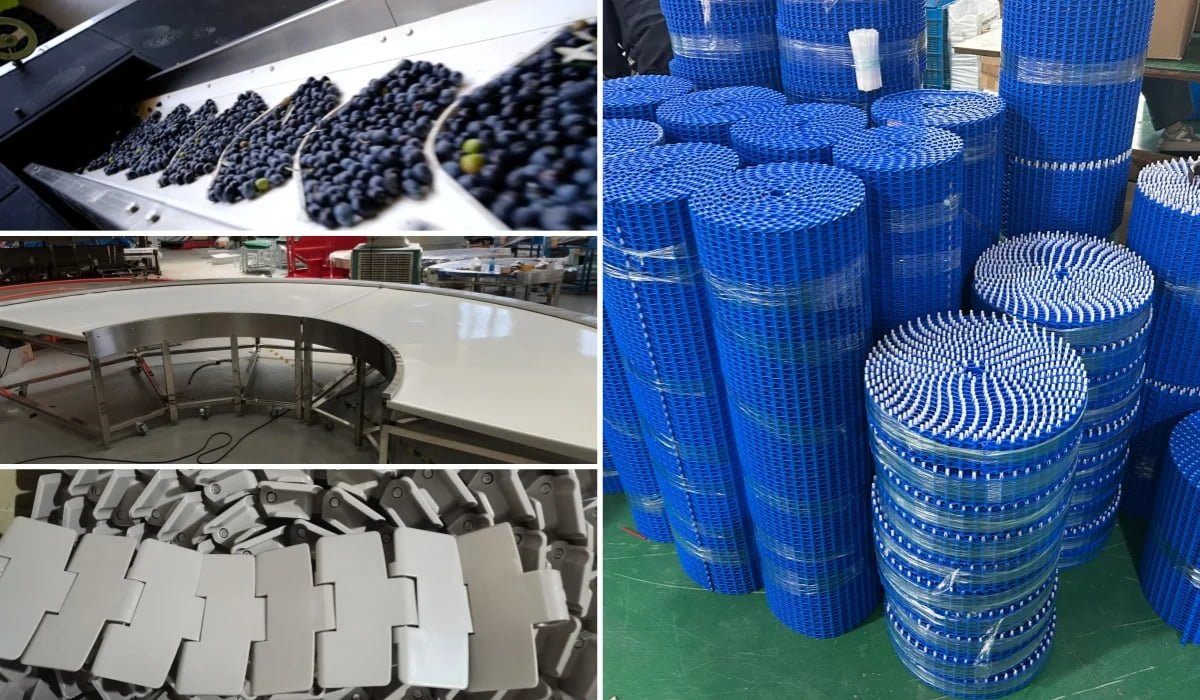
Flat belts, modular plastic belts, plastic chain plate belts, and timing belts all form continuous loops and carry materials forward. But their construction, drive method, load capacity, cleanability, and suitable applications differ significantly. There is no single belt type that suits every industry, product, or environment.
Flat Belts
Flat belts are a single continuous piece of material — rubber, PVC, PU, or fabric-reinforced composites. They run on friction drive and suit smooth, stable conveying across a wide range of products.
- Strengths: Simple structure, low noise, good for fragile products
- Limitations: Splice joints are a maintenance point; tension management is critical; not ideal for washdown-heavy environments
- Common in: Packaging, logistics, light assembly
Modular Plastic Belts
Modular belts consist of interlocking plastic segments connected by hinge rods. They run on positive drive via sprockets.
- Strengths: Easy to repair section by section, open designs allow drainage and airflow, compatible with aggressive washdown
- Limitations: Higher weight than flat belts, noise at higher speeds, sprocket compatibility must be verified
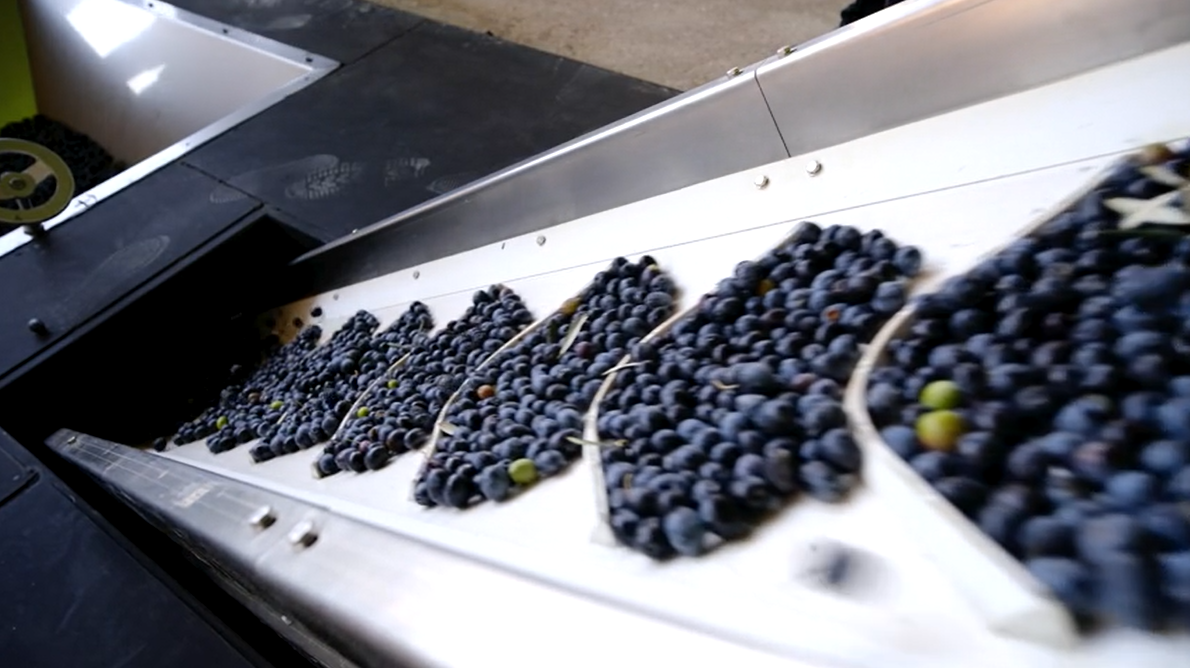
- Common in: Food processing, beverage, pharmaceutical, fruit and vegetable handling
Plastic Chain Plate Belts
Chain plate belts use rigid plastic plates mounted to a chain link structure, driven by sprockets. They handle heavier loads and resist elevated temperatures better than modular belts in many configurations.
- Strengths: High load capacity, stable surface, suitable for heat and pressure washing
- Limitations: More complex installation, heavier than modular belts, sprocket and rail compatibility is critical
- Common in: Canning, bottling, heavy food processing lines
Timing Belts
Timing belts use toothed inner surfaces that engage toothed pulleys for precise speed synchronization. They do not rely on friction.
- Strengths: No slippage, consistent speed ratios, quiet operation
- Limitations: Require matched pulley profiles; not designed for bulk material conveying
- Common in: Indexing applications, packaging machinery, precision assembly
What Information Actually Determines How a Belt Works in Your Application?
The question "how does a conveyor belt work?" gets more specific once you connect it to an actual installation. In component selection or replacement discussions, we often need to confirm far more than belt dimensions.
A conveyor belt's performance depends on the complete installation context: belt type and material, drive configuration, frame and support structure, operating environment, load weight and distribution, cleaning method, and temperature range. Providing only belt dimensions or speed tells a manufacturer very little about what will actually work.
Here is a practical list of what context shapes the working logic:
- Material type and load weight — determines belt structure, plate thickness, and hinge rod specification
- Operating temperature — affects belt material choice, especially for bakery ovens, cold rooms, or washdown tunnels
- Cleaning method — open-hinge modular belts suit pressure washing; solid flat belts do not drain in the same way
- Existing sprockets and guide rails — a replacement belt must match existing sprocket pitch and tooth profile, or the whole drive must be re-evaluated
- Installation space and direction of travel — some belt structures handle inclines and declines well; others require side guards or cleats
- Whether the issue is replacement, tracking, wear, or instability — each symptom points to a different part of the system
This is why we ask these questions before confirming a recommendation, not after. A belt that looks identical on the surface may have a different pitch, hinge rod diameter, or material grade — and that difference shows up the moment the system runs.
Frequently Asked Questions
What is the main difference between a modular belt and a flat belt?
A modular belt consists of interlocking plastic segments driven by sprockets through positive engagement. A flat belt is a single continuous piece driven by friction against a pulley. Modular belts are easier to repair section by section and tolerate washdown better. Flat belts are quieter and better for fragile or smooth products.
Why does a conveyor belt drift to one side?
Belt tracking problems usually come from uneven tension, misaligned tail or drive pulleys, worn guide rails, or uneven loading. Before adjusting tension, confirm that the frame is level and the pulleys are square to the belt path. On modular and chain plate belts, also check sprocket alignment and wear strip condition.
How often should conveyor belt components be replaced?
Replacement intervals depend on operating conditions, load, speed, and cleaning frequency. Wear strips and guide rails are consumable components that degrade faster than the belt itself. Establishing a scheduled inspection and replacement cycle — rather than waiting for failure — reduces unplanned downtime. Consult your component supplier for guidance specific to your belt type and environment.
Can I replace just one section of a modular belt?
Yes. That is one of the practical advantages of modular belt construction. Individual segments can be unclipped and replaced without removing the full belt. Confirm that replacement segments match the existing belt's pitch, material grade, and hinge rod specification exactly, or inconsistencies will appear at the splice point.
Does belt speed affect which belt type I should use?
Speed is one factor among several. Higher speeds generate more noise and vibration in modular and chain plate belts. Flat belts run more quietly at speed but require more careful tension management. Timing belts tolerate speed variation well but are not suited to bulk conveying. Always evaluate speed alongside load, environment, and drive configuration together.
Conclusion
A conveyor belt works because a coordinated set of components — the belt surface, drive unit, tensioning system, support structure, and accessories — all function together under controlled conditions. No single part works in isolation. Understanding how conveyor belts work means understanding how those parts interact, not just what the belt looks like.
Different belt types suit different applications. Different environments demand different materials. And different problems — slipping, tracking, wear, instability — each point back to a specific part of the system.
At Molytech, we manufacture conveyor belt components and work through these questions with buyers, maintenance teams, and system integrators every day. If you are evaluating belt types, planning a replacement, or troubleshooting an existing system, we are glad to work through the details with you. Contact our team to discuss your application and get component recommendations grounded in manufacturing experience.
<!--[googlesitekit-end-of-content]-->
"Conveyor belt", https://en.wikipedia.org/wiki/Conveyor_belt. A general technical reference describes a conveyor belt as a continuous carrying medium that moves around pulleys to transport materials, supporting the article's basic description of belt-loop operation. Evidence role: definition; source type: encyclopedia. Supports: A neutral source should define a conveyor belt as a continuous moving belt loop driven around pulleys or similar rotating elements.. Scope note: This would support the general definition rather than every component listed in the surrounding paragraph. ↩