

If you've ever searched for a conveyor system example, you've probably found answers that stop at "a belt moving products from A to B." That answer is technically correct but practically incomplete. Understanding what a conveyor system actually looks like in production helps you ask better questions, specify more accurately, and evaluate suppliers with more confidence.
A conveyor system example is a food packaging line where products move from a sorting or processing station through inspection, accumulation, and packaging — connected by a series of conveyors, transfer sections, and matched components. The "system" is not one machine. It is the connected arrangement of equipment, components, and product flow working together across the entire line.1
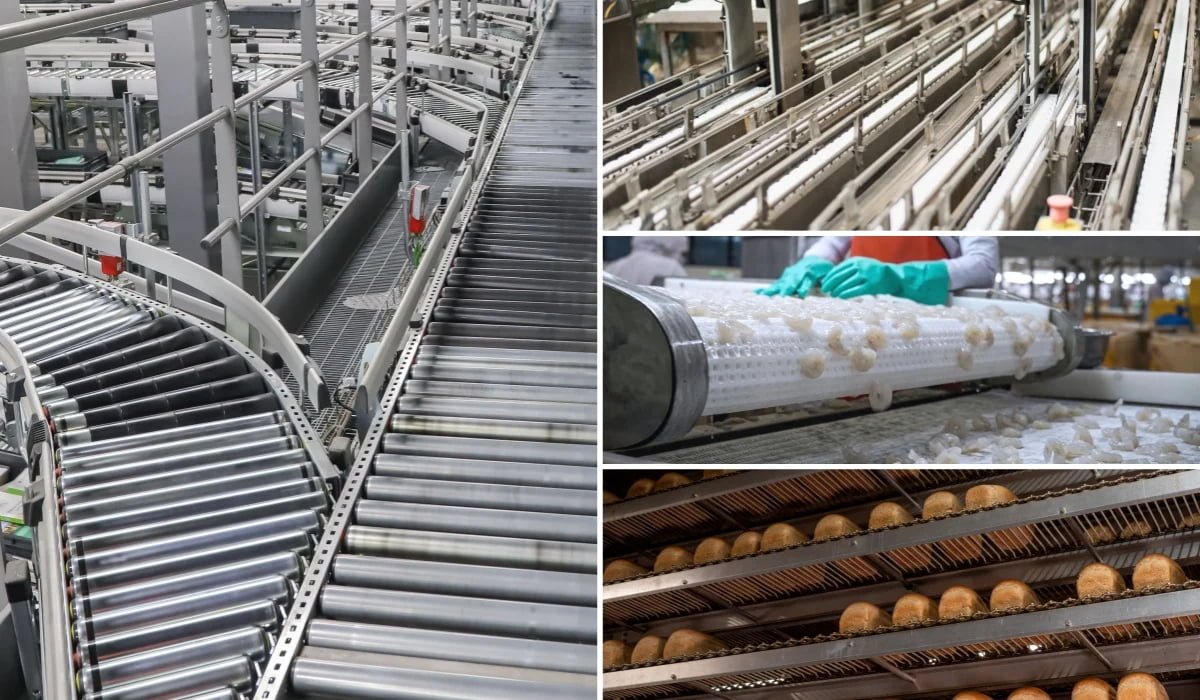
That single-line answer is a useful starting point, but it leaves out most of what makes a conveyor system real. The equipment types, belt materials, component choices, turning arrangements, and hygiene requirements all vary depending on what you are moving and where. The sections below walk through the full picture.
What Does a Conveyor System Look Like in a Food Packaging Line?
Most people picture a long belt when they think of a conveyor. A working food packaging line looks quite different — and considerably more connected.
A food packaging line conveyor system links multiple conveyors into a continuous flow: products travel from sorting or processing, through inspection and weighing, into accumulation or buffering, and then into primary and secondary packaging — each stage handed off cleanly to the next.
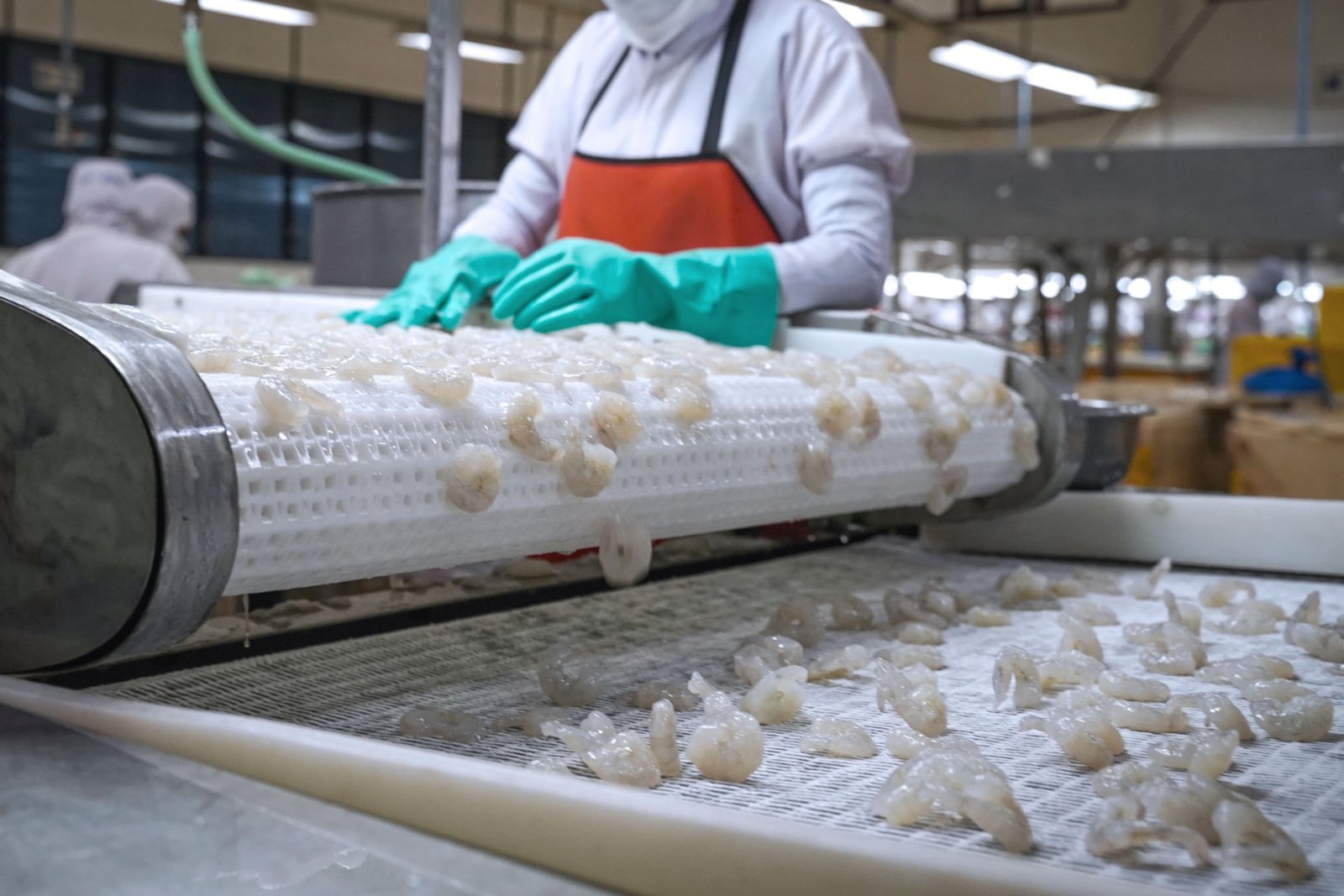
The equipment and components that make up this kind of system deserve a closer look, because the connections between them are where the real engineering decisions happen.
The Equipment Layer
A typical food packaging line might include several distinct conveyor sections:
- Infeed conveyor — moves products away from processing or sorting equipment and into the line
- Straight conveying sections — the primary transport runs, often using modular belts or chain plate belts depending on product type and hygiene requirement
- Turning or curved conveyors — redirect product flow to fit the plant layout without manual transfer
- Incline or decline sections — change product elevation between process stages
- Inspection and checkweigher sections — short, stable conveying surfaces that allow sensors, cameras, or scales to read products accurately
- Accumulation conveyors — buffer products when downstream packaging machines run at a different rate
- Transfer sections — hand off products from one conveyor to the next with minimum gap and minimum disturbance
No single one of these is "the conveyor system." Together, they form it.
The Component Layer
Each conveyor section is built from components — and those components determine how well the system performs and how easy it is to maintain. From my experience in manufacturing these parts, the key components in a food packaging line system typically include:
| Component | Role in the System |
|---|---|
| Modular belt or chain plate belt | Primary conveying surface; choice affects hygiene, drainage, product contact |
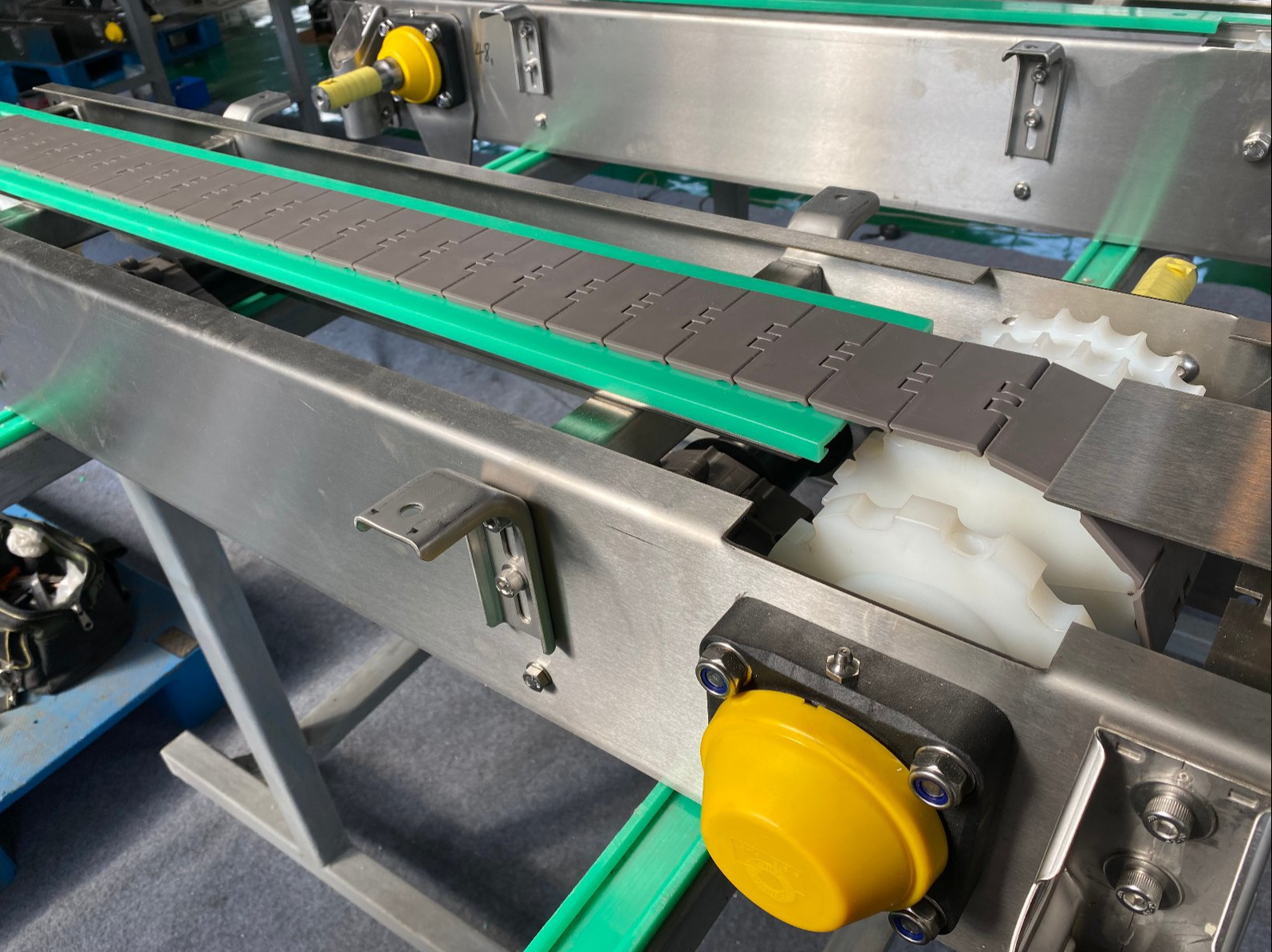
| Sprockets | Drive and guide the belt; must match belt pitch exactly |
| Guide rails and side guards | Keep products aligned and prevent falls between sections |
| Wear strips | Support the belt on the return side; reduce friction and extend belt life |
| Brackets and frames | Structural support; determine conveyor height and spacing |
| Drive units and tensioners | Provide motion; tension must be set and maintained correctly |
| Transfer plates or nose bars | Smooth the product gap at hand-off points between conveyors |
When a customer asks me about a specific component — a modular belt pitch, a sprocket bore size, a wear strip material — my first question is always about the system context. A component that works well in isolation may create problems at a transfer point or under a wash-down routine.
Why Component Matching Matters
A conveyor system is only as consistent as its weakest connection point. In a food packaging line, mismatched sprocket teeth and belt pitch cause premature wear. Wrong wear strip material creates excessive drag and heat. A poorly designed transfer nose bar creates product jams between sections.
From a manufacturing standpoint, the components that make up a conveyor system are not interchangeable commodities. They are engineered to work together — and when they don't, the system suffers at exactly the point where the sections meet.
How Does the Same Example Change Across Industries?
The food packaging line is a useful reference point, but applying that exact example to every industry would be misleading. The core structure — infeed, conveying, transfer, processing, outfeed — stays recognizable, but the details shift considerably.
Different industries place different demands on their conveyor systems: hygiene standards, product fragility, temperature exposure, moisture levels, and throughput speeds all influence which equipment and components are appropriate.
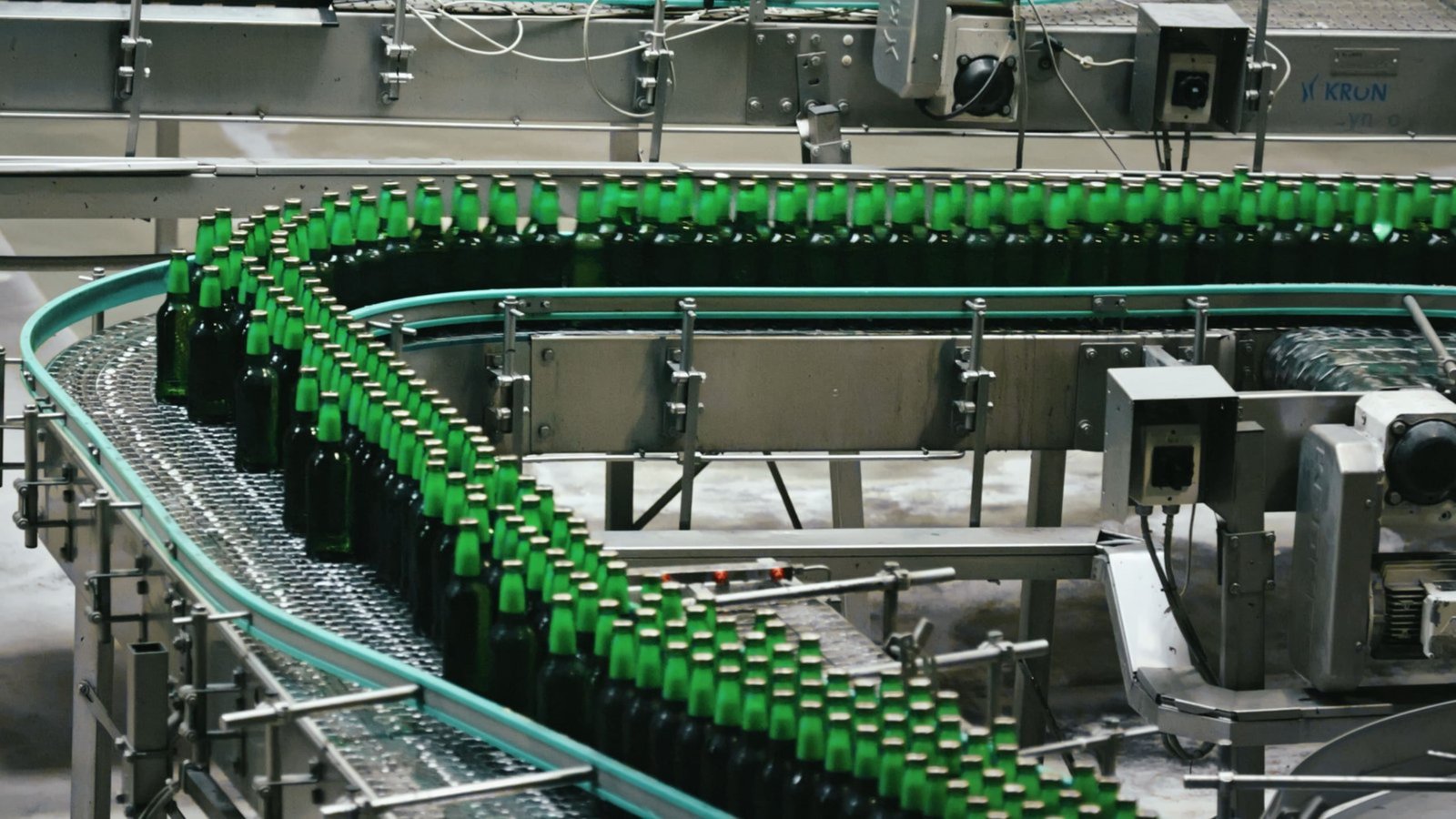
Here is how the same basic conveyor system concept looks when applied to several different production environments:
Beverage and Bottling Lines
In a beverage line, bottles or cans move at high speed through filling, capping, labeling, and case packing. The system often uses:
- Slat chain or table-top chain conveyors — handle upright containers with stability and predictable pitch
- Accumulation tables — large flat surfaces that buffer containers between machines running at different speeds
- Curved sections with side guides — redirect flow without toppling filled bottles
The hygiene requirement is significant because beverages involve liquid spillage and frequent cleaning2. Belt materials and frame designs need to support wash-down without trapping residue.
Bakery and Confectionery Lines
Baked goods are fragile and often irregular in shape. A bakery line conveyor system typically emphasizes:
- Gentle product handling — slower speeds, softer belt surfaces, minimal transfer gaps
- Heat resistance in oven or cooling sections — belt materials must tolerate temperature ranges that would degrade standard plastics
- Flat or perforated belt surfaces — allow airflow around products during cooling or proofing
I've seen bakery customers run into trouble when they specify components designed for food packaging without considering the temperature exposure. Oven conveyor belts are a different category.
Fruit and Vegetable Handling
Fresh produce handling requires:
- Open belt surfaces or mesh structures — allow soil, water, and debris to pass through
- Gentle incline sections — limit bruising and rolling on elevation changes
- Wash-down compatibility — all surfaces and components need to tolerate wet environments without corrosion or contamination risk
In fruit handling, the modular belt design — specifically the open area percentage — directly affects product quality. This is a case where the component choice connects to the commercial outcome.
Pharmaceutical Lines
Pharmaceutical conveyor systems operate under the strictest hygiene and traceability standards:
- Smooth, cleanable surfaces with no hidden cavities or crevices
- Stainless steel frames and food-grade or pharmaceutical-grade belt materials
- Controlled speed and gentle transfers — tablets, capsules, or vials are fragile and expensive
- Documentation requirements — buyers in this industry often need material declarations and quality records for components
The pharmaceutical example shows clearly that "a conveyor system" means something different depending on the regulatory and product environment.
What Makes a Conveyor Arrangement a "System"?
This question comes up in practical purchasing conversations more often than you might expect. A buyer might be replacing a single belt conveyor section, but the supplier keeps referring to "system compatibility." Understanding the distinction helps.
A conveyor arrangement becomes a system when the individual sections are designed and connected to manage product flow continuously — not just to transport products across a fixed distance in isolation.
The difference has real implications for component selection and supplier conversations.
Single Conveyor vs. Connected System
| Characteristic | Single Conveyor | Connected System |
|---|---|---|
| Scope | One section, one function | Multiple sections, linked flow |
| Transfer points | None or minimal | Multiple, each requiring attention |
| Component matching | Within one machine | Across sections and machines |
| Speed coordination | Not required | Often critical |
| Maintenance complexity | Lower | Higher — failure in one section affects others |
Where the System Logic Appears in Practice
When I review component requests from customers, the system perspective shows up in specific ways:
- Belt pitch must match across transfer points. If two connected belt conveyors use different pitch dimensions, product hand-off is rough and the gap is uncontrollable.
- Sprocket centers and shaft positions affect frame spacing. A replacement sprocket that changes the center distance may shift the conveyor height enough to misalign with an adjacent machine.
- Wear strip material choice affects belt tension and drive load. On a long system, cumulative friction from undersized wear strips can overload a standard drive unit.
- Side guard height and position must account for product behavior at curves. Products that behave predictably on a straight run can drift or tip at a curved section with incorrect guide rail geometry.
None of these are abstract engineering concerns. They are the kinds of issues that appear in production when components are selected without system context.
Frequently Asked Questions
What is the most common example of a conveyor system used in industry?
A food packaging line is one of the most widely recognized examples. It connects multiple conveyor sections — infeed, straight runs, turning sections, inspection, and packaging — using matched components like modular belts, sprockets, guide rails, and transfer plates. This example appears across food, beverage, bakery, and consumer goods production.
Is a single belt conveyor considered a conveyor system?
A single belt conveyor is a component of a conveyor system. The term "system" typically refers to the connected arrangement of multiple conveyors and components that manage continuous product flow across a production process. A standalone belt conveyor can be called a conveyor machine or a conveyor section, but the system includes all the linked stages.
What components are part of a conveyor system?
The main components include the conveying surface (modular belt, chain plate, or flat belt), sprockets, drive units, guide rails, side guards, wear strips, brackets, frames, transfer plates, and tensioning assemblies. The specific components depend on the industry, product type, conveyor design, and hygiene requirements of the application.
How do I know which conveyor system example is relevant to my industry?
The most relevant example matches your product type, process flow, hygiene standard, and plant layout. A beverage line, bakery line, and pharmaceutical line all use conveyor systems, but they differ in belt surface, material grade, cleaning method, and transfer design. Starting with your product and process requirements — rather than a generic example — leads to more accurate component selection.
Why does component matching matter in a conveyor system?
Components that are mismatched in pitch, material, or geometry create wear, jams, and inconsistent product flow — often at transfer points between sections. A conveyor system performs consistently when components are selected to work together across the full line, not just within a single conveyor section.
Conclusion
A conveyor system example is most useful when it shows how equipment and components connect across a production process — not just one belt moving products in a straight line. A food packaging line is a practical reference: products travel through infeed, conveying, inspection, accumulation, and packaging sections, linked by matched belts, sprockets, guide rails, wear strips, and transfer points. The same concept applies across beverage, bakery, fruit handling, and pharmaceutical lines, but the components, materials, and hygiene requirements change with the industry and product.
If you are evaluating components for a conveyor system or working through a selection question, Molytech's engineering team is ready to help. We manufacture conveyor components in-house and work directly with your application requirements to support accurate selection and consistent supply. Contact us to discuss your production line and find the right components for your system.
<!--[googlesitekit-end-of-content]-->
"Conveyor system", https://en.wikipedia.org/wiki/Conveyor_system. A technical reference defines a conveyor system as an integrated material-handling arrangement for moving goods through a process, supporting the distinction between a single conveyor section and a connected production-line system. Evidence role: definition; source type: encyclopedia. Supports: A neutral reference should define conveyor systems as integrated material-handling equipment used to move products through linked operations.. Scope note: The source may provide a general industrial definition rather than a food-packaging-specific definition. ↩
"Chapter 7: Equipment, Tools, Buildings, and Sanitation", https://www.fda.gov/media/117425/download. Food safety regulations and hygiene guidance require food-contact and processing equipment to be cleaned and maintained to prevent contamination, providing support for the need for frequent cleaning in beverage environments where liquid residues are common. Evidence role: general_support; source type: government. Supports: A food safety regulation or guidance document should support that food and beverage processing equipment must be cleaned and maintained to prevent contamination from residues.. Scope note: The source supports sanitation requirements generally and may not specify conveyor cleaning frequency for every beverage line. ↩