

If you work with conveyor systems, you already know that "conveyor chain" covers a wide range of products. Picking the wrong one for your setup is a real headache.
Conveyor chains are generally grouped by material, structure, and application. The main types include plastic flat top chains, metal flat top chains, roller chains, engineering chains, and special-purpose chains such as side-flexing chains and attachment chains. Each type fits different conveyor setups and product handling needs.
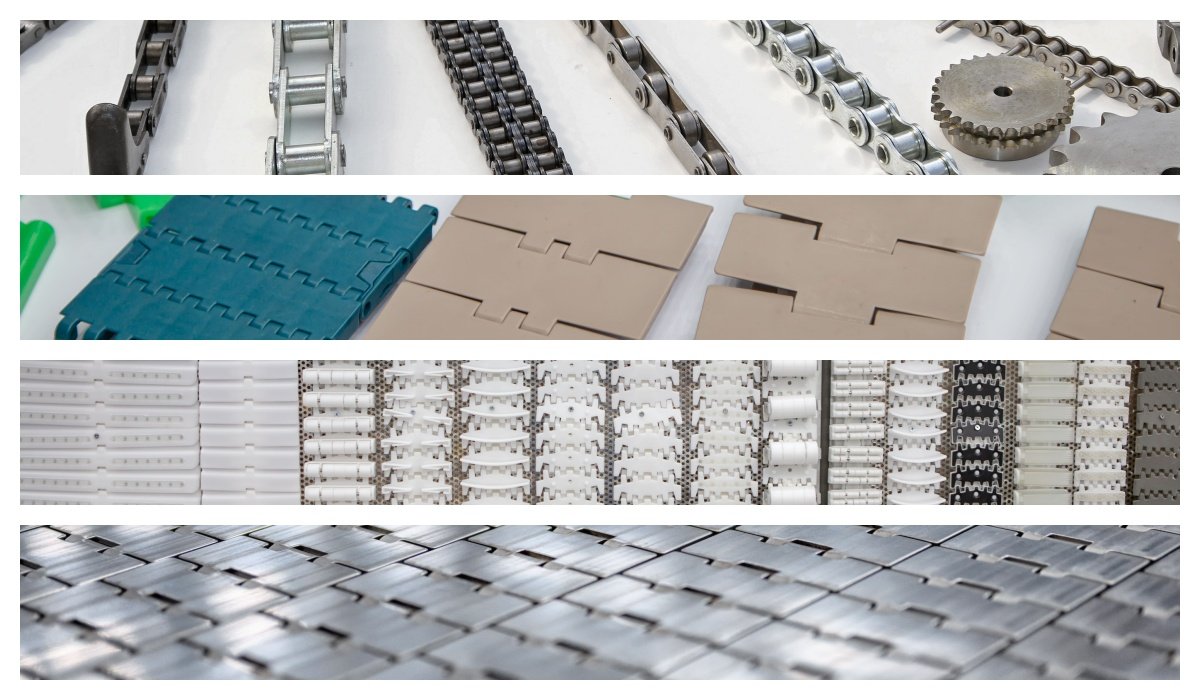
At Molytech, we handle replacement inquiries regularly. Customers often come to us with an old chain sample, a partial model number, or a photo of their existing conveyor. That tells us a lot — not just about the chain, but also about the sprockets, guide rails, and conveyor frame it works with. Chain identification in real situations is rarely just about the chain itself. It also involves the parts around it.
This article gives you a clear overview of the main conveyor chain types, what they are typically used for, and which components they work with.
What Are Plastic Flat Top Chains, and Where Are They Used?
A lot of people ask us about plastic chains first, because they show up in so many industries. It makes sense — plastic chains are lightweight, easy to clean, and work well in wet or humid environments.
Plastic flat top chains, also called plastic slat chains, are made from engineering plastics such as acetal (POM) or polyethylene (PE). They are widely used in food processing, beverage, bakery, and pharmaceutical applications where hygiene and washdown resistance are important. They run on plastic or stainless steel wear strips and work with plastic or stainless steel sprockets.
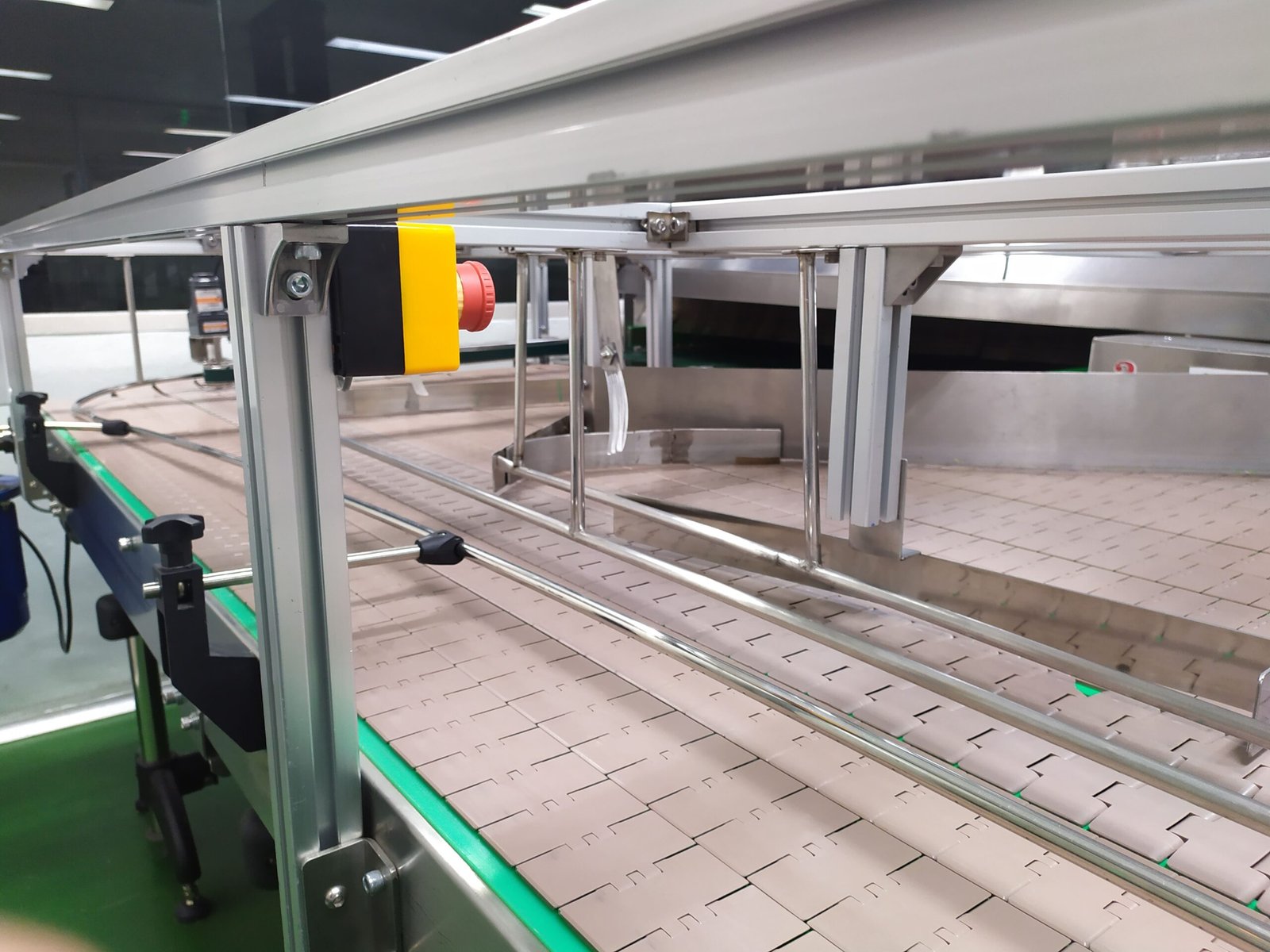
Plastic flat top chains come in a range of widths and pitches. The flat top surface makes them suitable for carrying bottles, cans, pouches, trays, and similar products. Some versions have a slightly textured or perforated surface depending on the application.
One thing worth noting from our replacement experience: plastic chains are often sold as part of a system. The chain pitch, sprocket tooth count, and guide rail spacing all need to match. When a customer sends us a sample, we look at the chain and the existing sprockets together. Here is a simple breakdown of the key matching points:
| Component | What to Match |
|---|---|
| Sprocket | Tooth count, pitch, bore size, shaft diameter |
| Wear strip | Width, material, mounting method |
| Guide rail | Width and height relative to chain profile |
| Conveyor frame | Chain width, end drive or center drive layout |
Plastic chain materials also vary. POM is harder and more dimensionally stable. PE is softer and works better in certain cold or wet conditions1. The specific grade and compliance information — such as FDA or EU food contact suitability — should always be verified directly with the manufacturer's documentation before use in regulated environments2.
What Are Metal Flat Top Chains, and When Do You Use Them Instead?
Metal flat top chains look similar to plastic flat top chains in function, but they are built for heavier loads and higher temperatures. They are a common choice in canning lines, glass bottle handling, and general industrial conveyor systems.
Metal flat top chains are typically made from carbon steel or stainless steel. They handle heavier products and higher operating temperatures compared to plastic chains. Stainless steel versions are used where corrosion resistance or washdown conditions are required3. They run with steel sprockets and usually need a lubrication system or special wear strips depending on the setup.
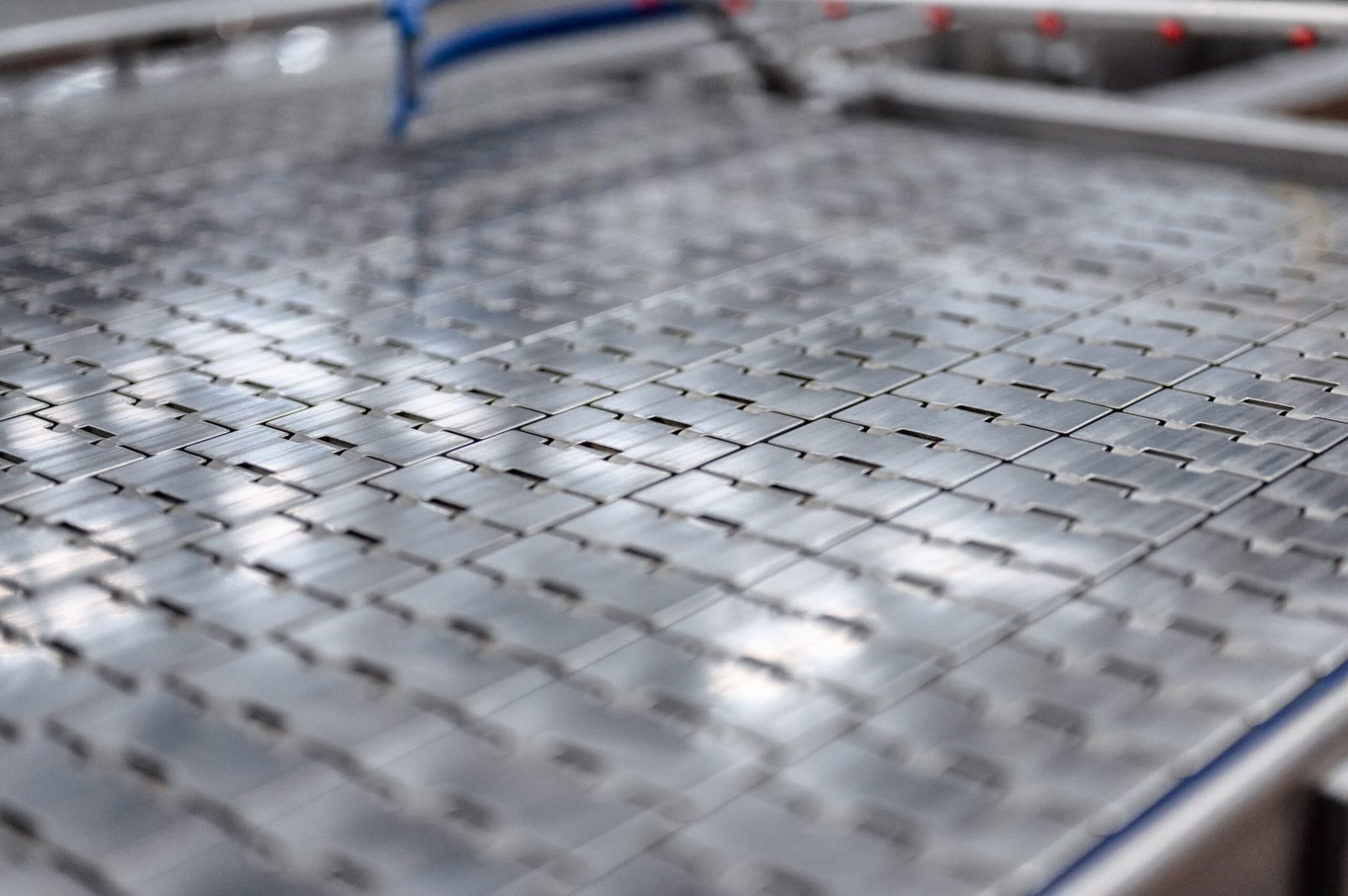
The construction of metal flat top chains is similar to plastic versions in terms of the flat carrying surface and hinge pin design. The differences show up in load capacity, weight, and temperature range. For exact load ratings and temperature limits, always refer to the manufacturer's technical data sheet.
Here is a general comparison between plastic and metal flat top chains to help you understand where each type is typically applied:
| Feature | Plastic Flat Top Chain | Metal Flat Top Chain |
|---|---|---|
| Typical Material | POM, PE, PP | Carbon steel, stainless steel |
| Weight | Light | Heavier |
| Corrosion Resistance | Good (material dependent) | Stainless versions very good |
| Temperature Range | Lower (check spec) | Higher (check spec) |
| Lubrication | Usually not required | Sometimes required |
| Typical Use | Food, beverage, pharma | Canning, glass, heavy industry |
In replacement situations, customers sometimes switch from carbon steel to stainless steel versions for the same chain width and pitch. This works as long as the sprocket and frame are compatible with the new chain's dimensions and weight. We always recommend checking the full system before finalizing a replacement order.
What Is a Roller Chain, and How Does It Fit Into Conveyor Systems?
Roller chains are probably the most widely recognized chain type in industrial settings. They are used in drive systems, power transmission, and certain conveyor applications.
Roller chains consist of inner links, outer links, rollers, and pins4. They transmit power between sprockets and are used in conveyor drives as well as direct product-carrying applications. They follow standardized pitch dimensions, which makes replacement and cross-referencing relatively straightforward. Common materials include carbon steel and stainless steel.
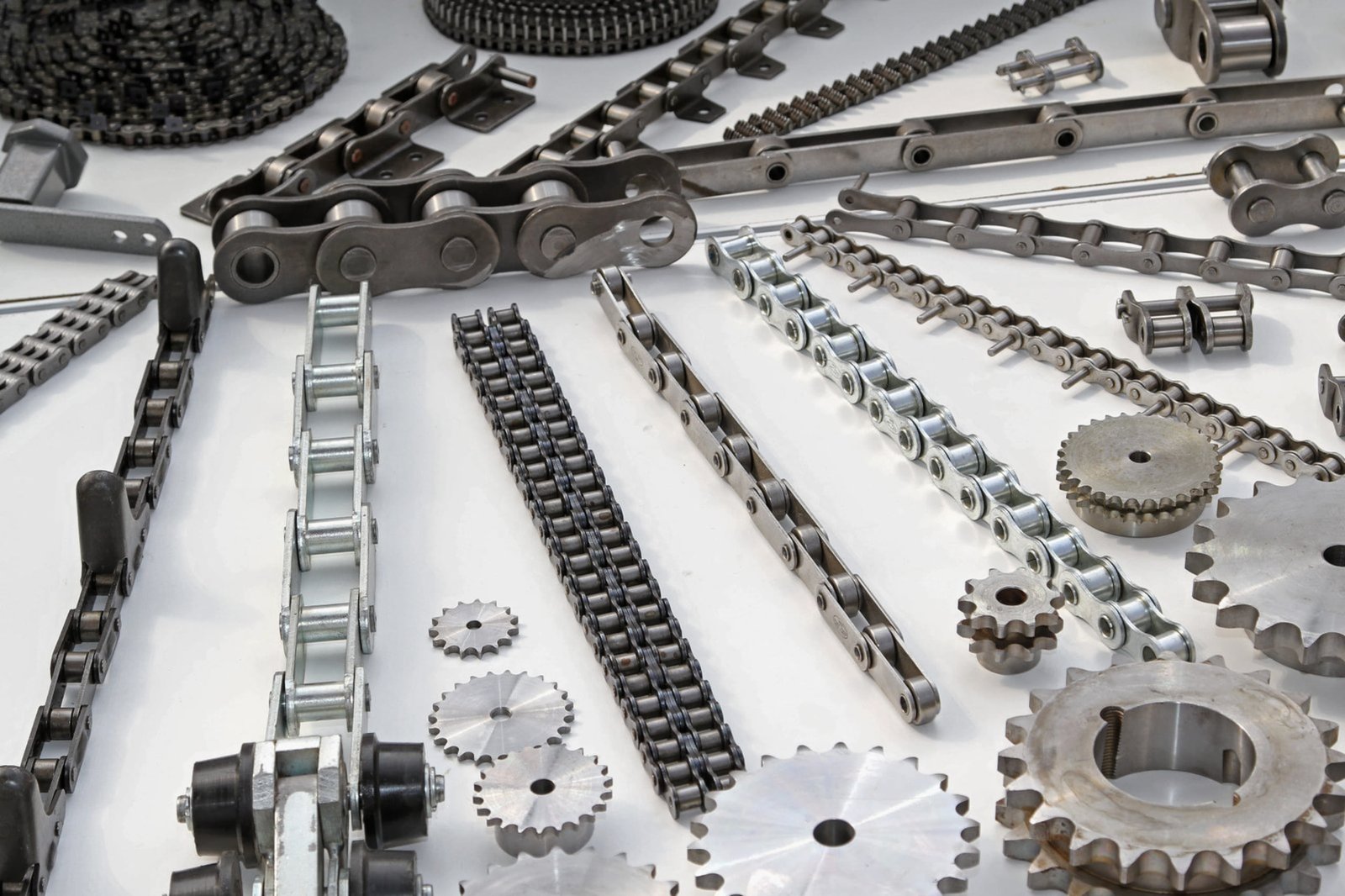
In conveyor systems, roller chains serve two main roles. The first is as drive chains — they transfer power from the motor or gearbox to the conveyor. The second is as the conveyor chain itself, where the chain carries the product directly or supports a platform or crossbar that carries the product.
Roller chain pitch is standardized, which helps with replacement. However, the sprocket must also match the chain's pitch and roller diameter exactly. Here are the key dimensions to confirm when replacing a roller chain:
| Dimension | Why It Matters |
|---|---|
| Pitch | Must match sprocket and existing chain |
| Roller diameter | Affects how chain seats on sprocket |
| Inner width | Must clear sprocket tooth width |
| Chain length (number of links) | Affects overall conveyor or drive length |
| Attachment type | If the chain carries a product, attachment holes or plates must match the original |
Roller chains can also come with attachments — extended pins, bent plates, or cleats — for carrying products directly. These are sometimes called attachment chains and are covered in the next section.
What Are Engineering Chains and Heavy-Duty Conveyor Chains?
When standard roller chains are not strong enough, engineering chains are the answer. These are larger, heavier chains designed for demanding applications.
Engineering chains, also called heavy-duty conveyor chains, are designed for high loads, large pitches, and demanding environments. They are commonly used in automotive, foundry, agricultural, and bulk material handling applications. These chains are typically made from alloy steel or carbon steel and require matched heavy-duty sprockets.
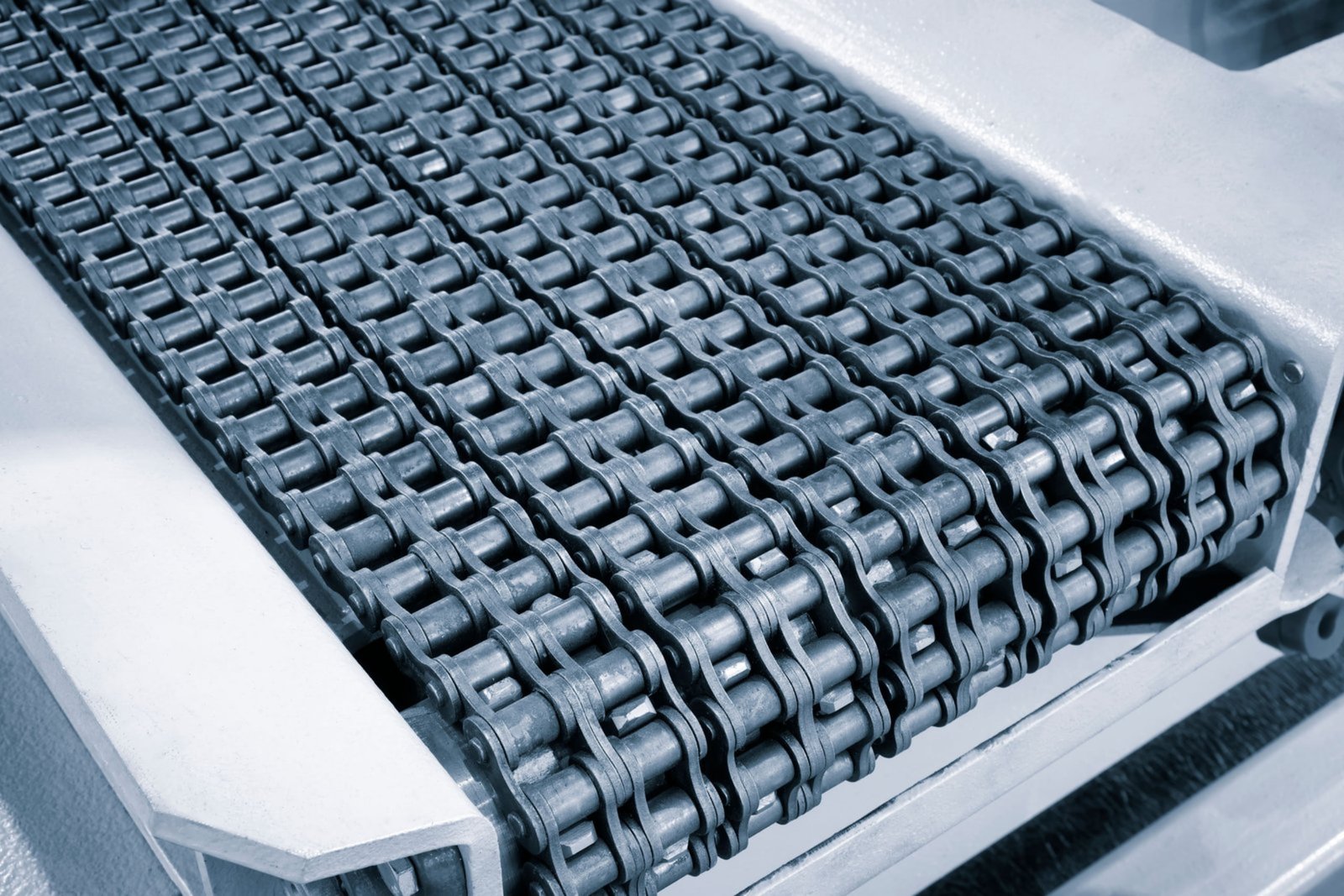
Engineering chains look different from standard roller chains. They tend to have larger pitch sizes, wider link plates, and stronger pins. Some versions have special rollers or bushings for specific wear conditions.
In my experience handling replacement inquiries for these chains, the key challenge is that engineering chains are often custom to the original equipment. The pitch may be non-standard, and the sprocket may be machined specifically for that chain. This is why customers often send us a full sample or a detailed drawing.
Here is an overview of the typical factors involved when identifying an engineering chain for replacement:
| Factor | Detail |
|---|---|
| Pitch | Often larger than standard, sometimes non-standard |
| Link plate design | Varies widely by manufacturer and application |
| Pin diameter and length | Must match original for sprocket compatibility |
| Material | Steel grade depends on load and environment |
| Lubrication requirement | Most heavy-duty chains require regular lubrication |
| Matching sprocket | Usually requires the same manufacturer's sprocket or a custom-made one |
For exact load ratings, speed limits, and material certifications for engineering chains, always request the manufacturer's datasheet. This is especially important in high-load applications.
What Are Special-Purpose Chains Like Side-Flexing and Attachment Chains?
Not all conveyors run in a straight line, and not all products are carried the same way. Special-purpose chains solve specific handling problems that standard chains cannot.
Special-purpose conveyor chains include side-flexing chains, gripping chains, and attachment chains. Side-flexing chains allow the conveyor to curve horizontally without a separate transfer unit. Gripping chains hold products on inclined or declined conveyors. Attachment chains carry products using cleats, brackets, or extended pins fixed to the chain links.
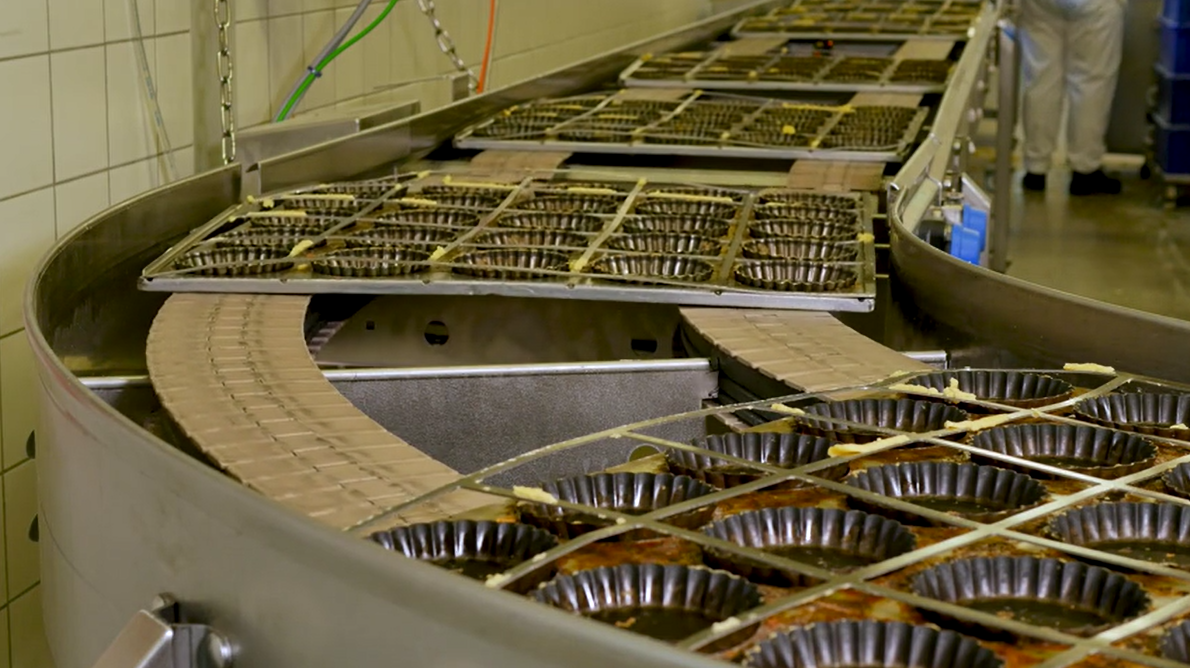
Each of these chain types solves a specific problem in a conveyor layout:
Side-Flexing Chains
Side-flexing chains are made from plastic and are designed to navigate curves. The chain links are shaped to allow lateral movement while maintaining a flat carrying surface. They are common in bottling lines, packaging lines, and any layout where floor space requires curves.
The guide rails for side-flexing chains are critical. The inner and outer guide rails control the chain's path through the curve. These need to be designed and installed correctly for the chain to run smoothly.
Attachment Chains
Attachment chains are standard roller chains or plate chains with additional components fixed to them. These attachments can be cleats for incline conveyors, side plates for product guidance, or extended pins for holding items. The attachment type must match the product and conveyor design.
Gripping Chains
Gripping chains are used to hold products between two parallel chains, typically on inclined sections. The chain surface or attached gripper material contacts the product directly. The grip force and surface material depend on the product shape and weight.
Here is a quick summary of these special chain types:
| Chain Type | Main Feature | Typical Application |
|---|---|---|
| Side-flexing chain | Curves horizontally | Bottling, packaging lines |
| Attachment chain | Cleats, plates, pins on links | Incline conveyors, sorting |
| Gripping chain | Holds products between two chains | Inclined handling of bottles or cans |
How Do You Identify the Right Chain Type for a Replacement?
In real replacement situations, customers rarely walk in with a perfect model number. Most of the time, they have a worn sample, a partial label, or just their existing chain in hand.
Identifying the right replacement conveyor chain involves looking at the chain itself — pitch, width, material, and link design — and also checking the matching components: sprockets, wear strips, guide rails, and conveyor frame dimensions. The chain and its surrounding parts must all be compatible for the replacement to work correctly.
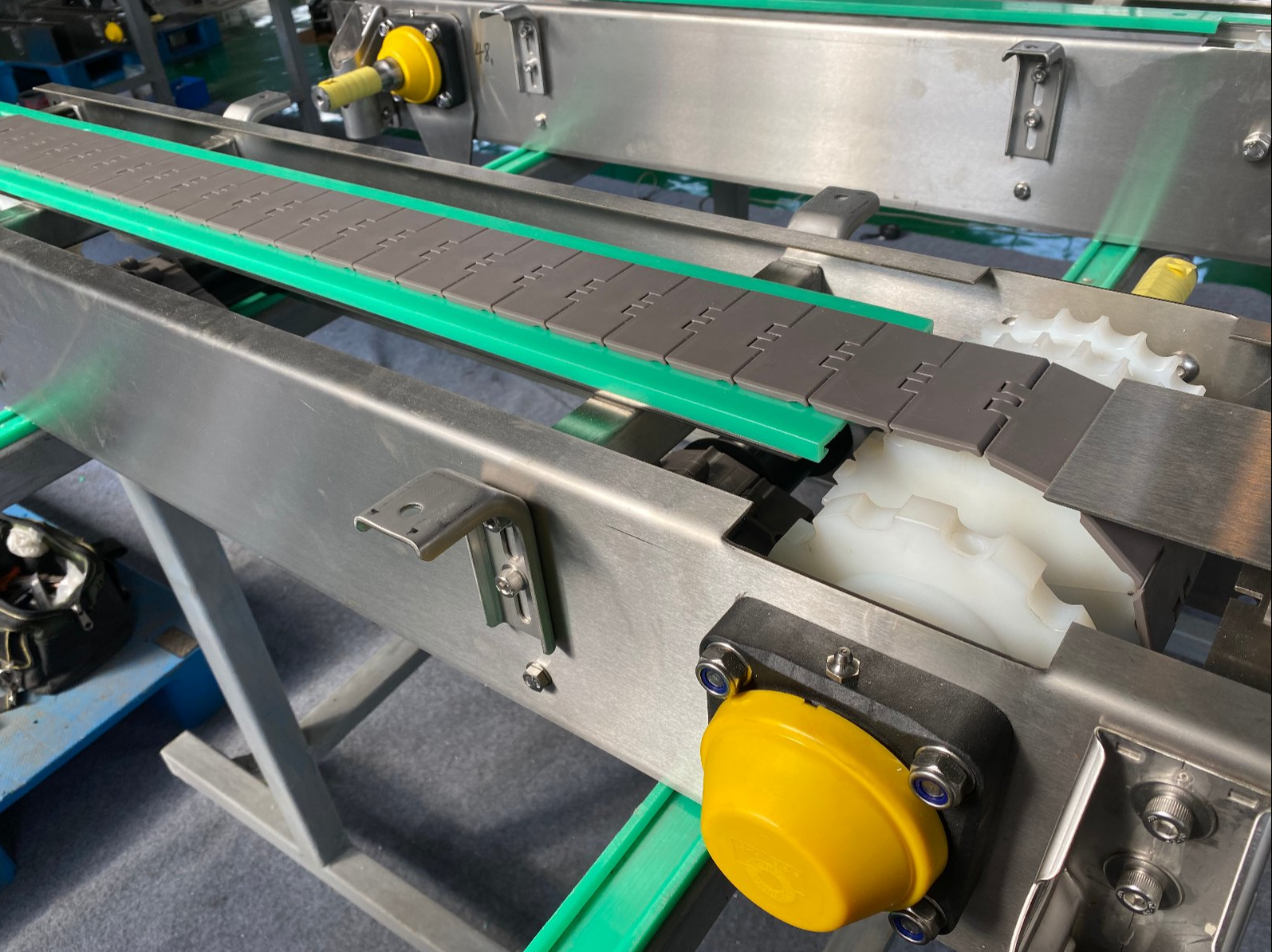
At Molytech, we work through replacement inquiries by collecting as much information as possible about both the chain and the existing system. Here is the kind of information that helps narrow down the right chain quickly:
What to Check on the Chain
- Pitch (distance between link pins)
- Chain width (inner width and overall width)
- Link material and surface type
- Attachment type, if any
- Any visible markings or partial model numbers
What to Check on the Surrounding Components
- Sprocket: tooth count, pitch, bore size
- Wear strip: width, material, mounting style
- Guide rail: spacing and height
- Conveyor frame: overall width, drive position
| Information Source | What It Tells You |
|---|---|
| Old chain sample | Pitch, width, material, attachment style |
| Sprocket | Confirms chain pitch and width |
| Wear strip | Confirms chain width and underside profile |
| Conveyor drawing | Gives overall system context |
| Original equipment manual | Sometimes includes chain model or part number |
When a chain model is confirmed, the replacement is straightforward. When it is not, working through the dimensions of both the chain and the matched components gives us enough to identify a compatible replacement.
Conclusion
Conveyor chains come in several types — plastic flat top, metal flat top, roller chains, engineering chains, and special-purpose chains. Each fits different applications, loads, and system configurations. The right choice depends on your specific setup, not a single universal answer.
"Polyoxymethylene - Wikipedia", https://en.wikipedia.org/wiki/Polyoxymethylene. Comparative polymer property databases document that polyoxymethylene (POM) exhibits higher Shore hardness and lower coefficient of thermal expansion than polyethylene (PE), while high-density polyethylene retains greater impact toughness at sub-zero temperatures. Evidence role: mechanism; source type: research. Supports: That POM and PE differ measurably in hardness, dimensional stability, and low-temperature performance, supporting their selection for different operating environments. Scope note: Specific property values vary by grade, filler content, and processing method; published comparisons reflect general material families rather than the specific formulations used by individual conveyor chain manufacturers. ↩
"Inventory of Food Contact Substances Listed in 21 CFR - FDA", https://www.fda.gov/food/packaging-food-contact-substances-fcs/inventory-food-contact-substances-listed-21-cfr. EU Regulation No 10/2011 on plastic materials and articles intended to contact food establishes a positive list of authorized substances and requires that manufacturers provide declarations of compliance for food-contact plastic components. Evidence role: general_support; source type: government. Supports: That specific regulatory frameworks govern the use of plastic materials in food contact applications, requiring documented compliance. Scope note: Regulatory requirements vary by jurisdiction; EU Regulation 10/2011 applies within the European Union and does not substitute for FDA requirements under 21 CFR in the United States. ↩
"Study of the Corrosion Behavior of Stainless Steel in Food Industry", https://pmc.ncbi.nlm.nih.gov/articles/PMC11012613/. The passive chromium oxide layer formed on stainless steel surfaces provides resistance to oxidation and many corrosive media; grades such as AISI 316 with molybdenum additions offer enhanced resistance to chloride-containing cleaning agents commonly used in food processing washdown procedures. Evidence role: mechanism; source type: institution. Supports: That stainless steel alloys resist corrosion in washdown and chemically aggressive environments due to their passive oxide layer, making them suitable for food processing and industrial cleaning applications. Scope note: Corrosion resistance varies significantly by stainless steel grade and the specific chemical environment; not all stainless steel grades perform equally under all washdown conditions, and material selection should be confirmed against the specific cleaning agents and concentrations used. ↩
"Roller chain - Wikipedia", https://en.wikipedia.org/wiki/Roller_chain. ISO 606 specifies the characteristics of short-pitch precision roller chains, defining the geometry and nomenclature of chain components including inner plates, outer plates, rollers, bushes, and pins. Evidence role: definition; source type: institution. Supports: That roller chains are standardized mechanical components defined by their constituent parts including inner links, outer links, rollers, and pins. Scope note: ISO 606 covers short-pitch precision roller chains specifically; engineering and heavy-duty chains may fall under different standards with varying component definitions. ↩