

Production lines face constant bottlenecks. Manual handling is inconsistent and slows things down.1 Conveyors can make your material flow continuous, stable, and much more efficient.2
The true value of conveying equipment is creating a continuous, stable, and controllable material flow. This connects production steps, reduces manual inconsistencies, and improves overall efficiency when matched correctly to the application, especially in food, beverage, and pharmaceutical industries.
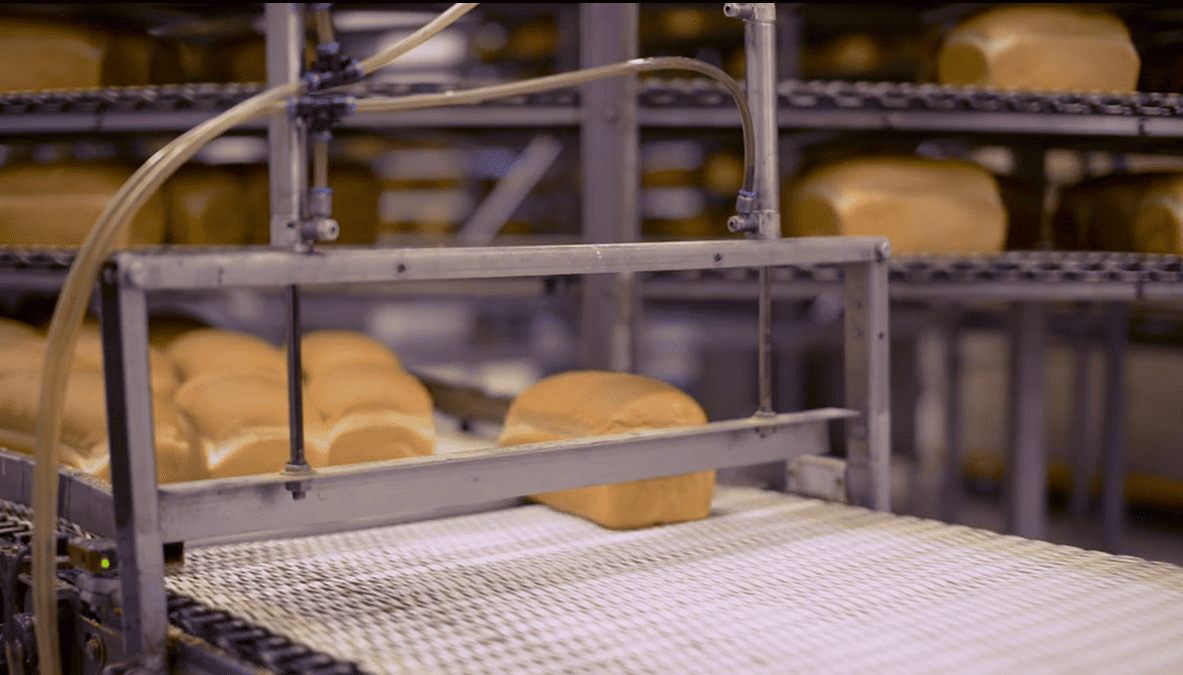
In my 10+ years of experience, I’ve seen many companies look to conveyors for simple answers, like replacing a person or moving a box. But the real advantages are much deeper. A conveyor is not just a machine; it's the circulatory system of your production line. When it's designed and chosen well, it brings a rhythm and predictability that manual labor can never match. However, when it's the wrong choice, it can become the source of new and more frustrating problems. The key is understanding that the benefits are not automatic. They are earned through careful thought about how the equipment fits your specific process. Let's break down what those real advantages are and, more importantly, how to actually achieve them.
Do conveyors automatically improve production flow?
You bought a conveyor hoping for a smoother process. But things are still clunky. A conveyor isn't a magic wand; it must be the right one for the job.
No, conveyors do not automatically improve flow. The advantage is only realized when the equipment is correctly matched to your material's properties, factory layout, required speed, and operating conditions.3 The wrong conveyor can create new problems instead of solving old ones.
 "Conveyor Improving Production Flow")
From my experience helping clients select equipment, the biggest mistake is thinking any conveyor will do. A smooth production flow comes from a perfect match between the conveyor and the task. Think about these factors. What are you moving? Heavy boxes need a sturdy roller or belt conveyor. Small, delicate food items might need a modular belt with special flights. How is your factory laid out? A curved conveyor might be needed to navigate around existing machinery, saving space and creating a more efficient path. What about speed? The conveyor must be able to match the output of one machine and the input of the next. If it's too fast or too slow, you just create new bottlenecks.
Here is a simple way I help customers think about it:
| Factor | Questions to Ask | Why It Matters |
|---|---|---|
| Product | Is it heavy or light? Solid or liquid? Packaged or raw? | The product's nature dictates the conveyor type (belt, chain, modular) and material (steel, plastic). |
| Layout | Is the path straight, curved, or inclined? Is space limited? | The conveyor must physically fit into your workspace and connect processes logically. |
| Speed | How many items per minute do you need to move? | The speed must be controllable to sync with other machines and prevent pile-ups or gaps. |
| Environment | Is it wet, dry, hot, or cold? Does it need to be sanitary? | The conveyor's materials and design must withstand the operating conditions to ensure a long life. |
Getting these details right is what turns a simple machine into a powerful tool for improving flow.
Is the main benefit of conveyors just saving labor?
Thinking of conveyors just to cut labor costs? That's a common starting point, but it misses the bigger picture. The real value is in coordination, not just fewer hands.
While conveyors do reduce manual handling, their deeper value is creating a predictable production rhythm. They eliminate the variability of human pace4, leading to smoother coordination between machines and workstations. This consistency is often more valuable than labor savings alone.
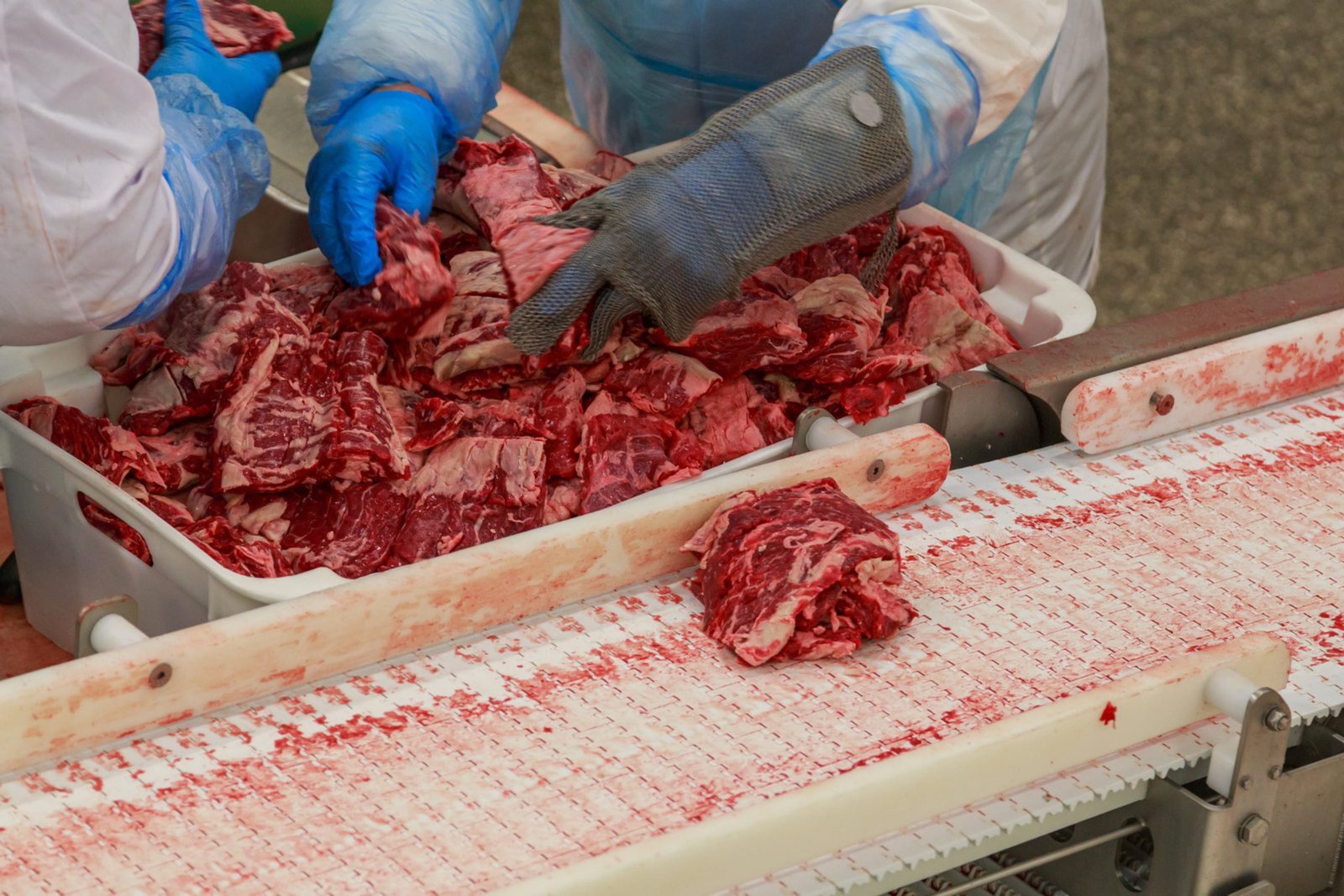
Many customers first call me about saving labor. And yes, a conveyor can replace repetitive, strenuous tasks. But the conversation quickly shifts when we talk about consistency. A person might move a box in 5 seconds one time, and 8 seconds the next. They get tired, take breaks, or get distracted. A conveyor moves the box in 5 seconds every single time. This predictability is incredibly powerful. It means the machine downstream—a wrapper, a labeler, a packer—gets a steady, predictable supply of products. This allows that machine to run at its optimal, most efficient speed.5 You move from a "batch and wait" system, where piles of products build up, to a smooth, continuous flow. The true saving isn't just one person's salary; it's the increased output and efficiency of your entire line.
Here’s a comparison of the impact:
| Aspect | Manual Handling | Conveyor System |
|---|---|---|
| Pacing | Inconsistent, varies by person and time of day. | Consistent, mechanical, and predictable. |
| Coordination | Creates buffers and backlogs between steps. | Enables smooth, "just-in-time" flow between machines. |
| Workload | Can be physically demanding and lead to injuries. | Reduces strain and frees up employees for higher-value tasks. |
| Focus | On reducing labor headcount. | On maximizing the efficiency of the entire production line. |
The advantage is less about replacing people and more about letting your machines work together perfectly.
Are conveyors always cleaner for food and pharma production?
Your food or pharmaceutical products need a perfectly clean journey. But are all conveyors hygienic? A poorly chosen one can introduce contamination risks instead of preventing them.
Not all conveyors are suitable for sanitary applications. To gain the advantage of cleaner handling, the conveyor must be specifically designed for it. This means using food-grade materials, having an open structure for easy cleaning, and resisting harsh washdown chemicals.
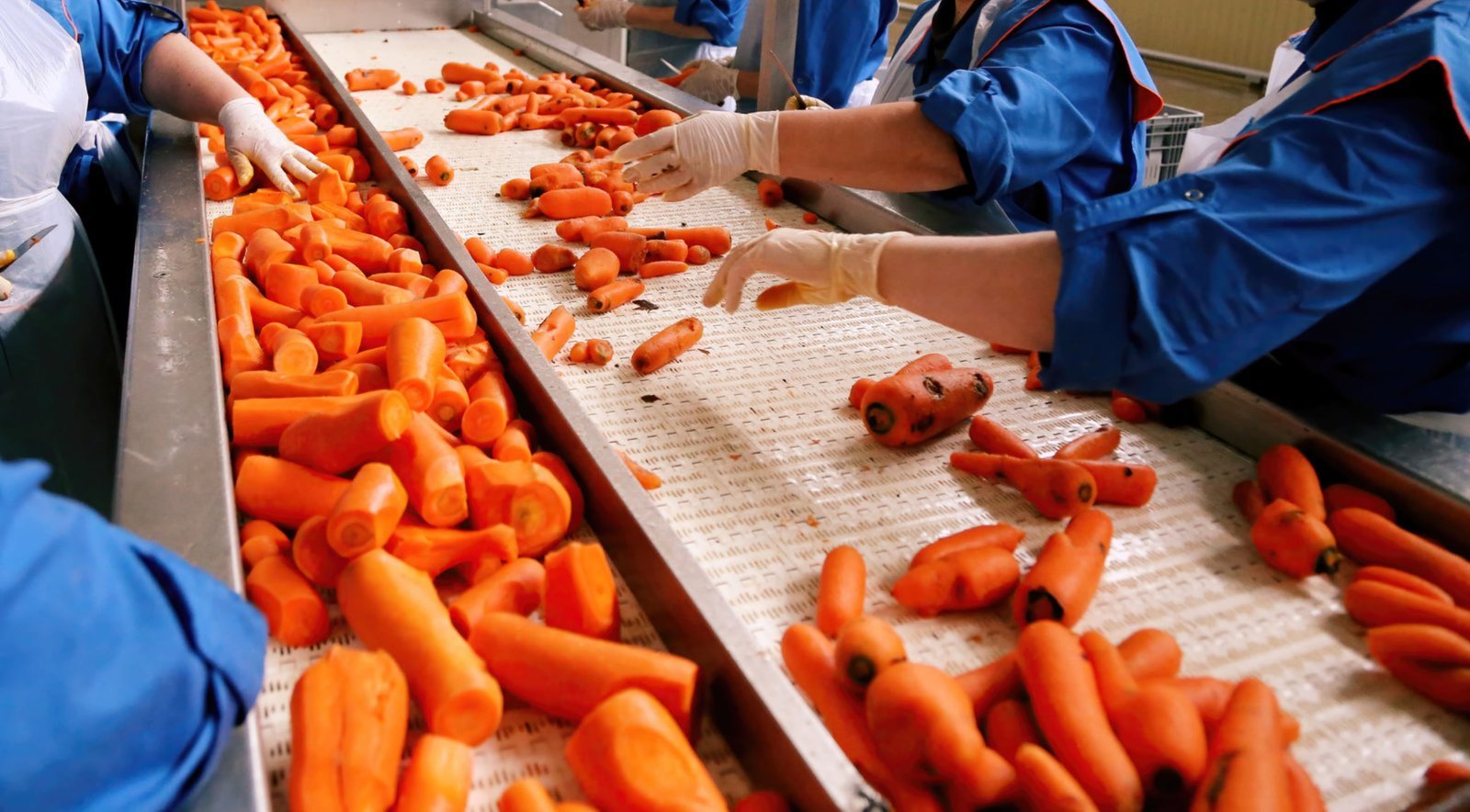
In the food, beverage, and pharmaceutical industries, hygiene is everything. A common question I get is whether a conveyor will help meet cleanliness standards. The answer is: only if it's the right one. A standard industrial conveyor can be a nightmare for hygiene. It can have hidden crevices where bacteria grow6, materials that can't be sanitized, and lubricants that could contaminate products. To get the hygiene advantage, you need to look for specific features. The frame should be stainless steel and have an open design, with no hollow tubes where water can get trapped.7 The belt itself is critical. Plastic modular belts are often used because they can be made from FDA-compliant materials and their open-hinge design makes them easier to clean. All components, from the wear strips to the guide rails, must be made from materials that are approved for food contact8 and can handle the daily washdowns with cleaning agents.
Consider this checklist for a hygienic conveyor:
- Materials: Are the belt, frame, and components made from stainless steel and food-grade plastics?
- Design: Is the frame open and free of hollow spots? Are there minimal flat surfaces where water can pool?
- Cleanability: Can the belt be easily lifted or removed for cleaning underneath? Can it withstand high-pressure washing?
- Components: Are the bearings, motors, and other parts sealed and protected from water and cleaning chemicals?
Choosing correctly means a safer product and easier compliance with hygiene regulations.
Does the value of a conveyor end after installation?
The new conveyor is installed and running smoothly. The job is done, right? Not quite. Its long-term value depends on what happens next, especially when parts wear out.
No, a conveyor's true long-term value depends on its reliability and maintainability. This is directly tied to the quality and availability of its components, like belts, chains, sprockets, and wear strips. Reliable parts mean less downtime and sustained performance.
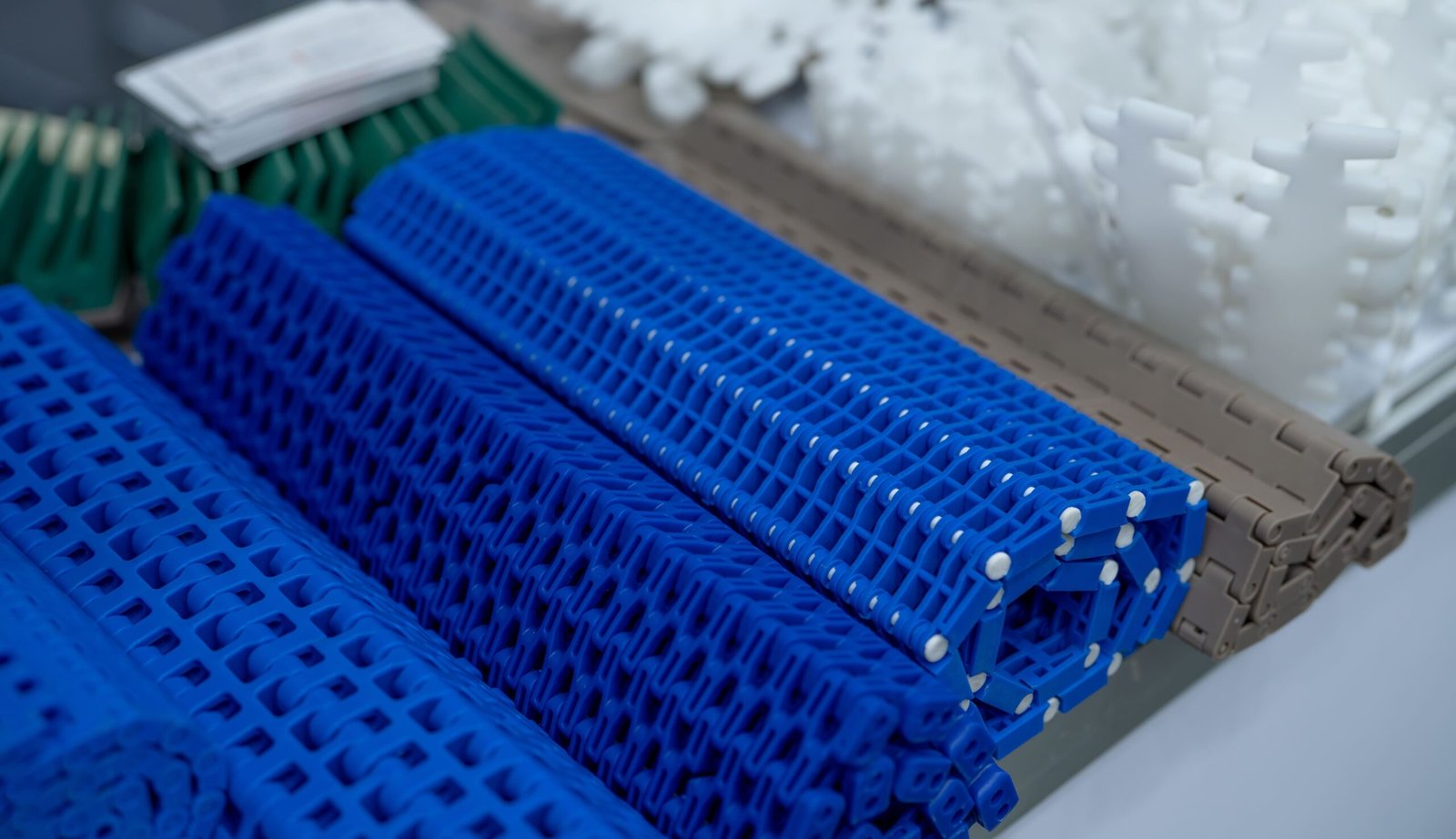
I often get calls from frantic maintenance managers. Their production line is down because a single, small part on their conveyor failed, and they can't find a replacement. This is where the long-term value of a conveyor is truly tested. A conveyor is not a single object; it's a system of interconnected components. The belt or chain, the sprockets that drive it, the wear strips it slides on, and the guide rails that contain the product—all of these are wear parts. They will eventually need to be replaced. The true cost of a conveyor isn't just its purchase price, but the cost of any downtime it might cause. When you choose a conveyor, you must also think about its parts. Are they standard and easy to source? Or are they custom-made and only available from the original manufacturer with a long lead time? A machine built with high-quality, readily available components is an asset. A machine with obscure, hard-to-find parts is a future headache. The goal is uninterrupted production, and that relies on a dependable supply of reliable components.
Conclusion
Conveyors offer huge advantages, but only with careful selection and long-term support. The right equipment and components are key to reliable, uninterrupted production for your business.
"Effectiveness of training program in manual material handling - PMC", https://pmc.ncbi.nlm.nih.gov/articles/PMC9093623/. Human-factors research reports that manual work rates and task execution can vary across workers and over time, providing context for why manual handling may introduce variability into production flow. Evidence role: general_support; source type: paper. Supports: Human-performed repetitive handling tasks can vary in pace and performance, which may affect throughput and consistency.. Scope note: This supports the mechanism of variability in manual work, but it does not prove that manual handling slows every production process. ↩
"Boost Efficiency with Continuous Flow Conveyors", https://powersafeautomation.com/resources/blog/factory-solutions/boost-efficiency-with-continuous-flow-conveyors. Material-handling references describe conveyors as equipment for continuous movement of goods through a facility, a function that can support more stable production flow when the system is appropriately designed. Evidence role: general_support; source type: education. Supports: Conveyors are a form of material-handling equipment used to move items continuously between production steps and can contribute to flow efficiency when properly applied.. Scope note: This is contextual support for the function and potential benefit of conveyors, not direct evidence that every conveyor installation improves efficiency. ↩
"How Selecting the Right Material Handling Equipment Boosts ...", https://arnoldmachinerymh.com/resources/how-selecting-the-right-material-handling-equipment-boosts-efficiency/. Engineering guidance on material-handling selection identifies load characteristics, capacity requirements, routing, and operating environment as key factors in choosing conveyor equipment. Evidence role: expert_consensus; source type: education. Supports: Material-handling equipment selection depends on characteristics such as load type, route, capacity, speed, and operating conditions.. Scope note: This supports the selection logic, but it does not evaluate the specific conveyor types mentioned in the article. ↩
"Robots are optimized for tedious, repetitive tasks. Can they ...", https://viterbischool.usc.edu/news/2019/11/robots-are-optimized-for-tedious-repetitive-tasks-can-they-be-automated-for-more-complex-workspaces/. Human-factors studies document variability in manual task performance, while production-automation literature explains that mechanized transfer equipment can provide a controlled and repeatable movement rate. Evidence role: mechanism; source type: paper. Supports: Human task performance and work pace vary, while automated material-handling systems can impose a controlled transfer rate.. Scope note: This supports the general comparison between manual and mechanized pacing, but the word 'eliminate' may be stronger than the evidence because conveyors can still experience mechanical variation or downtime. ↩
"Some Characteristics of the Decline in Manufacturing Capacity ...", https://www.federalreserve.gov/econres/notes/feds-notes/some-characteristics-of-the-decline-in-manufacturing-capacity-utilization-20180301.html. Manufacturing-systems research links stable inter-station flow with reduced starvation and blocking, conditions that allow downstream equipment to operate nearer to its planned utilization rate. Evidence role: mechanism; source type: paper. Supports: Stable material flow can reduce starvation and blocking of downstream equipment, supporting higher utilization and more efficient operation.. Scope note: This provides a mechanism for improved machine utilization, not proof that a specific downstream machine will reach its optimal speed. ↩
"GMPs 2004 Study: Literature Review of Common Food Safety ... - FDA", https://www.fda.gov/food/current-good-manufacturing-practices-cgmps-food-and-dietary-supplements/good-manufacturing-practices-21st-century-food-processing-2004-study-section-2-literature-review. Hygienic design guidance states that crevices, dead spaces, and inaccessible surfaces can retain residues and microorganisms, creating potential contamination niches in food-processing equipment. Evidence role: mechanism; source type: institution. Supports: Crevices, dead spaces, and hard-to-clean niches in food-processing equipment can retain soils and microorganisms.. Scope note: This supports the contamination mechanism; it does not show that every standard industrial conveyor has such defects. ↩
"Sanitary Design and Construction of Food Equipment1", https://ucfoodsafety.ucdavis.edu/sites/g/files/dgvnsk7366/files/inline-files/26502.pdf. Sanitary equipment design standards commonly specify corrosion-resistant, cleanable, and drainable construction and caution against hollow or sealed structural members that can trap moisture or contaminants. Evidence role: expert_consensus; source type: institution. Supports: Sanitary equipment design favors corrosion-resistant materials, cleanable open construction, and avoidance of moisture-retaining hollow structures.. Scope note: This supports the general hygienic-design rationale, though exact material and frame requirements vary by application and regulatory jurisdiction. ↩
"Food Packaging & Other Substances that Come in Contact ...", https://www.fda.gov/food/food-ingredients-packaging/food-packaging-other-substances-come-contact-food-information-consumers. Government food-contact material regulations require substances and articles intended for contact with food to meet applicable safety and compositional requirements, which is relevant to conveyor belts, guide rails, and other contact components. Evidence role: definition; source type: government. Supports: Materials intended to contact food must comply with food-contact material regulations or approvals, such as FDA rules in the United States or EU food-contact regulations.. Scope note: This supports the regulatory principle; the applicable approval route depends on jurisdiction, material, and whether the component actually contacts food. ↩