

Modular belt upgrades in meat processing rarely fail because someone chose the wrong material. They fail because the upgrade decision skipped the compatibility checks, ignored cleaning system requirements, or underestimated how much the existing conveyor structure would constrain the new belt. If you are evaluating an upgrade, those are the real risks — and they are also where the real savings come from when you get them right.
A modular belt upgrade in a meat processing plant can reduce total operating cost by addressing the root causes of maintenance burden: cleaning difficulty, unplanned belt wear, frequent replacement cycles, and sanitation risk. The cost saving is not found in the belt price itself, but in reduced cleaning time, lower replacement frequency, better drainage, and improved compatibility with hygiene-critical production environments.
The details behind that summary matter more than the summary itself. Below, I'll walk through the actual cost components affected by a modular belt upgrade — and the compatibility checks that determine whether the upgrade performs as expected or creates a new set of problems.
What Makes Meat Processing Specifically Demanding for Conveyor Belts?
Most conveyor belts handle mechanical load. Meat processing belts handle mechanical load, organic residue, repeated chemical wash-down, temperature swings, and regulatory hygiene requirements1 — all simultaneously. The belt that looks adequate on paper often fails under that combination of stressors before its rated service life ends.
In meat processing, the most significant belt-related operating costs come from hygiene maintenance, not from mechanical wear alone. Belt structure, open area percentage, surface profile, and material suitability directly determine how much cleaning effort the line requires and how reliably the belt passes sanitation inspection.
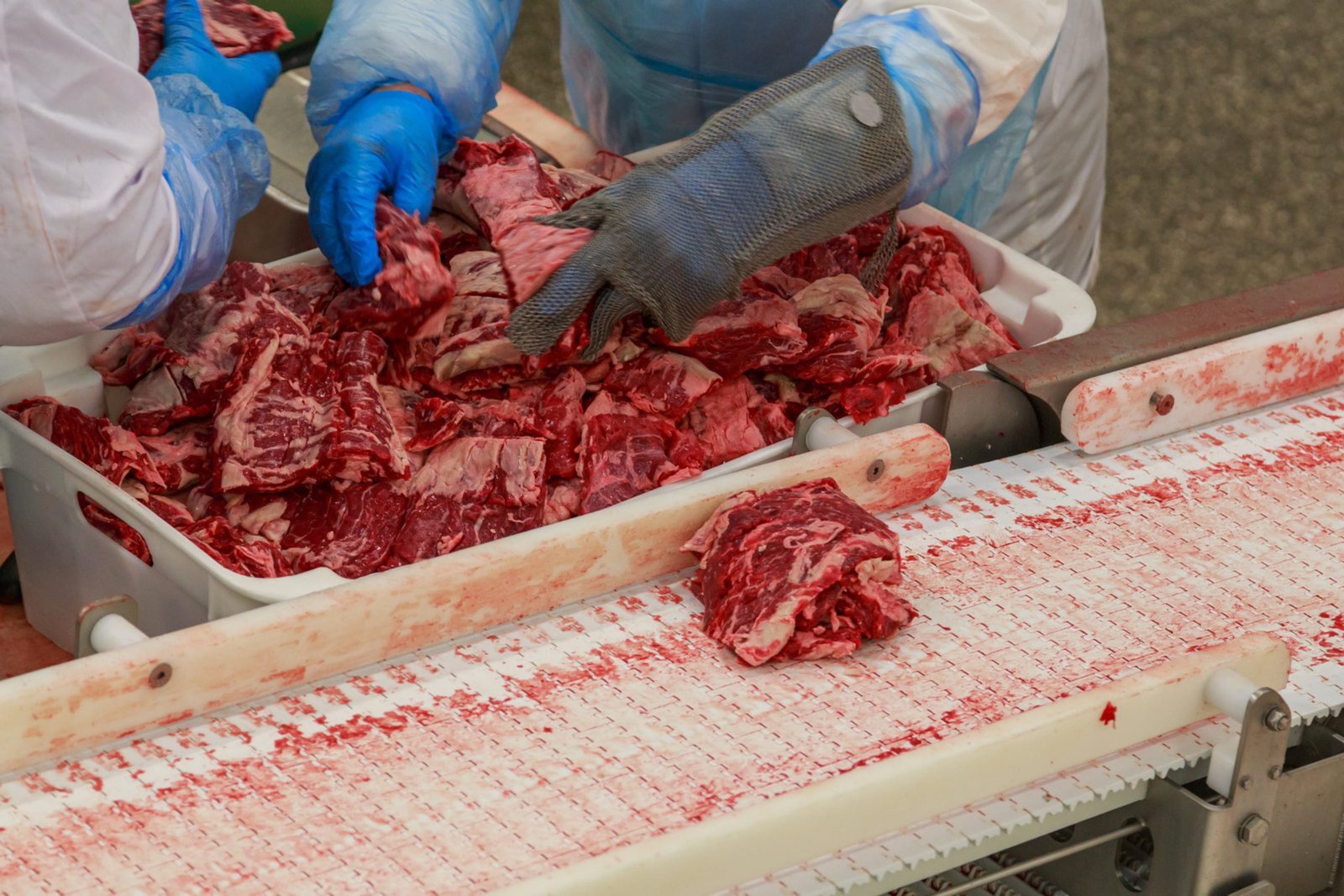
Understanding this distinction changes how you evaluate an upgrade. A belt with lower mechanical wear but poor drainage or a dense surface pattern can cost more to operate than a faster-wearing belt with better hygiene geometry. The total cost comparison only makes sense when you include cleaning time, sanitation pass rates, and product contamination risk alongside belt replacement frequency.
Why Belt Structure Affects Cleaning Cost
In my experience working through belt selection inquiries from food processing customers, cleaning difficulty is almost always the complaint that triggered the upgrade evaluation — not belt failure in the mechanical sense.
The structure of a modular belt determines where organic residue collects and how accessible those areas are during wash-down:
- Open-area belts allow water and cleaning agents to pass through the belt surface, reducing residue pooling and improving drainage. Higher open-area percentages generally reduce cleaning cycle time2 for wet product handling applications.
- Tight-pitch, dense-surface belts may offer better product support but create more horizontal surfaces where residue accumulates. These require longer cleaning cycles or higher-pressure wash-down, which increases both labor time and water and chemical consumption.
- Belt thickness and hinge geometry affect whether cleaning agents reach the hinge and rod areas — the zones most likely to harbor bacteria in a meat processing environment.
A belt that drains well and exposes fewer hidden surfaces reduces the number of cleaning passes required per shift and lowers the risk of sanitation failures that trigger line stoppages.
Material Selection Is Not Interchangeable
Modular belts for meat processing are commonly manufactured in polyethylene (PE), polypropylene (PP), or acetal (POM). These are not interchangeable choices:
| Material | Temperature Resistance | Chemical Resistance | Typical Application |
|---|---|---|---|
| Polypropylene (PP) | Moderate | Good | General meat handling, ambient temp |
| Acetal (POM) | Good | Moderate | Higher load, precision conveying |
| Polyethylene (PE) | Moderate | Very good | Wet applications, chemical wash-down |
Selecting the wrong material for the plant's specific wash-down chemicals or operating temperature accelerates surface degradation, increasing particulate contamination risk and shortening belt service life. This is a detail that should be confirmed with the belt supplier before committing to an upgrade.
How Does a Modular Belt Upgrade Actually Reduce Cleaning and Maintenance Cost?
The cost reduction case for a modular belt upgrade is not a single-line argument. It runs across several cost categories that individually seem small but add up meaningfully over a 12-to-24-month operating period.
A modular belt upgrade reduces operating cost through a combination of shorter cleaning cycles, reduced sanitation rework, lower replacement frequency, and simpler maintenance access. Each of these savings categories depends on selecting a belt with appropriate structure, open area, and material for the specific production and cleaning environment.
Cleaning Time and Labor
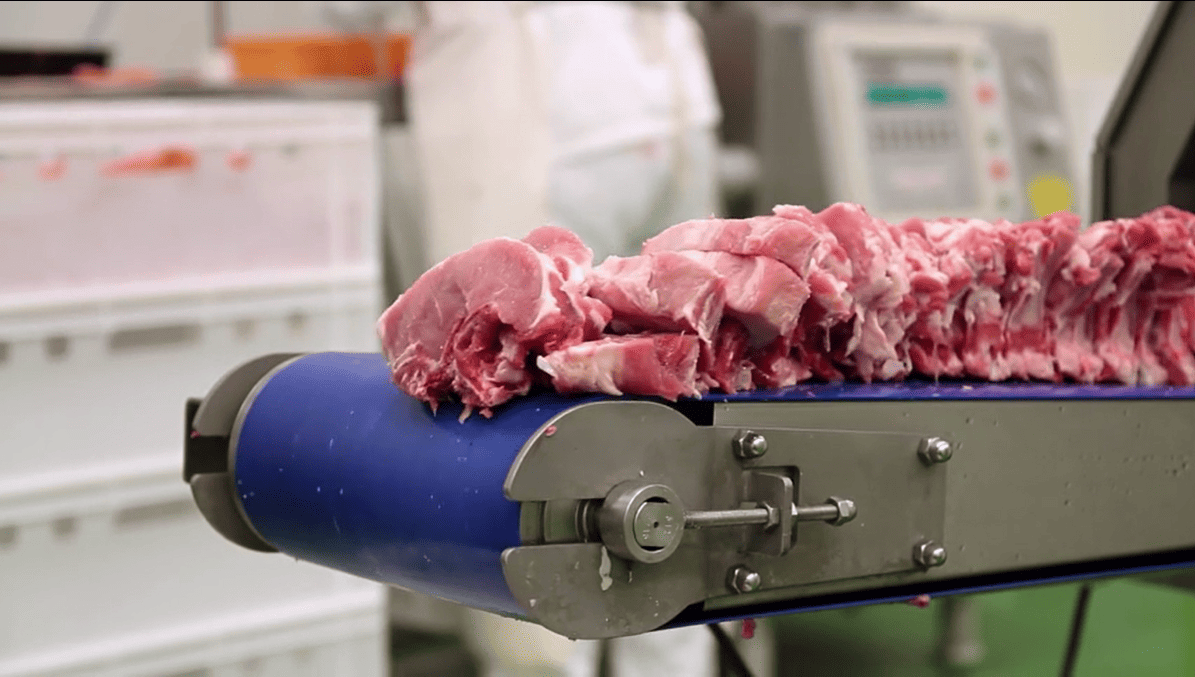
Cleaning in meat processing is not discretionary. HACCP requirements set minimum sanitation standards, and the time required to meet those standards is a fixed operating cost — unless the belt design changes the effort required.
A belt with higher open area and accessible hinge geometry typically reduces:
- Cleaning cycle duration per shift: fewer passes needed to clear residue
- Pre-soak time: better drainage means less residue pooling before active cleaning begins
- Post-rinse inspection failures: less hidden surface area reduces the likelihood that a sanitation check fails and requires a repeat cleaning cycle
Over a high-volume production schedule, these reductions accumulate into measurable labor and schedule improvements. I've seen customers describe the difference in practical terms: the line comes back online faster after cleaning, which either reduces shift overtime or creates production schedule flexibility.
Replacement Frequency and Parts Cost
Modular belts fail incrementally. Individual modules crack, hinge rods wear, or link connections degrade — usually starting at zones of highest mechanical stress or chemical exposure. One advantage of modular construction is the ability to replace sections rather than the full belt length. But that advantage is only realized if:
- Replacement modules are consistently available from the supplier in matching specifications
- The plant maintains a small stock of replacement modules for the installed belt pitch and width
- The belt's wear pattern is predictable, so maintenance teams can plan module replacements at scheduled stops rather than responding to emergency failures
An upgrade that moves a plant from a flat-surface belt to an open-grid modular design may also improve wear predictability because the mechanical load distribution changes. If the previous belt was failing unpredictably — sometimes at six months, sometimes at fourteen — the replacement cost per year was effectively unplannable. A belt with more consistent wear behavior makes replacement scheduling possible, which reduces emergency maintenance events.
Sanitation Risk and Downtime
This is the cost component that is hardest to quantify but most significant when it materializes. A sanitation failure in a meat processing facility can trigger:
- Line shutdown pending re-inspection
- Product hold or recall risk if contamination is identified post-production
- Regulatory intervention in serious cases
A modular belt upgrade does not eliminate sanitation risk on its own. But selecting a belt with documented food-grade material certification, appropriate open area for the product type, and geometry that supports effective wash-down reduces the structural contribution to that risk. Buyers should request and verify relevant certifications (FDA, EU food contact compliance, or equivalent3) from their supplier — these are documents to confirm independently, not marketing claims to accept at face value.
What Compatibility Checks Must Be Completed Before Assuming the Upgrade Will Work?
This is where upgrade projects most commonly run into problems. A belt that is technically superior for hygiene and wear may still be incompatible with the existing conveyor structure — and discovering that after purchase is an expensive lesson.
Before committing to a modular belt upgrade, verify belt pitch against installed sprockets, confirm belt width against frame dimensions and guide rail positions, check conveyor drive capacity, and assess whether existing wear strips and side guards are compatible with the new belt's running characteristics.
Sprocket and Pitch Matching
Modular belts are driven by sprockets that engage the belt's hinge rod openings. The pitch of the belt — the center-to-center distance between hinge rods — must match the sprocket tooth spacing exactly4. Running a mismatched pitch creates:
- Uneven drive engagement
- Accelerated sprocket wear
- Belt tracking problems
- Premature hinge rod failure
Before specifying an upgrade belt, confirm the installed sprocket pitch and tooth count. If the upgrade belt uses a different pitch than the existing belt, sprocket replacement must be included in the project scope and cost.
Belt Width and Frame Geometry
Modular belts are assembled from interlocking modules, and belt width is determined by module configuration. The upgrade belt must fit within the conveyor frame width, clear side guards and guide rails, and maintain the clearances required for belt tracking and thermal expansion.
For plants running at low temperatures — cold chain or chilled meat processing environments — thermal contraction of belt modules is a real factor. Confirm with your supplier that the specified material and module configuration are appropriate for the operating temperature range.
Drive System and Tension
Not all conveyor drives are sized to handle a different belt weight or friction profile. A heavier modular belt — for example, moving from a lightweight flat belt to a thicker open-grid construction — may exceed the drive motor's continuous load rating or require tension adjustment at the tail end.
This assessment requires looking at the conveyor's original drive specification. If drive capacity is marginal, the upgrade project may need to include drive component review alongside the belt change.
Existing Wear Strips and Guide Rails
Wear strips support the belt's upper run and reduce sliding friction. Guide rails keep the belt tracking within the frame. Both are in contact with the belt surface, and both must be compatible with the new belt's material and geometry:
- Some belt materials require specific wear strip materials to avoid accelerated surface wear
- Guide rail spacing must be confirmed against the new belt's module width and tolerance
- Worn or misaligned guide rails should be replaced as part of the upgrade to avoid transferring an existing tracking problem to the new belt
Frequently Asked Questions
Does a modular belt upgrade always reduce operating cost in meat processing?
Not automatically. The cost reduction depends on whether the current belt's failure modes align with what a modular belt upgrade addresses — hygiene difficulty, unplanned wear, or replacement unpredictability. If the existing belt is already performing well on those dimensions, the upgrade case is weaker. A structured pre-evaluation is necessary before assuming savings.
How do I know if my existing sprockets are compatible with a replacement modular belt?
Measure the installed sprocket pitch (tooth-to-tooth center distance) and tooth count. Compare this against the replacement belt's pitch specification. If they match, existing sprockets may be reusable pending a wear inspection. If they do not match, sprocket replacement is required and should be budgeted as part of the upgrade project.
What certifications should I verify when selecting a food-grade modular belt for meat processing?
Request documentation confirming compliance with FDA food contact regulations, EU Regulation 10/2011 for plastic materials in food contact, or equivalent standards relevant to your market. Verify these documents directly rather than relying on general marketing claims. Your quality or regulatory team should confirm acceptability for your specific application.
Can I replace individual modules without replacing the full belt?
Yes — this is one of the structural advantages of modular belt construction. However, replacement modules must match the installed belt's pitch, width, and material exactly. Stocking a small quantity of matching modules reduces repair time and avoids the risk of mismatched replacements degrading belt performance.
How does belt open area percentage affect cleaning in meat processing specifically?
Higher open area allows water, cleaning agents, and organic debris to pass through the belt surface rather than pooling on top. In wet meat processing applications — where blood, fat, and tissue are common residues — better drainage reduces cleaning cycle time and lowers the probability of residue becoming trapped in belt structure between cleaning events.
Conclusion
A modular belt upgrade in a meat processing plant is a sound investment when it is evaluated correctly. The cost saving in a modular belt upgrade comes from reducing the total operating burden — cleaning labor, sanitation risk, unplanned maintenance, and replacement unpredictability — not from the belt unit price alone. That distinction matters because it changes what you check before committing to the upgrade.
Sprocket compatibility, belt pitch, material selection, open area, frame geometry, and conveyor drive capacity all need to be confirmed before assuming the upgrade will perform as expected. Getting those checks right is what separates a successful upgrade from a project that creates new problems while solving old ones.
At Molytech, we work through these compatibility and selection questions with maintenance and engineering teams as part of standard pre-order communication. If you are evaluating a modular belt upgrade for a meat processing or food production application, contact our team to discuss your conveyor specifications and current maintenance challenges.
"Sanitation Performance Standards Compliance Guide", https://www.fsis.usda.gov/inspection/compliance-guidance/sanitation-performance-standards-compliance-guide. USDA FSIS sanitation rules and guidance describe meat and poultry establishments as regulated environments requiring sanitary equipment, cleaning procedures, and control of contamination, supporting the article's characterization of meat-processing conveyors as hygiene-critical equipment. Evidence role: general_support; source type: government. Supports: Meat and poultry processing equipment must operate under sanitary conditions that involve removal of organic residues and routine cleaning and sanitizing.. Scope note: The source supports the regulatory and sanitation context but does not evaluate a specific modular belt design. ↩
"Cleaning conveyor belts in the chicken-cutting area of a poultry ...", https://pubmed.ncbi.nlm.nih.gov/24674444/. Hygienic-design guidance from food-safety engineering institutions links open, accessible, and drainable equipment geometry with improved cleanability, supporting the mechanism by which higher belt open area can reduce cleaning effort. Evidence role: mechanism; source type: institution. Supports: Open, drainable equipment geometry improves access for cleaning and reduces residue retention in food-processing equipment.. Scope note: The guidance supports the design principle but may not provide a measured cleaning-time reduction for the exact belt model or meat application. ↩
"Food Packaging & Other Substances that Come in Contact ...", https://www.fda.gov/food/food-ingredients-packaging/food-packaging-other-substances-come-contact-food-information-consumers. FDA food-contact substance regulations and EU Regulation No. 10/2011 establish requirements for materials and articles intended to contact food, supporting the article's reference to documented food-contact compliance for plastic conveyor belt materials. Evidence role: definition; source type: government. Supports: FDA food-contact rules and EU Regulation No. 10/2011 regulate materials intended to contact food, including plastics.. ↩
"Sproket & Chain Specifications - Academia.edu", https://www.academia.edu/123183411/Sproket_and_Chain_Specifications. Mechanical-design references on chain and sprocket drives explain that the pitch of the driven element must match the sprocket tooth spacing for proper engagement, providing contextual support for the same compatibility principle in modular belt drives. Evidence role: mechanism; source type: education. Supports: Positive-drive systems require matched pitch between the driven element and sprocket teeth to achieve correct engagement and avoid wear or malfunction.. Scope note: The source may discuss chain-sprocket mechanics rather than the exact modular belt product geometry. ↩