

If you need to replace a sprocket fast, the wrong material choice can cause early wear, rust, or even a stopped production line. That's a problem nobody wants.
Sprockets are commonly made from two groups of materials: steel and engineering plastic. Steel sprockets include carbon steel and stainless steel. Plastic sprockets include nylon, POM, and UHMWPE. The right material depends on the working environment, chain type, and operating conditions.
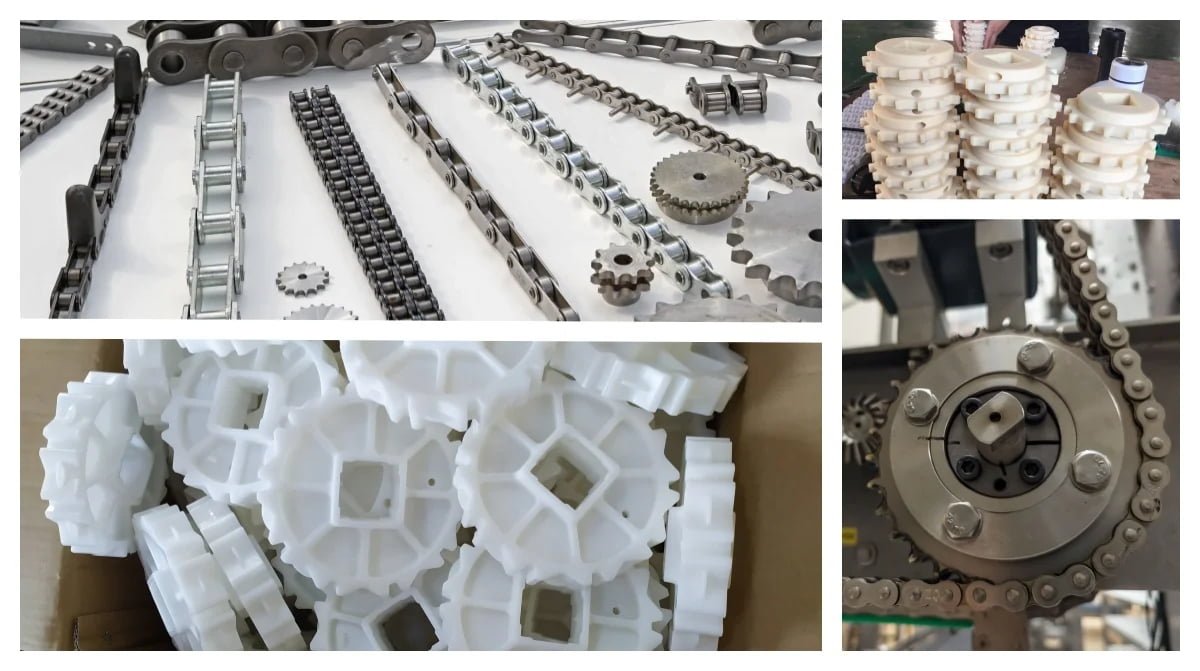
Sprocket material is one of the first things that comes up when a maintenance team contacts us for a replacement. Before we can confirm a suitable product, we always ask about dimensions and working conditions at the same time. The sections below cover the most common materials we see in real orders — what they are and where they tend to show up.
What Are the Most Common Steel Materials Used for Sprockets?
Steel is the default material for most industrial sprockets. But not all steel sprockets are the same, and picking the wrong type can create problems quickly.
Carbon steel and stainless steel are the two most common steel materials used for sprockets. Carbon steel is widely used in general industrial applications. Stainless steel is typically chosen where corrosion resistance or hygiene is required, such as in food processing or wet environments.
Carbon Steel Sprockets
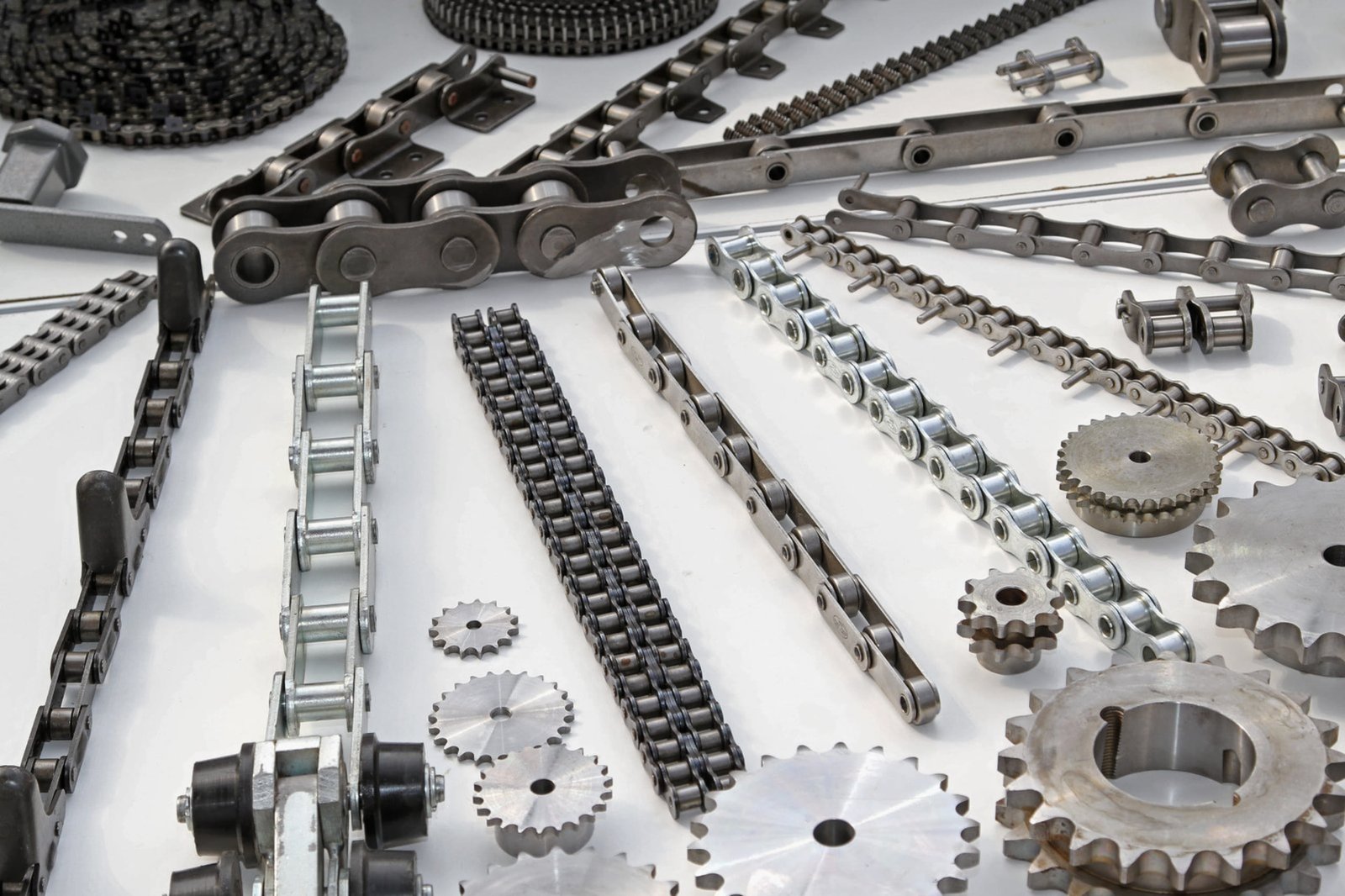
Carbon steel is the most common sprocket material we see in general industrial conveyor systems1. It handles mechanical load well and machines cleanly, which is why it appears in so many standard applications.
The surface of a carbon steel sprocket is sometimes hardened or treated to improve wear resistance2. Zinc plating or black oxide coating is also applied in some cases to slow down surface corrosion3. That said, carbon steel is not a corrosion-resistant material by nature. In dry or lightly protected environments, it performs reliably. In wet or chemically active environments, it corrodes faster.
| Property | Carbon Steel |
|---|---|
| Strength | Good for general industrial use |
| Corrosion resistance | Limited — needs coating or protection |
| Cost | Lower compared to stainless steel |
| Common applications | General conveyor systems, dry environments |
When we receive a replacement request for carbon steel sprockets, the details we typically need include the chain model, number of teeth, bore size, keyway dimensions, and whether any surface treatment is required. A drawing or photo of the original part helps confirm the spec quickly.
Stainless Steel Sprockets
Stainless steel sprockets come up frequently in food processing, beverage, pharmaceutical, and other industries where hygiene and cleaning are routine requirements. These environments involve water, cleaning agents, or direct contact with food products, which makes corrosion resistance a real and practical need — not just a preference.
Stainless steel holds up better than carbon steel in wet and chemically active conditions4. It is also easier to clean without surface degradation over time. That combination is why it stays common in hygiene-sensitive lines.
| Property | Stainless Steel |
|---|---|
| Corrosion resistance | Good — suitable for wet and food-grade environments |
| Strength | Adequate for most conveyor applications |
| Cost | Higher than carbon steel |
| Common applications | Food, beverage, pharmaceutical, frequent washdown |
The same dimensional information applies when sourcing stainless steel sprockets: chain type, tooth count, bore, keyway, and environment. One thing that comes up in practice is confirming whether the conveyed product, cleaning method, or operating temperature places any additional demands on the material. That's worth noting in the inquiry.
What Plastic Materials Are Used for Sprockets?
Plastic sprockets are not just a lightweight alternative. They are a genuine design choice in many conveyor systems, and they show up regularly in the industries we work with.
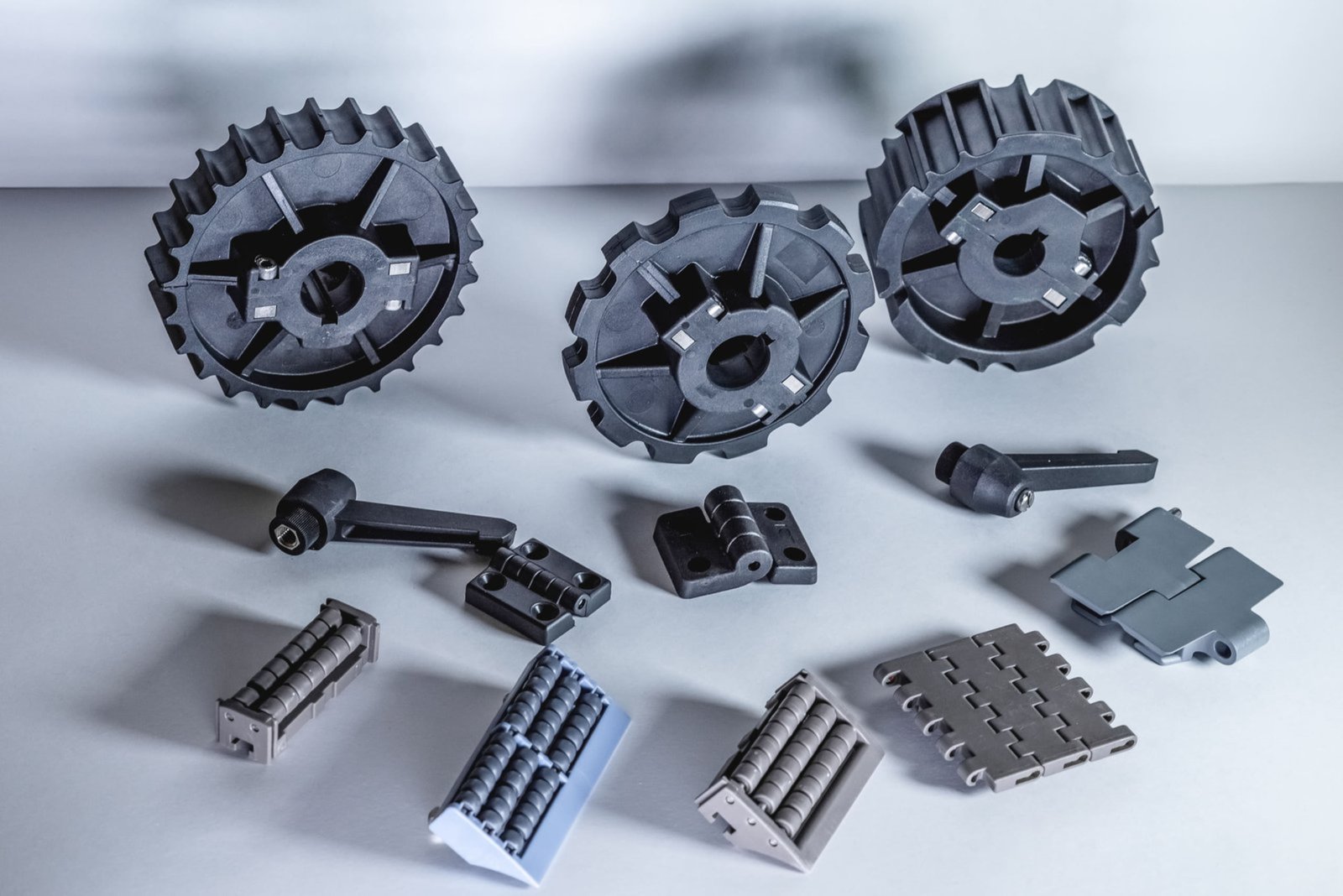
Nylon, POM (polyoxymethylene), and UHMWPE (ultra-high-molecular-weight polyethylene) are the most common plastic materials used for sprockets. These materials are lightweight, produce less noise during operation, and offer reasonable wear resistance in many conveyor applications.
Nylon (PA) Sprockets
Nylon is one of the most widely used plastic materials for sprockets. It is light, has a low friction surface, and absorbs some mechanical shock during operation. That last point matters on conveyor lines where impact or vibration is part of normal use.
Nylon also handles contact with water and mild chemicals reasonably well, which is why it appears in food handling and packaging lines5. One thing to keep in mind is that nylon absorbs moisture, which can cause minor dimensional changes over time. In most conveyor applications this is manageable, but it is worth knowing if tight tolerances matter in a specific system.
| Property | Nylon (PA) |
|---|---|
| Weight | Light |
| Noise | Low |
| Moisture absorption | Moderate — minor dimensional change possible |
| Common applications | Food handling, packaging, general conveyor lines |
POM (Polyoxymethylene) Sprockets
POM, also called acetal, is a harder and more dimensionally stable plastic than nylon6. It absorbs very little moisture, which means its dimensions stay consistent in humid or wet environments. The surface is smooth and has low friction, which suits systems where the sprocket runs in regular contact with chain or belt components.
POM sprockets are used in food processing, light industrial conveyor systems, and anywhere that dimensional consistency and a clean surface are valued. They are a common alternative to nylon in applications where moisture stability matters more.
| Property | POM |
|---|---|
| Dimensional stability | Good — low moisture absorption |
| Surface friction | Low |
| Hardness | Higher than nylon |
| Common applications | Food processing, light industrial, moisture-exposed lines |
UHMWPE Sprockets
UHMWPE is a less common sprocket material compared to nylon and POM, but it shows up in specific applications. Its main characteristic is very high wear resistance combined with a low friction surface7. It also handles impact well without cracking.
In conveyor systems that run at lower speeds but involve abrasive products or rough handling conditions, UHMWPE holds up well as a sprocket material. It is also considered a food-safe material, which allows it to appear in food and beverage lines where direct product contact is possible.
| Property | UHMWPE |
|---|---|
| Wear resistance | Very high |
| Impact resistance | Good |
| Surface friction | Very low |
| Common applications | Abrasive environments, food-safe applications, low-speed lines |
When we receive inquiries for plastic sprockets, the information we ask for is the same as with steel: chain model, tooth count, bore size, keyway if applicable, and working environment. For plastic sprockets specifically, operating temperature and cleaning chemicals are worth mentioning, because some plastics have limits in high-heat or strong-solvent environments8.
How Do You Confirm the Right Sprocket Material for Your System?
Knowing the material categories is useful, but knowing how to confirm the right material for a specific replacement is what actually moves a purchase forward.
To confirm the right sprocket material, you need the chain type and model, number of teeth, bore size, keyway dimensions, and details about the working environment. That includes the conveyed product, cleaning method, operating temperature, and line speed.
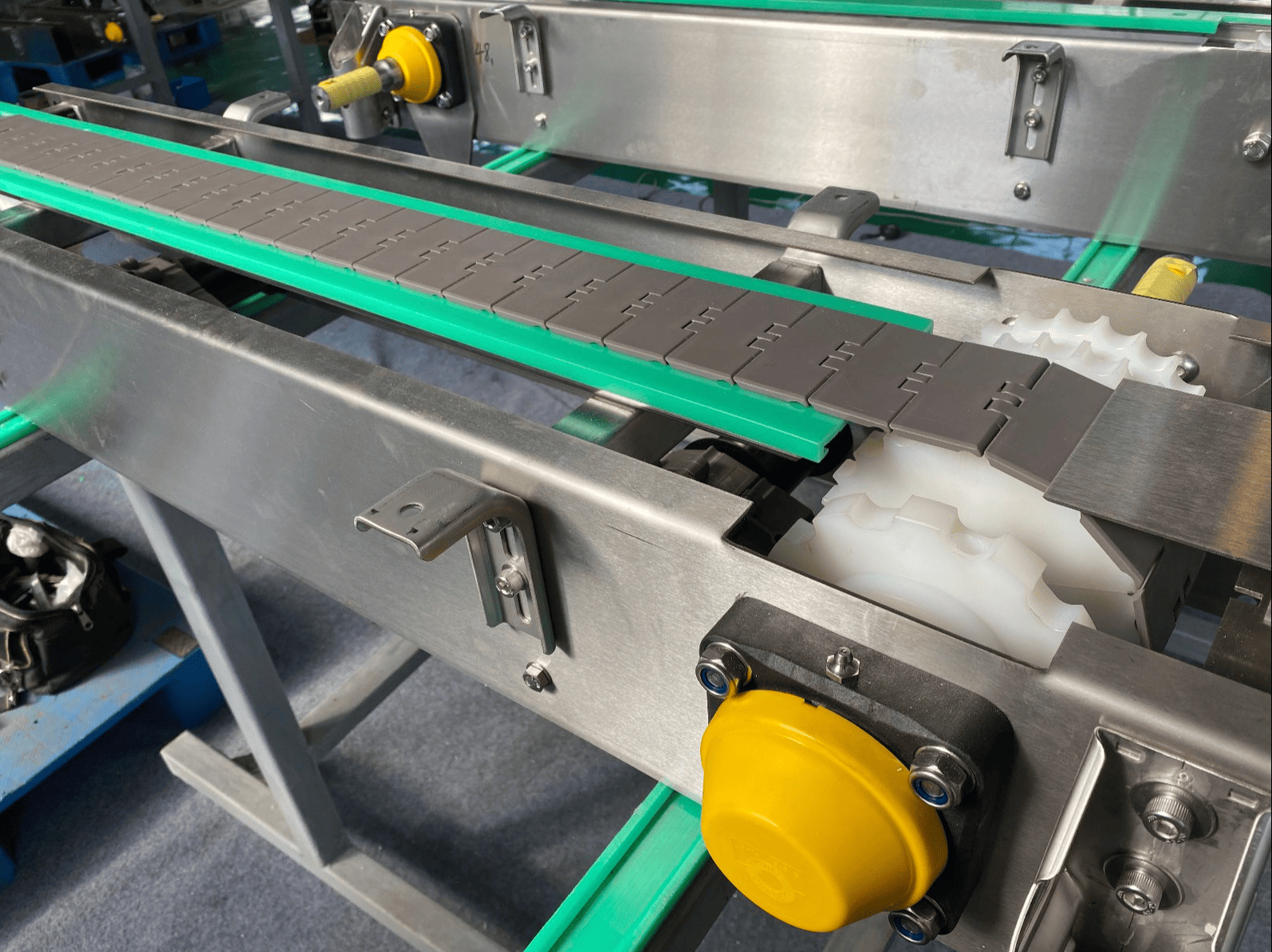
In practice, when a maintenance team contacts us for a replacement sprocket, the inquiry often starts with a photo or a part number. From there, we go through the working conditions together to confirm which material fits.
The table below shows the kind of information that typically comes up in a replacement or quotation request:
| Information Needed | Why It Matters |
|---|---|
| Chain model / type | Confirms tooth profile and pitch compatibility |
| Number of teeth | Directly affects chain engagement and drive ratio |
| Bore size and keyway | Ensures shaft fit — wrong bore means the part cannot be installed |
| Operating environment | Determines whether steel or plastic is more suitable |
| Conveyed product | Affects material choice, especially in food or chemical applications |
| Cleaning method | High-pressure water or chemical cleaning may limit certain materials |
| Operating temperature | Some plastics have temperature limits; high heat may require steel |
| Line speed | Higher speeds generate more heat at the sprocket-chain interface |
This information does not need to come from an engineering report. In most cases, the maintenance team already knows these details from working with the line. The key is having it ready when placing an inquiry, because it shortens the confirmation process on both sides.
We see a mix of all these materials in real orders — carbon steel, stainless steel, nylon, POM, and UHMWPE. The pattern that shows up consistently is that material choice follows the working environment rather than any single rule. A food processing line and a dry industrial conveyor have different demands, and the sprocket material reflects that difference.
Conclusion
Sprockets are made from carbon steel, stainless steel, nylon, POM, or UHMWPE. The right material depends on your working environment, chain type, and operating conditions — not a single universal answer.
"Carbon Steel vs Stainless Steel Sprockets: How to Choose for ...", https://www.lily-bearing.com/resources/blog/carbon-steel-vs-stainless-steel-sprockets?srsltid=AfmBOooJeqJWISWuUrdOAnK8P5vVrwx-py3KF7BgCwzP2gH0jvYzMoOG. Engineering references on power transmission components consistently identify carbon steel as the standard material for industrial sprockets due to its machinability, mechanical strength, and cost-effectiveness in dry or lightly protected environments. Evidence role: general_support; source type: research. Supports: Carbon steel is the predominant material used in general-purpose industrial sprocket manufacturing. Scope note: Industry-wide market share data for sprocket materials is not widely published; support is drawn from engineering design references rather than quantitative market surveys. ↩
"Effect of case hardening on the wear and hardness properties ... - PMC", https://pmc.ncbi.nlm.nih.gov/articles/PMC10366404/. Metallurgical literature on surface hardening of carbon steel documents that processes such as carburizing and induction hardening increase surface hardness while preserving a tough core, reducing wear rates on gear and sprocket tooth flanks. Evidence role: mechanism; source type: research. Supports: Surface hardening processes such as case hardening or induction hardening increase the surface hardness of carbon steel components, thereby improving resistance to abrasive and adhesive wear. Scope note: General metallurgical principles apply; specific wear-life improvement figures vary by process parameters, steel grade, and operating conditions. ↩
"Corrosion Resistance of Zinc Plating | Sharretts Plating Company", https://www.sharrettsplating.com/blog/corrosion-resistance-of-zinc-plating/. Materials engineering references describe zinc electroplating as providing sacrificial cathodic protection to steel, and black oxide conversion coating as offering limited corrosion resistance primarily effective when combined with post-treatment sealants. Evidence role: mechanism; source type: research. Supports: Zinc plating provides galvanic corrosion protection to steel substrates, while black oxide forms a thin conversion coating that offers mild corrosion resistance when used with supplemental oil or wax. Scope note: Black oxide alone provides minimal corrosion protection compared to zinc plating; effectiveness depends heavily on post-treatment and environmental exposure conditions. ↩
"Stainless steel - Wikipedia", https://en.wikipedia.org/wiki/Stainless_steel. Stainless steel derives its corrosion resistance from a self-repairing passive chromium oxide film; this property makes it substantially more resistant than plain carbon steel to oxidation and chemical attack in aqueous and mildly acidic environments (see, e.g., ASM International or Wikipedia: Stainless steel). Evidence role: mechanism; source type: encyclopedia. Supports: Stainless steel resists corrosion in wet and chemically active environments due to a passive chromium oxide layer that forms on its surface. Scope note: Corrosion resistance varies significantly by stainless steel grade and specific chemical environment; not all stainless grades perform equally under all conditions. ↩
"Food Packaging & Other Substances that Come in Contact ...", https://www.fda.gov/food/food-ingredients-packaging/food-packaging-other-substances-come-contact-food-information-consumers. Engineering plastics data and food equipment standards indicate that unfilled polyamide grades can be formulated to meet food contact requirements, with acceptable resistance to water, oils, and mild cleaning agents, though resistance to strong acids and bases is limited. Evidence role: general_support; source type: research. Supports: Nylon (polyamide) exhibits adequate resistance to water and mild chemicals and is used in food handling equipment, subject to applicable food contact regulations. Scope note: Food contact compliance depends on specific nylon grade and any additives present; not all commercial nylon grades are certified for direct food contact. ↩
"Acetal vs Nylon: A Guide to Choosing the Right Plastic", https://www.interstateplastics.com/acetal-vs-nylon?srsltid=AfmBOoomQdSTr-6OjplEk4F1CbZhN1Z_xbHPtwjF0Brr28RsgQyBvldJ. Engineering plastics reference data consistently show that polyoxymethylene (POM/acetal) has a moisture absorption rate below 0.25%, compared to 1–9% for polyamides, and a higher Shore D hardness, making it more dimensionally stable in wet or humid service conditions. Evidence role: general_support; source type: research. Supports: POM absorbs significantly less moisture than nylon and exhibits higher hardness, resulting in better dimensional stability in humid environments. Scope note: Exact values vary by specific grade and test conditions; comparative performance should be verified against manufacturer data sheets for the grades in use. ↩
"Ultra-high-molecular-weight polyethylene - Wikipedia", https://en.wikipedia.org/wiki/Ultra-high-molecular-weight_polyethylene. UHMWPE is documented in polymer engineering literature as having one of the highest abrasion resistances of any thermoplastic, with a low coefficient of friction comparable to PTFE, properties attributed to its very high molecular weight and semi-crystalline structure (see, e.g., Wikipedia: Ultra-high-molecular-weight polyethylene). Evidence role: general_support; source type: encyclopedia. Supports: UHMWPE exhibits exceptionally high abrasion resistance and a low coefficient of friction among engineering plastics. Scope note: Wear performance is highly dependent on contact conditions, counterface material, and lubrication; published values represent standardized test conditions that may differ from specific conveyor applications. ↩
"UHMW vs Nylon | Plastics for Wear Applications", https://www.curbellplastics.com/resource-library/material-selection-tools/plastic-material-comparisons/uhmw-vs-nylon/?srsltid=AfmBOop1fXnt3sYb6isy17_Fz1PdF5efg2kC6Gj9mmgcobF0eb3nLVIg. Published engineering plastics property data indicate continuous service temperature limits of approximately 80–100°C for nylon, 90–100°C for POM, and 80–90°C for UHMWPE, with solvent resistance varying by chemical class; strong oxidizing acids and halogenated solvents can degrade these materials. Evidence role: general_support; source type: research. Supports: Common engineering plastics used in sprockets have defined continuous service temperature limits and varying resistance to solvents and cleaning chemicals. Scope note: Exact temperature and chemical resistance limits vary by specific grade, load conditions, and exposure duration; manufacturer data sheets should be consulted for critical applications. ↩