

When we talk about conveyor systems, most people focus on the chain, the motor, or the frame.
But in many cases, the small wear strip quietly determines whether the entire system runs smoothly, efficiently, and with minimal maintenance.
After more than 10 years in conveyor component solutions, I often find that a well-chosen wear strip can make the difference between stable production and endless unplanned downtime.
The Role of Wear Strips in a Conveyor Line
At first glance, a wear strip seems like a simple piece of plastic fixed under the chain or belt.
In reality, it serves several critical functions: it supports the chain, reduces friction between the chain and frame, and ensures the smooth and quiet operation of the system.
A well-designed wear strip provides dimensional stability to the conveyor, preventing uneven wear or vibration.
Different materials—such as UHMW-PE, POM, or nylon—perform differently in terms of friction, wear resistance, and thermal stability.
Understanding these differences is the first step in designing a reliable conveying solution.
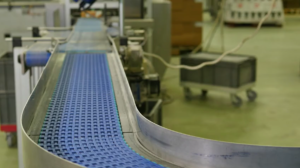
Why Wear Strips Are the Key to System Longevity
A conveyor is only as reliable as its smallest component.
If the wear strip material wears out too quickly, the chain runs unevenly, vibrations increase, and both energy consumption and noise level rise.
Over time, the chain itself may suffer premature wear, shortening its service life.
By choosing the right grade and hardness of material, you can minimize friction, reduce energy loss, and stabilize chain movement.
In one of our recent projects, simply upgrading the wear strip material extended the chain’s lifetime by nearly 40%—a clear example that sometimes small changes bring large improvements.
Choosing the Right Material for Both Performance and Hygiene
In the food industry, a wear strip does more than resist abrasion. It must also meet hygiene and cleaning requirements, which are often more demanding than mechanical performance.
Materials with smooth, non-porous surfaces prevent the buildup of residue or bacteria and must comply with FDA or EU food-grade standards.
Each material offers distinct advantages depending on the operation environment:
- UHMW-PE (Ultra High Molecular Weight Polyethylene) is the most widely used material for wear strips in food-grade applications. It offers exceptionally low friction, high impact resistance, and superb chemical resistance, allowing smooth chain movement even in wet or humid conditions. Its self-lubricating property means it needs no additional grease, making cleaning faster and hygiene control easier.
- POM (Polyacetal), on the other hand, delivers high rigidity and dimensional stability, making it ideal for conveyor systems running at high speed or under precise tolerance requirements. It maintains its shape and strength under continuous load, which helps prevent chain slippage or misalignment.
- Nylon (PA6 or PA66) provides outstanding mechanical strength and temperature resistance, suitable for heavy-duty or industrial conveyors that operate in warm environments. It handles impact and load exceptionally well, ensuring a consistent system structure even under greater mechanical stress.
Selecting the right wear strip material means finding the right balance between mechanical durability, hygiene standards, and ease of maintenance—a choice that directly defines your conveyor’s efficiency and reliability.
Optimizing Wear Strip Design for Easier Maintenance
Good design doesn’t stop at installation—it continues through maintenance and system optimization.
Wear strips should be designed for easy removal and replacement, minimizing downtime when maintenance is needed.
Simple structural details—like accessible mounting grooves or modular support rails—can make future adjustments smoother and faster.
From my experience, investing time in a detailed wear strip design pays back quickly.
It not only ensures smoother chain movement but also reduces long-term maintenance costs—a sign of truly professional system design.
In conveyor design, every detail matters.
The wear strip may be a small component, but its impact on system stability, lifetime, and hygiene compliance is significant.
When properly selected and integrated, it becomes a quiet yet powerful contributor to efficient and reliable production.
If you ever find yourself comparing different materials or trying to balance durability, cleanliness, and maintenance in your conveyor project, this is exactly where the right partner with experience can make all the difference.