

In every conveyor system, sprockets play a critical role in driving the chain plates or modular belts that carry products through production.
Although small in size, sprockets directly determine the smoothness of motion, line speed accuracy, and overall system efficiency.
Understanding their basic parameters and selection principles helps engineers and maintenance teams choose parts that offer reliability and long service life.
The Role of Sprockets in Conveyor Systems
A conveyor sprocket transmits rotation from the motor or gearbox to the conveyor chain.
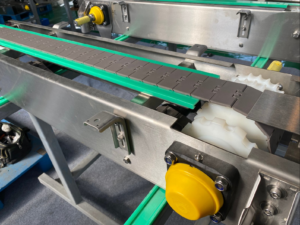
Each tooth on the sprocket engages precisely with a link of the chain plate, guiding it along the conveying path.
Proper engagement ensures smooth movement and minimal noise.
When the sprocket and chain plate are mismatched—whether in pitch, tooth profile, or alignment—the chain may vibrate, slip, or wear prematurely.
In short, the sprocket acts as the mechanical interface between power and motion.
Selecting the right design ensures stable product transfer and efficient power transmission across the entire line.
Basic Parameters of Conveyor Sprockets
Sprockets are defined by several key parameters.
Understanding these specifications is the first step in proper selection or replacement.
Pitch (P)
The pitch is the distance between the centers of two adjacent chain links.
It must match exactly between the chain and sprocket; otherwise, the chain will not seat correctly on the teeth.
Number of Teeth (z)
Tooth count affects conveyor speed and torque.
A sprocket with more teeth generally provides smoother motion and less chain articulation, while fewer teeth offer greater torque but increased wear.
Pitch Diameter (Dp)
Pitch diameter is measured through the centers of the engaged chain rollers.
It defines the effective radius of rotation, influencing conveyor speed and the bending radius of the chain.
Outside Diameter (Do)
This is the overall diameter from tooth tip to tooth tip.
It must be checked against the machine’s available space.
Bore Diameter and Hub Type
The bore is the central hole that mounts to the drive shaft.
Hub configurations—plain bore, keyed, taper‑lock, or set‑screw—determine how the sprocket attaches and locates on the shaft.
Ensuring the correct bore size and hub type is important for secure installation and easy replacement.
Tooth Width and Profile
The tooth width corresponds to chain thickness.
Tooth profiles are shaped to engage smoothly with chain links, minimizing friction, vibration, and noise.
Precision machining of teeth leads to more stable operation and longer chain life.
Material Options and Typical Applications
Selecting appropriate material is essential because operating environments differ in temperature, humidity, and chemical exposure.
Below are common sprocket materials and their characteristics.
Plastic (POM, Nylon)
- Lightweight and corrosion‑resistant.
- Quiet running and suitable for contact with food.
- Commonly used in bottle conveyors, packaging, and light‑duty production lines.
Stainless Steel (304 / 316)
- High strength and excellent resistance to cleaning agents and heat.
- Preferred in meat, beverage, and bakery applications involving water or steam washing.
- Good dimensional stability for high‑temperature areas.
Carbon Steel
- Strong and cost‑effective for heavy loads or dry conditions.
- Requires surface treatment (zinc‑plated, nitrided) or lubrication to prevent rust.
- Often used in industrial and metal‑packaging environments.
Matching the sprocket material to the chain plate or belt is recommended to achieve uniform wear and consistent performance.
Alignment, Installation, and Maintenance Considerations
Even the best‑designed sprocket will not perform well if installed incorrectly.
Proper alignment and routine inspection extend service life for both sprocket and chain.
Alignment and Installation
- Mount all sprockets on the same plane, maintaining shaft parallelism.
- Check that keyways align correctly and that fixing screws are secure.
- Verify chain tension before starting the conveyor; excessive tension increases tooth wear.
Inspection and Maintenance
- Examine the tooth profile regularly. A sharp or deformed tip means replacement is due.
- Listen for abnormal noise, which may indicate misalignment or pitch mismatch.
- Clean sprockets during scheduled maintenance, especially in wet or sticky product environments.
A few minutes spent aligning and inspecting sprockets can prevent hours of unplanned downtime.
Selection Principles
When choosing a new sprocket for an existing conveyor or a new installation, consider the following principles:
- Match the Chain Pitch and Width
The sprocket must correspond precisely to the chain plate’s pitch.
Always confirm manufacturer data before purchase. - Determine Tooth Count and Pitch Diameter
Required line speed and drive torque will dictate these parameters.
Higher speed systems use larger or multiple sprockets for smooth engagement. - Choose the Appropriate Material
Match corrosion resistance and temperature tolerance to operating conditions. - Check Compatibility with Existing Equipment
Ensure bore, hub, and keyway dimensions fit the drive shaft, and that space allows for removal and maintenance. - Consider Working Load and Environment
Review recommended load ratings and include an adequate safety factor for continuous operation.
A short example summary table:
| Environment | Recommended Material | Tooth Number Range | Notable Feature |
|---|---|---|---|
| Food / Beverage (wet) | Stainless steel | 17–25 | Corrosion‑resistant, easy to clean |
| General Packaging | POM Plastic | 15–23 | Low noise, lightweight |
| Heavy Load Industrial | Carbon Steel | 9–17 | High torque transmission |
Conveyor sprockets convert motor rotation into accurate movement of the conveying surface.
Their parameters—pitch, diameter, tooth count, and material—define how efficiently the system operates.
By understanding these fundamentals and following consistent selection and maintenance practices, engineers can ensure stable, reliable, and long‑lasting conveyor performance.